How to Detect Mold in Your House
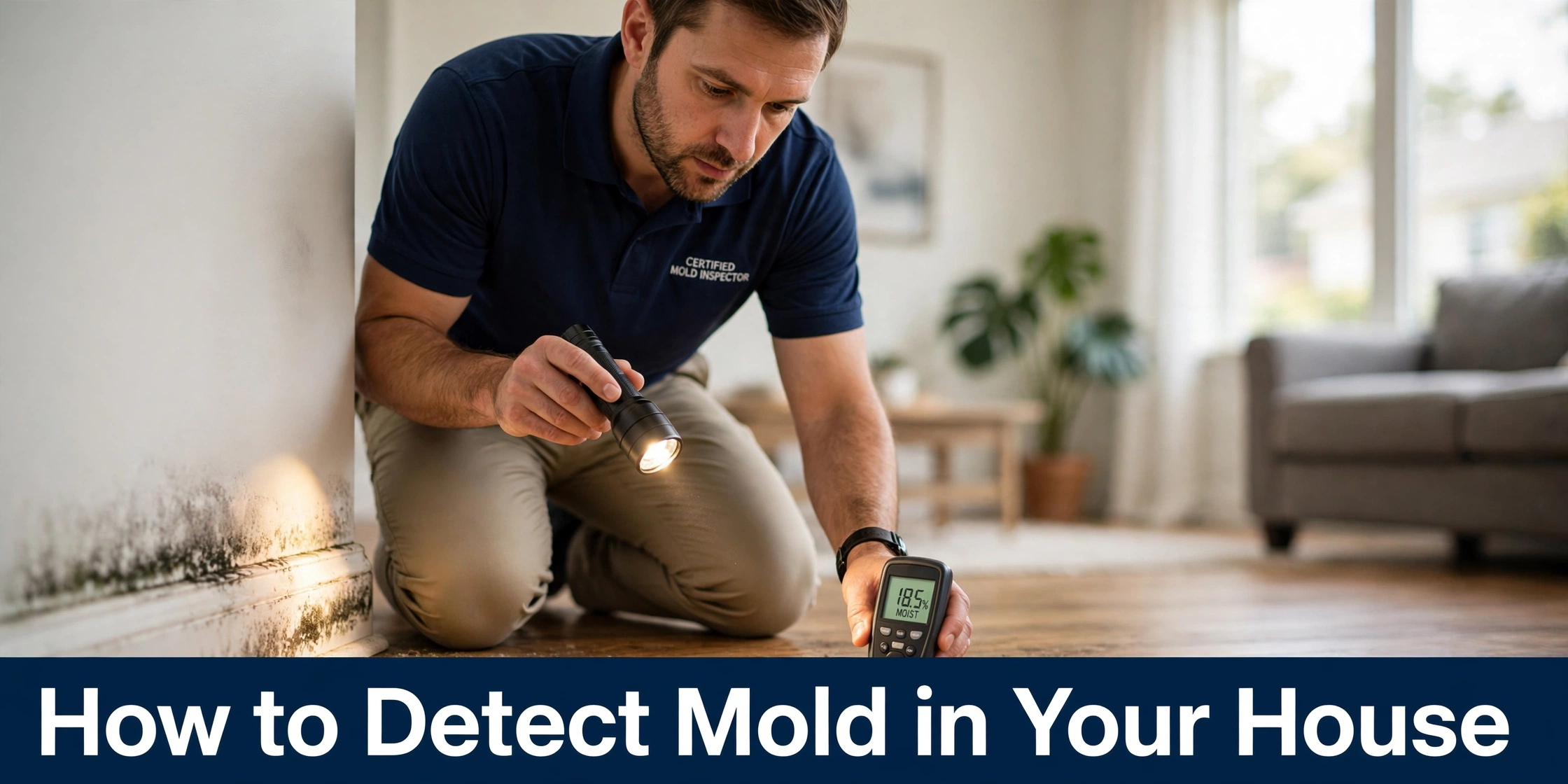
You detect mold with your eyes, your nose and a moisture meter, in that order. A lab test is the last tool on the list, not the first. If you can already see growth, you do not need a test at all. You need to find the water feeding it and fix that.
That is not my opinion. It is the position of the US Environmental Protection Agency and the CDC: a good visual inspection and a musty smell tell you more than an air sample does.
Quick facts
- There is no federal standard for a safe level of mold in a home, so no test result can pass or fail your house.
- If mold is visible, sampling is not needed. The cleanup is the same whatever type it is.
- Mold can start growing within 24 to 48 hours after a material gets wet.
- Keep indoor humidity below 60 percent. Between 30 and 50 percent is the range to aim for.
- A do it yourself cleanup is fine for most areas under about 10 square feet. Bigger areas belong to a professional.
- A home test kit costs $10 to $50. Published prices for a professional inspection run from about $200 to $1,000, depending on the source and the size of the home.
What are the first signs of mold in a house?
The first signs are usually a musty smell and a stain, long before you see anything fuzzy. Mold often announces itself to your nose first. The smell is damp and earthy, like wet cardboard or a pile of leaves left in the rain. If one room smells and the rest of the house does not, that room is where you start.
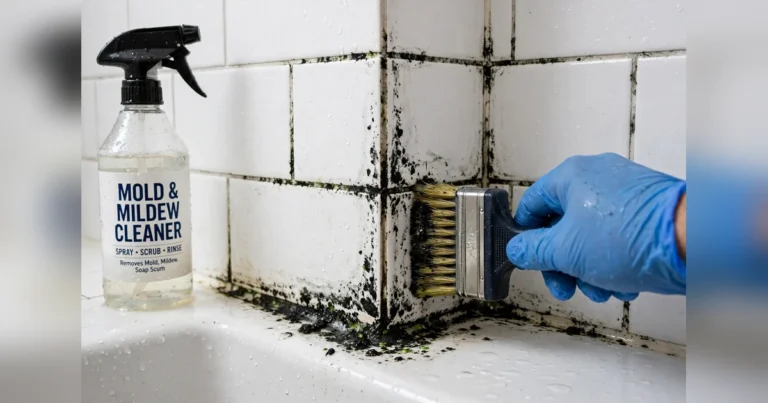
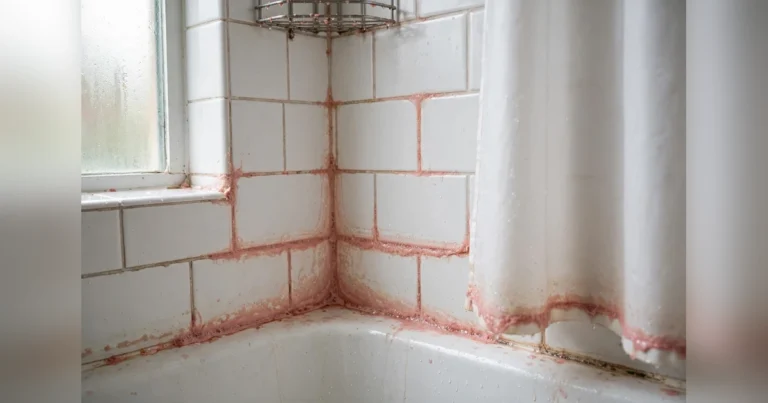
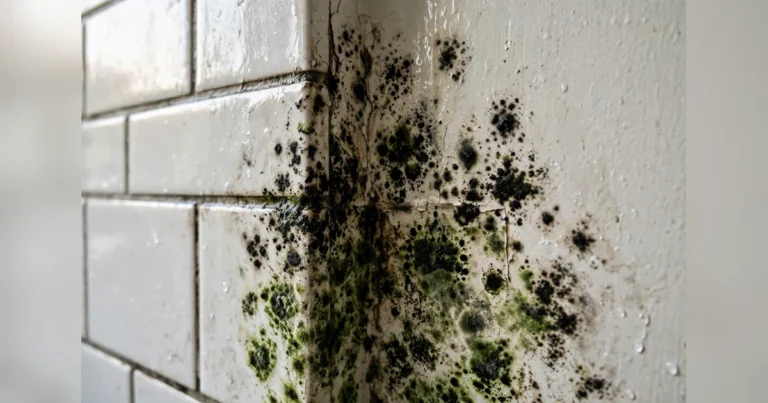
Visible growth comes in many colors: black, green, white, orange, even pink in a shower. The color tells you almost nothing. The CDC is clear on this: color does not show how dangerous a mold is, and the dark types get treated the same way as the pale ones. What matters is the pattern:
- A straight vertical stain on a wall usually means water is coming from above it.
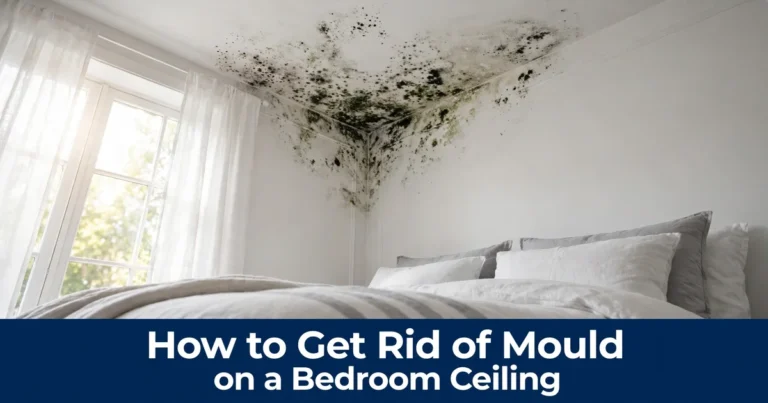
- A ring on a ceiling usually means a slow leak in the floor or roof space over it.
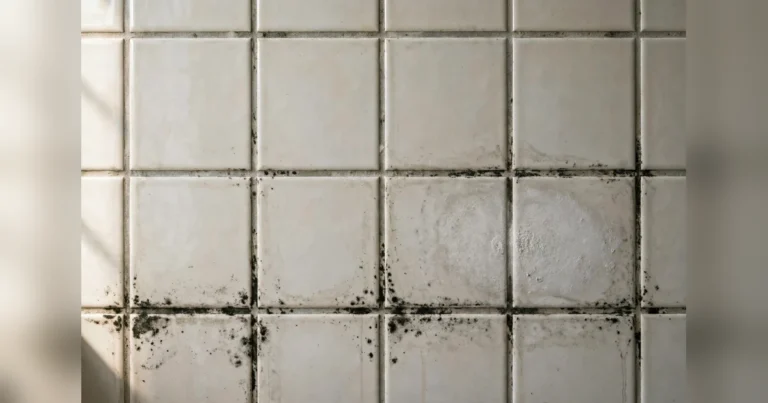
- Spots clustered along grout lines or caulk in a bathroom mean the water seal has failed there.
- Bubbling or peeling paint in one patch, or a baseboard that has swollen or lifted, often means the wall behind it is wet.
Learn the look-alikes too. White crust on brick or concrete is usually efflorescence, mineral salts left by water passing through. Dark straight lines on a ceiling can be soot or dust marking the joists, not growth. Mildew is the shallow film on shower walls and window sills. One simple check: put a drop of diluted bleach on the spot. Mildew and light surface mold fade within a minute or two. A stain that does not change needs a closer look, and soft wood that a screwdriver sinks into is rot, its own problem.
Coughing, a blocked nose or itchy eyes that ease up when you leave the house are a reason to go looking. They are not proof of what you will find.
How do you check a house for mold, step by step?
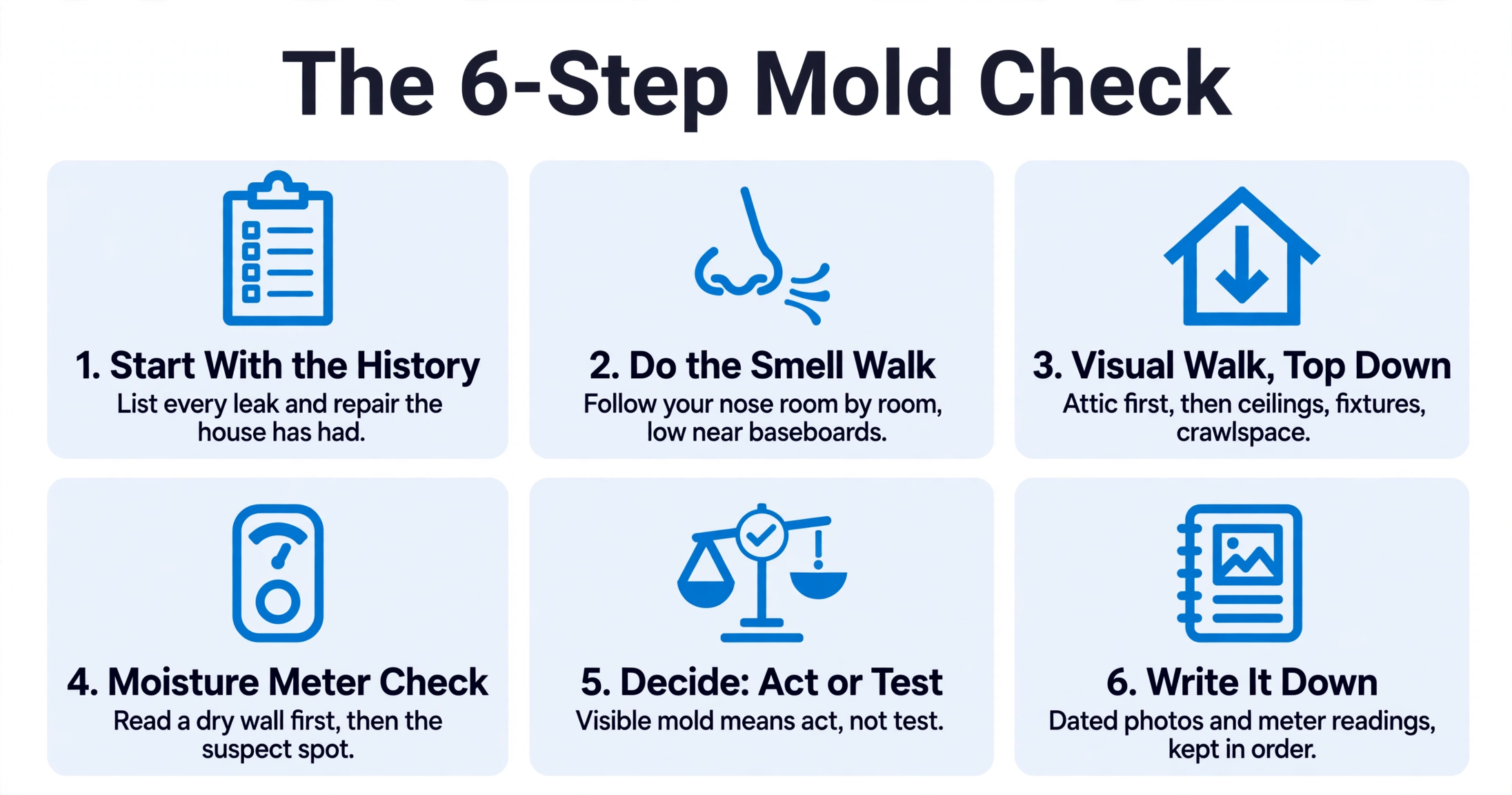
Work in this order: history, smell, eyes, meter, decision. Do not hunt the mold. Hunt the water. Mold is only the footprint the water left behind.
Step 1. Start with the history. List every leak, flood, roof repair and plumbing job the house has had, and when. Mold follows old water, so the history points the search.
Step 2. Do the smell walk. The best detection tool in this guide costs nothing. Close the house up, go out for a few hours, then walk back in and follow your nose room by room. Get low, near the baseboards. Open closets and the cabinets under sinks. Smell at the air vents while the system runs. Write down where the smell is strongest. That note is a map: a smell trapped in one closet points at that wall, a smell at a vent points at the air system, and a smell after rain points at water getting in.
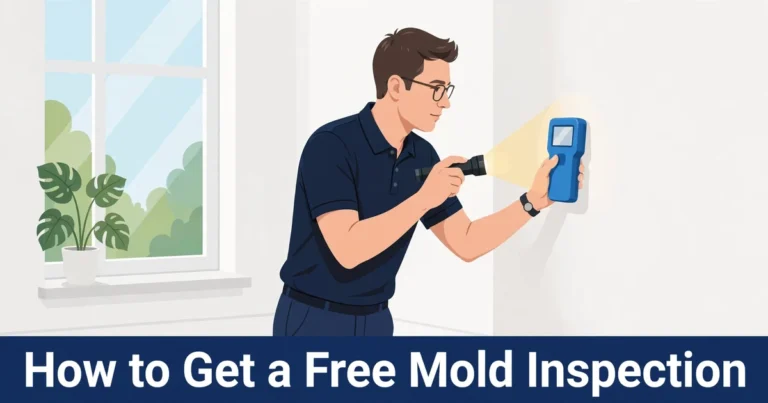
Step 3. Do the visual walk, top down. Attic first, then top floor ceilings and outside corners, then every plumbing fixture, then the basement or crawlspace. Shine your flashlight at an angle across walls and ceilings. Fuzzy growth casts a tiny shadow under angled light that flat light hides.
Step 4. Use the moisture meter the honest way. Take your first meter reading on a wall you know is dry. That reading is the only number that means anything in your house. Published guides argue about danger lines, citing figures from 16 percent to over 20 percent for wood and drywall. Skip the argument. Read the dry section of the same wall first, then the suspect spot. A spot far above its own dry neighbor is wet, whatever number a website gave you.
Step 5. Decide. Visible growth means act, do not test. A smell with no source means keep following the water. A test only makes sense when its result would change what you do next.
Step 6. Write it down as you go. Take dated photos, one wide shot and one close up, and photograph the meter reading while the meter is on the wall. If this ever becomes a conversation with a landlord, an insurer or a buyer, that folder is your evidence.
A full sweep of a 2,000 square foot home takes about an hour and a half, plus about half an hour for any room you stop to investigate.
Where does mold hide in a house?
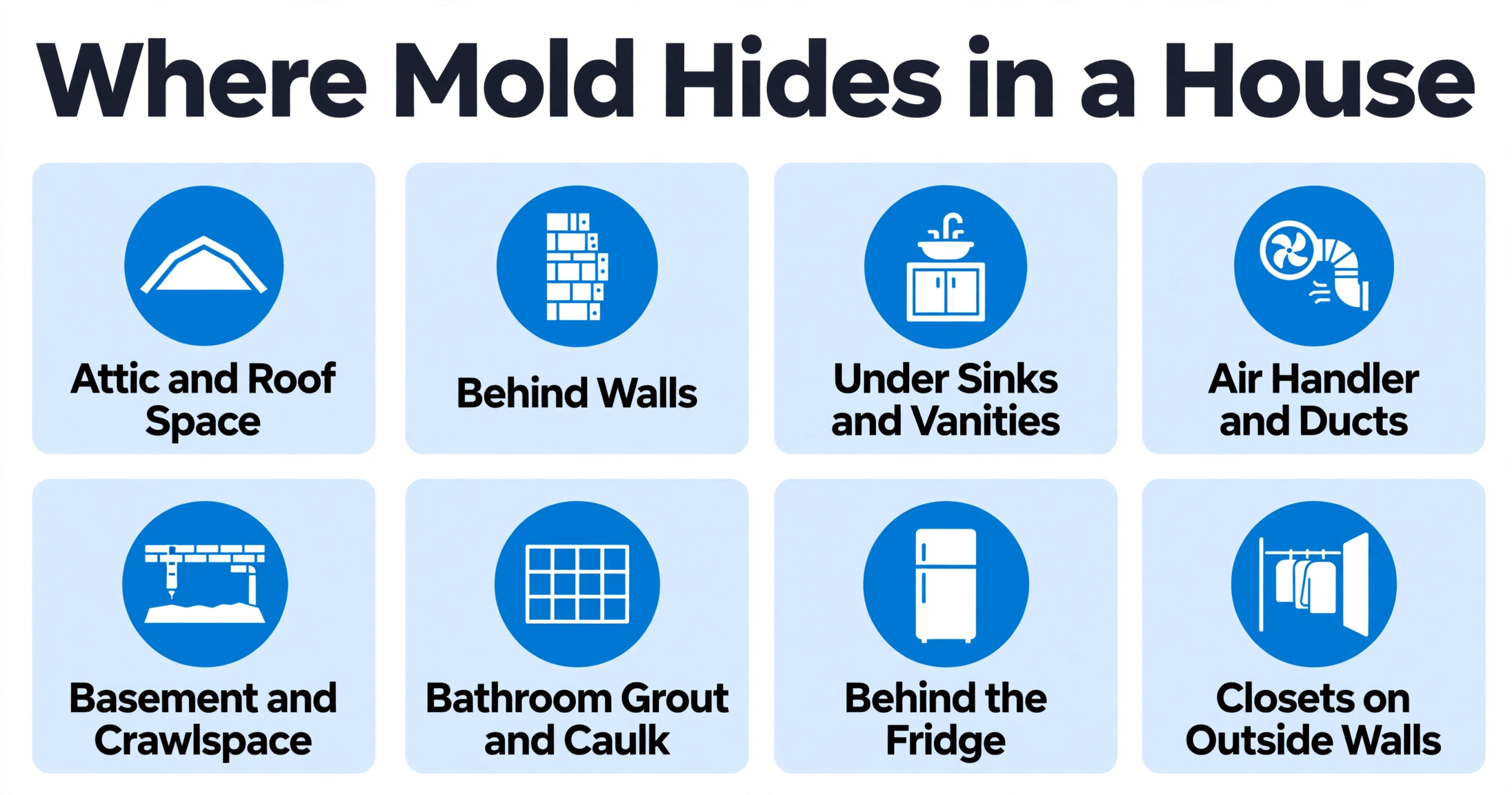
Mold hides where water sits unseen: inside walls, under floors, above ceilings and inside the air system. The EPA’s classic hiding places: The back side of drywall, wallpaper and paneling. The top side of ceiling tiles. The underside of carpets and their pads. Inside walls around pipes that leak or sweat. The wall behind heavy furniture, where damp air gets trapped. Inside ductwork. And in roof materials above the ceiling.
Then there are the spots almost every guide misses and inspectors check first:
- Behind and under the toilet, where a failed wax ring leaks a little with every flush.
- Under bathroom vanities and kitchen sinks, at the back of the cabinet where a slow drip never gets seen.
- Behind the dishwasher kick plate, the floor level panel nobody removes.
- At the fridge water line and drip pan, the classic slow leak of the whole house.
- Inside the wall at the washing machine connections, and around the water heater.
- In closets on outside walls, where cold surfaces collect condensation.
The air system deserves its own paragraph. Check the air handler before the bedrooms. Mold growing at the coil rides the fan into every room the system serves. Wet dust collects on cooling coils, drain pans overflow when their lines clog, and the growth gets blown through the whole house. Look into the handler, check the drain pan, shine a flashlight into a supply vent. If the musty smell arrives when the system starts, the system itself is the first suspect. Experienced inspectors name the air conditioner and the basement as the two most common sources in a home for a reason.
How do you check for mold behind walls?
You check behind a wall without opening it: smell, meter, then a camera through one small hole if the first two agree. If the smell is strongest at an electrical outlet, look inside that wall first. A wall cavity breathes through every hole cut into it, and outlets and switch plates are the holes it breathes through most.
Start with the meter on the surface. Read a known dry section of the same wall, then the suspect area, then work outward until readings fall back to the dry line. You have drawn the wet area without touching a tool. A thermal camera can speed this up by showing cold patches that often mean damp material, but treat it as a lead, not an answer. Cold patches have other causes. The meter confirms them.
If the smell and the meter both point at one spot, a borescope through one small drilled hole gives you eyes inside the cavity. That step comes before opening anything. Do not start by pulling off wallpaper or cutting a big hole. The EPA warns that disturbing hidden growth can release a very large number of spores into the room. If a small hole is truly needed, keep children, pets and anyone with asthma or a weak immune system out of the room, and wear an N95 mask, gloves and sealed goggles. Renters skip this step entirely. Your version is in the renting section below.
Do home mold test kits work?
Home kits work at one narrow job and fail at the one job people buy them for. A lab report can tell you mold is in the air. It cannot point at the wall it came from. Your nose, a flashlight and a moisture meter can.
A petri dish left open in the cleanest house in California will grow mold. That is not the test failing you. That is the test working exactly as it works, and it is why it cannot clear your house either. Mold spores float in every home on earth. A dish that grows colonies has told you that your house is on earth. The American Industrial Hygiene Association has criticized these kits for years for exactly this reason, and no, the number of colonies is not a health score. No agency sets one. Any chart that grades your home by colony count is a seller’s chart, not a standard.
Here is the honest breakdown:
| Test | What it can tell you | What it cannot tell you |
|---|---|---|
| Petri dish kit ($10 to $50) | Spores landed and grew in that room | How much mold you have, where it grows, whether it matters |
| Swab or tape sample sent to a lab ($25 to $75 per sample) | The type growing on that one visible spot | Anything about the rest of the house |
| Quick antigen test (about $5 to $12) | Whether settled dust holds water damage molds | How much, where, or whether hidden growth is active |
| ERMI or HERTSMI dust test ($155 to $290) | Which mold types have lived in your dust, including old problems | Where it is growing now, or whether the problem is past or present |
The one home sample that earns its money is the swab or tape lift on a spot you can already see, when knowing the type would change a decision, for example in a dispute or at a doctor’s request. Everything else a kit tells you, your senses told you first, for free.
How do professionals detect mold?
A professional inspection is the same method you just read, done with better tools, a trained eye and a written report at the end. The visit usually takes one to two hours. Expect a full visual inspection of the house, moisture readings mapped across suspect walls and floors, and a thermal camera where it can help. Expect the inspector to check the attic, the crawlspace and the air handler, not just the room that smells.
Sampling, when it happens, follows rules a kit cannot follow. Air samples are taken in the suspect rooms and one is taken outdoors on the same day. That outdoor sample is the control. Indoor results only mean something when read against it, because outdoor air carries mold too. Surface samples are taken where growth is hard to identify by eye. The report then names what was found, where the moisture comes from and what to do about it, in a form a landlord, an insurer, a buyer or a doctor can act on.
Look for real credentials. Inspectors certified through bodies such as the ACAC, or trained under AIHA or IICRC standards, have been examined on this method. Some inspectors work with a trained detection dog. A dog’s nose can point at a hidden source without opening anything, and a house takes about an hour. Treat the dog the way its handlers do: the alert starts the check, and the inspector still confirms it with meter readings or a sample. And know this before you book anyone: a standard home inspection during a purchase is not a mold inspection, unless mold work is added to it.
What is the difference between testing your house and testing your body?
Testing your house looks for growth and water. Testing your body is a medical question, and no home kit answers it. People mix these up constantly, and a whole set of searches on mold exposure and mold toxicity comes from that mix up.
Here is the part that matters. Doctors and health agencies do not read your symptoms against a spore count, because there is no agreed level to read them against. Tests are only weakly linked to health results, which is why a good inspector treats a test as one small piece of the picture. Experienced inspectors also warn that the expensive urine mycotoxin tests sold to worried homeowners usually do not reflect actual mold growth in that person’s home. If a doctor orders one for a medical reason, that is between you and the doctor. Just do not expect it to say anything about your walls.
You may also see news from October 2026 about a new urine test cleared by the FDA. Read it carefully. That test is for invasive aspergillosis, a rare and serious infection in hospital patients whose immune systems are very weak. It says nothing about the mold in a home, and it is not a home test of any kind.
Symptoms can start the search. They can never finish it. Only finding the growth, or the water feeding it, finishes it. So if your household feels worse at home and better away, spend the money on finding the moisture, and take the health questions to a doctor.
How much does mold testing cost?
It depends on the route, and the published prices disagree because the service is not standardized. These are published ranges from the sources named, not quotes for any one company.
| Route | Published cost | Source |
|---|---|---|
| Home test kit | $10 to $50 | Angi, updated August 2026 |
| Lab fee per mailed sample | $25 to $75 | Kit makers and lab price lists |
| ERMI dust test | $290, shipping included | Mycometrics price via a mold illness community site |
| HERTSMI-2 dust test | $155 | Same source |
| Professional inspection | $200 to $600 | MoldGuide |
| Professional inspection | $600 to $1,000 | Angi |
Read together, a professional inspection lands between about $200 and $1,000 for most homes, with house size and sample count moving the price. The higher end does not buy a fancier number. It buys the moisture source found, the hidden areas checked and a report other people accept.
When should you call a professional instead?
Call a professional when the problem is big, hidden, in the air system, or tied to money or health paperwork. The clear cases:
- The growth covers more than about 10 square feet.
- The smell is strong and your own hunt found no source.
- Mold is in or near the heating and cooling system. Do not run a contaminated system until it is checked.
- The water came from a flood, a sewage backup or any dirty source.
- You are buying or selling, and the finding will move money.
- You are in a dispute with an insurer, a landlord or a contractor, and need a report that stands up.
- A cleanup is finished and you want proof it worked. Checking a cleaned area is the one testing job the EPA names as useful.
- A doctor has asked for information about the home.
Below those lines, a careful homeowner with a meter and a free afternoon can do this detection work and know where they stand.
How often should you check your house for mold?
Run the full check twice a year, and a short targeted check after any water event. Spring and autumn suit most homes. The short check is for the day something goes wrong: a burst pipe, a roof leak in a storm, an overflowing washing machine, a failed water heater. Anything that stayed wet past 48 hours gets checked, because that is the window where growth starts.
Vacant homes need a different rule. An empty house grows mold in the dark and nobody smells it. A vacant home needs a hygrometer and a checking schedule, not hope. This is not a small edge case. An analysis of 23,174 inspections released in September 2026 by a Florida mold inspection company found unoccupied properties were about 77.6 percent more likely to show new warning signs of mold or moisture than occupied ones. That is company data, not a government figure, but the lesson fits Santa Barbara well. A second home, a rental between tenants or a house shut up while you travel has no nose living in it. A cheap humidity meter checked on a schedule, or a leak sensor under the water heater that alerts your phone, stands in for the nose that is not there.
What mistakes make people miss mold?
The same handful of mistakes account for most missed mold. Avoid these and your check is already better than most:
- Testing before fixing the water. The result changes nothing. The water decides everything.
- Painting over a stain to watch whether it returns. Paint forgets nothing. It hides a stain for one season, and the moisture meter finds the same wet spot in ten seconds, in the dark, years later. Meter the wall today instead.
- Trusting a kit’s colony count as a health grade. No agency sets such a scale.
- Taking one indoor air sample with no outdoor sample to compare it with. The number has nothing to be read against.
- Opening a wall or stripping wallpaper on a suspicion. The disturbance can release a large number of spores. Small hole and camera first, or a professional.
- Bleaching a soft, porous surface and calling the lighter color a cure. Dead mold can still set off allergies, and roots inside porous material survive.
- Checking only the room that smells. Smell travels through ducts and wall cavities, and the source is often one room away.
- Skipping the top and bottom of the house. Roof leaks and crawlspace damp feed the rooms in between.
Are you renting? How to check without opening anything
Renters detect the same way, but they document instead of drilling. You can do the smell walk, the visual walk and the flashlight checks. You cannot cut inspection holes, pull up flooring or open walls, and you should not try.
Your tools are a phone camera and dates. Photograph every stain, bubbling patch of paint and drip, wide shot and close up, and keep the photos in order. Note when you first smelled the problem and which rooms it affects. Then notify your landlord in writing, not only by phone, and keep a copy. The EPA tells renters to report leaks and moisture problems to the building owner right away. A dated written notice starts the repair duty and protects you if the problem grows. If symptoms are part of the picture, write that down too, in the same plain style. Facts and dates persuade. Arguments do not.
Frequently asked questions
Is a standard home inspection the same as a mold inspection?
No. A standard purchase inspection looks at the house in general. A mold inspection follows the moisture method in this guide, with meter mapping and samples where needed. It is a separate service unless added on purpose.
Can you smell mold before you see it?
Yes, and this is normal. The musty smell comes from gases that active growth gives off, and they travel through wall cavities and ducts. A smell with no visible source is the classic sign of hidden growth.
Does black mold need a special test or special handling?
No. The CDC position is that color does not show how dangerous a mold is, and the dark types are handled like the rest: remove the growth and fix the moisture. There is no separate black mold test worth buying.
How long does a professional mold inspection take?
About one to two hours for most homes, longer when hidden areas need investigating.
Will a test prove that mold is making me sick?
No test can do that. There is no agreed safe or unsafe level to measure your home against, and symptoms have many causes. A test can find growth and water in a house. What it means for your health is a doctor’s call.
Is it worth paying for a mold dog?
Yes, in the right case: a large home, a smell with no source, or a purchase where opening walls is not an option. The dog points, the inspector confirms. On its own as a final answer, it is not enough.
The short version
If the smell is in your Santa Barbara home and the source will not show itself, that is exactly the case this guide says to hand over. Call (805) 765-0923 for an inspection only visit: no cleanup to sell you, just the moisture source found, the findings in writing and a clear next step.