Black Mold Inspection in Santa Barbara, CA
Found dark spots or smell something musty? Get a straight answer about what’s in your home from an inspection-only service that doesn’t sell remediation.
✓ Inspection-only no remediation sales
✓ 24-hour service
✓ Local Santa Barbara experts
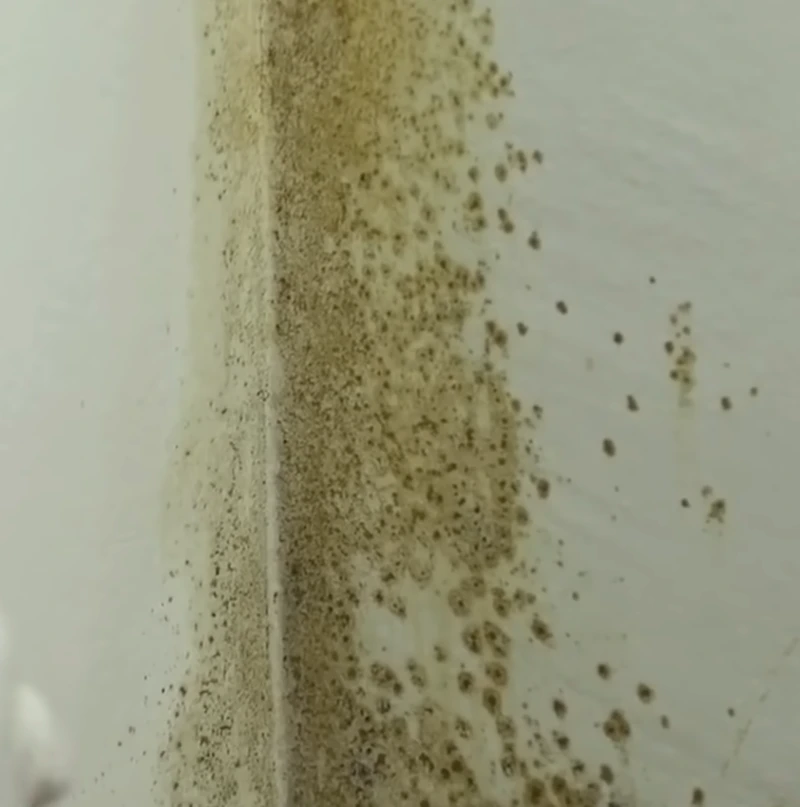
Finding dark spots on a wall or catching a musty smell every time you open a closet is unsettling, especially once the words “black mold” start running through your head. This page explains what black mold actually is, when it’s a real problem, and exactly what a professional black mold inspection involves.
One thing up front: we are an inspection-only service. We don’t sell remediation, and we don’t earn referral fees from anyone who does. Our only job is to give you a straight answer about what’s in your home and what to do next. Whether you own your home, you’re buying, or you’re renting start here.
What Is Black Mold, Actually?
The species behind the name
“Black mold” most often refers to Stachybotrys chartarum, a mold that grows on materials that stay wet for a long time. The name comes from its dark greenish-black color but color alone never identifies a species. Only laboratory analysis of a sample can do that. Many dark-colored molds are not Stachybotrys, and Stachybotrys doesn’t always look black.
Where black mold grows in homes
It needs two things: constant moisture and something to eat. It feeds on cellulose the plant fiber in drywall paper, wood, ceiling tiles, and cardboard. That’s why it shows up behind baseboards under a slow plumbing drip, inside a wall fed by a roof leak, on the back of drywall in a chronically damp bathroom, or on subflooring over damp ground. If a material dries out, growth stops which is why the moisture source matters more than the mold itself.
What black mold looks like and what it doesn’t prove
It often appears as dark greenish-black spots or patches, sometimes slimy when wet and powdery when dry. But plenty of harmless discoloration looks similar: old water stains, dirt, even some paints. A dark spot proves you had moisture at some point. It doesn’t prove you have an active mold problem right now, and it certainly doesn’t prove the species. That’s what inspection and, when warranted, lab testing is for.
Black mold vs. ordinary household mold
Most household mold the pink film in a shower, the white fuzz on a windowsill is common, surface-level, and manageable with cleaning and ventilation. Black mold (Stachybotrys) is different mainly in what it signals: it grows where materials have stayed wet for a long time, which means a long-term moisture problem, not a housekeeping problem. Finding it means finding the water source, because the water is the actual problem.
Key point: A dark spot proves you had moisture. It doesn’t prove you have an active mold problem right now that’s what inspection and lab testing are for.
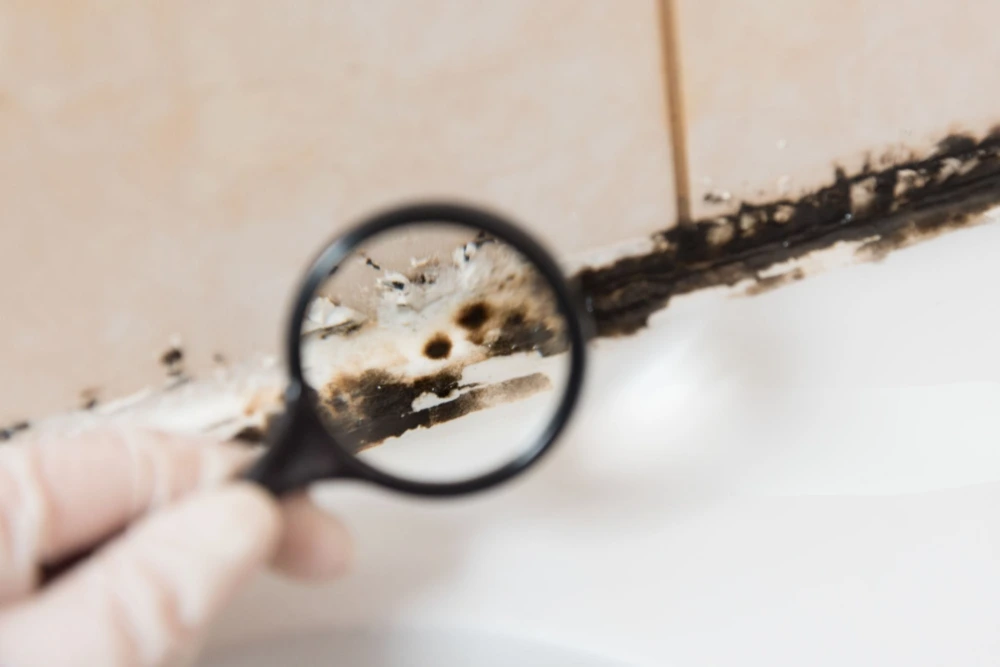
Is Black Mold Dangerous?
Short answer: it can be a genuine health concern for some people, but it isn’t the poison gas that movies make it out to be. Here’s the calm version.
Mycotoxins, explained
Some molds, including Stachybotrys chartarum, can produce mycotoxins chemical compounds that are toxic in high doses. The key word is can: not every colony produces them, and the mere presence of mold tells you nothing about mycotoxin levels. Mycotoxin testing exists, but it’s a specialized test that’s rarely the right first step. Don’t let anyone scare you with the word alone ask what it would change about your next step.
Who’s most sensitive
Mold exposure affects people differently. Those who tend to react most: children, elderly people, anyone with asthma or allergies, and people with weakened immune systems. Reactions are usually respiratory or allergy-like coughing, congestion, irritated eyes, worsened asthma. If someone in the home has ongoing symptoms that improve when they leave the house, that’s worth mentioning to both your doctor and your inspector.
See a doctor for symptoms
An inspector assesses buildings, not bodies. No mold test air sample, swab, or otherwise can diagnose a health condition or prove that mold made someone sick. If you’re dealing with persistent symptoms, see a medical professional. Our job is to tell you what’s growing in the building and where the moisture is coming from; your doctor handles the health side.
Where Black Mold Comes From: The Moisture Sources
Mold is a moisture problem wearing a mold costume. Every black mold situation traces back to water. The usual suspects:
| Moisture source | How it happens | Warning sign |
|---|---|---|
| Roof leaks & flashing | Water gets past damaged shingles, cracked flashing around chimneys and vents, or clogged valleys, then soaks the attic side of drywall or ceiling materials for months. | Ceiling stains by then, the back of the drywall may have been wet all winter. |
| Plumbing leaks | The worst leaks are slow: a supply-line seep inside a wall cavity, a weeping drain fitting, a toilet base that leaks a little with every flush keeping wood and drywall damp for months with no puddle. | Often invisible suspect it when mold appears near bathrooms or kitchens. |
| Bathroom ventilation | Hot showers pump gallons of moisture into the air; without a fan vented outdoors, it condenses on walls, ceilings and inside wall cavities. | Moisture trapped behind tile and drywall. |
| HVAC condensation | Air conditioners drain moisture through a condensate line; when it clogs, water backs up into drip pans, ductwork and surrounding materials. | Musty odor when the AC kicks on. |
| Groundwater & drainage | Poor grading, failed drainage or hillside runoff pushes water against the foundation; it wicks into walls and floors from below. | Dampness wicking up lower walls and floors. |
Not sure which one?
That’s exactly what the inspection finds. Moisture mapping traces it to the source.
The key principle: no moisture fix, no lasting mold fix.
You can clean, treat, or even remove mold, but if the moisture source stays, the mold comes back. Every legitimate remediation plan starts with stopping the water.
Signs You May Have a Black Mold Problem
What to look and smell for around your home:
What to look for
- Dark spots that keep returning after cleaning
- Water stains, bubbling or peeling paint
- Warped baseboards, soft drywall, warped flooring
- Check under sinks, behind toilets, around windows
What to smell for
- A musty, earthy odor that won’t go away
- Stronger after rain or in humid weather
- Smell it but can’t find it? It may be inside a wall cavity
Staining vs. active growth: a stain proves water was there at some point. Moisture meters tell whether it’s dry history or a current problem.
LOCAL FACTORS
Santa Barbara Homes and Mold
Mold here isn’t generic it’s shaped by this city’s climate, housing stock, and hillsides. A local inspector knows where to look:
Rainy season: Nov–Apr
Santa Barbara is dry May through October and wet November through April, with most rain falling November to March. Nearly all rain-driven water intrusion roof leaks, failed flashing, saturated hillsides, water against foundations happens in those few winter months. If you’ve been meaning to check the house for mold, the rainy season (or right after it) is when leaks are easiest to find.
Marine layer humidity
The marine layer cool ocean air trapped under warmer air by the Santa Ynez Mountains brings morning fog and keeps humidity in the 45–55% range even on clear days. Poorly ventilated bathrooms, closets, and garages can stay damp all summer. Mold here isn’t only a winter problem.
Pre-1969 housing stock
Because Santa Barbara has seen very limited new construction, the vast majority of homes were built before 1969 most are 55+ years old, many dating to the 1920s. That’s decades of plumbing, roofing, window seals, and undocumented repairs. Pre-1969 construction predates modern moisture-control standards, which is exactly what a mold inspection is designed to look behind.
Spanish Colonial Revival
After the 1925 earthquake, Santa Barbara rebuilt in Spanish Colonial Revival style smooth stucco walls, red terra-cotta tile roofs, wood windows set deep in thick walls still the city’s signature look from the Riviera to Bungalow Haven. Beautiful, but aging stucco cracks and admits water, old wood windows and caulking fail, and low-pitched tile roofs have junctions that are hard to inspect. The character features are also where old leaks hide.
Hillside drainage
The city sits between the ocean and steep foothills. Homes in Mission Canyon, on the Riviera, and up in Montecito deal with steep-slope drainage winter storms can send water toward a house instead of away from it, intruding at foundations, through retaining walls, or via grading failures. Shaded, vegetation-dense foothill lots stay damp longer. When hillside water reaches a house, mold follows.
What a Black Mold Inspection Involves
Step by step no surprises, no walls cut open:
- The walkthrough: Room-by-room review bathrooms, kitchen, laundry, attic, garage, exterior rooflines and drainage reading the building for moisture history.
- Moisture mapping: Moisture meters give hard numbers on what’s wet right now; thermal imaging reveals hidden dampness behind surfaces without opening walls.
- The honest filter on sampling: Samples aren’t automatic. Testing earns its keep when the source is hidden, you need species ID, or you’re documenting for escrow or a dispute. We’ll tell you when testing won’t change your next step.
- Air vs. surface sampling: Air sampling answers “what’s floating in this room?” Surface sampling answers “what’s growing here?” A good inspection uses the right one for the situation.
- The outdoor baseline: An outdoor sample taken the same day gives the lab a control. “Elevated” means elevated versus what’s outside your front door.
- Timing — 1–2 hours, non-invasive: A typical home takes 1–2 hours on site. Lab results follow in 2–3 business days, then your full written report with findings and next steps.
Understanding Your Lab Results
Numbers without interpretation are useless. Your report explains what they mean in plain language:
What “elevated” means
Higher than your outdoor baseline not “over a government limit” (none exists for mold). The indoor/outdoor comparison is everything.
Why species ID matters
Common outdoor types drifting in are normal background. Stachybotrys or Chaetomium indoors signal a chronic moisture problem.
What reports can’t tell you
They can’t diagnose health conditions or certify a building forever. They document what’s present and guide next steps.
Smell something musty but can’t find it?
Hidden growth is the most common reason people call us. Get a straight answer.
What To Do (and Not Do) Before Your Inspection
Three small things that make the inspection more accurate and three mistakes to avoid:
DO
- ✓ Leave suspect growth alone — cleaning destroys the evidence we sample
- ✓ Run the HVAC normally — samples should reflect everyday conditions
- ✓ Gather leak & repair history — even rough dates help us know where to look
DON’T
- ✗ Bleach it — doesn’t kill roots in porous materials, just bleaches the color
- ✗ Paint over it — seals the problem in; it always comes back
- ✗ Cut drywall yourself — risks spreading contamination through the house
Mold Inspection for Buyers, Sellers & Renters
Same building science, different stakes:
Buying
A standard home inspection is visual and generalist inspectors note stains and moisture but don’t sample or identify mold. If you see red flags at a showing (musty odor, water stains, peeling paint, warped baseboards, suspiciously fresh paint in one area), a dedicated mold inspection answers what the generalist can’t. Worth knowing: Santa Barbara County disclosure paperwork includes a mold advisory telling buyers to inspect for mold and moisture an escrow inspection is the natural response.
Selling
California sellers must disclose known mold and past water damage. If you’ve remediated, keep the documentation remediation scope, moisture source fixed, and any clearance verification. Buyers (and their inspectors) treat documented, verified remediation very differently from an undocumented “we cleaned it.”
Renting
Renters face a different maze: who pays for the inspection, whether the landlord must test or just fix, and what to do about mold that’s been painted over. Document everything in writing dated photos, written notices to the landlord (keep copies), and any inspection reports. An independent inspection report is often the piece that moves a stuck landlord conversation forward. For questions about your legal rights (withholding rent, breaking a lease), talk to a tenant-rights attorney an inspector can document the building, not advise on the law.
After the Inspection: Remediation & Next Steps
- Fix the moisture first: Real remediation starts with stopping the water then containment, HEPA filtration, and removal of what can’t be cleaned.
- Vet the remediator: Containment? HEPA? Independent third-party clearance not self-verified? Get the scope in writing.
- Clearance verification: An independent inspector re-tests after cleanup. “Clear” = moisture gone, levels back to normal documented.
Prevention checklist
- Fix leaks promptly days matter, not months
- Bathroom fan vented outdoors, run 20 min after showers
- Dryer vents outdoors; clean AC condensate lines
- Walk exterior drainage before each rainy season
Black Mold Inspection FAQs
The questions Santa Barbara homeowners ask us most:
How can I tell if it’s actually black mold or just mildew?
You can’t reliably tell by looking — color alone never identifies a species. Mildew is usually surface-level (shower grout, windowsills) and cleans off easily; growth that’s inside walls, keeps returning, or follows a moisture pattern deserves professional assessment. Only lab analysis of a sample identifies the species.
Is black mold dangerous? Should I be worried about my kids or pets?
It can aggravate allergies, asthma, and respiratory irritation, and children, elderly people, and immunocompromised individuals tend to be more sensitive. But it isn’t a poison gas — the risk depends on the extent, the duration, and the person. Persistent symptoms deserve a doctor’s visit; the building side deserves an inspection.
What’s the difference between a mold inspection and mold testing — do I need both?
An inspection is the detective work: finding moisture, mapping the problem, and deciding what (if anything) needs lab analysis. Testing is the lab work on samples. You usually need the inspection first; testing is ordered when it will change your next step — identifying a hidden species, documenting for escrow or a dispute, or verifying remediation.
I can already see the mold. Do I still need an inspection?
Often yes — because what you see is usually the tip of the iceberg. The visible patch tells you mold exists; the inspection finds how far it extends, where the moisture is coming from, and whether it’s active. If the growth is small, the source is obvious, and you just need it fixed, testing may add little — but the moisture assessment still matters.
Are those $40 DIY mold test kits accurate?
They grow whatever lands on a petri dish — including normal outdoor spores — with no outdoor baseline for comparison. Almost every kit comes back “positive,” which tells you nothing useful. They’re not a substitute for professional sampling, and a scary-looking dish isn’t a diagnosis.
Should I clean or bleach the mold before the inspector comes?
No. Cleaning destroys the evidence the inspector needs to sample, and bleach doesn’t kill mold roots in porous materials anyway. Leave everything as-is until after the inspection.
Will the inspector have to cut into my walls?
No — a standard inspection is non-invasive. Moisture meters and thermal cameras find suspect areas without opening anything. If wall-cavity investigation is warranted, the inspector will explain why and recommend next steps rather than cutting uninvited.
How long does a black mold inspection take, and when do I get results?
A typical home takes 1–2 hours on site. Lab results usually follow in 2–3 business days (rush options exist). The full written report — findings, moisture map, lab interpretation, and recommendations — comes after the lab results.
How do I read my lab report — what does “elevated” actually mean?
“Elevated” means higher than your outdoor baseline sample, or an unusual indoor species mix — not “over a government limit” (none exists for mold). Your report should walk through the indoor/outdoor comparison and flag which species matter and why. If a report just hands you numbers with no interpretation, ask for one.
The seller’s mold test came back clean. Should I trust it?
A clean result is only as good as the method behind it: what was sampled, where, when, and by whom — and whether the tester had any stake in the sale going through. An independent inspection during escrow, with its own baseline and samples, is how buyers verify.
I’m buying a home in Santa Barbara — is the standard home inspection enough for mold?
Not for a real answer. General inspectors note visible issues but don’t sample, identify species, or map moisture the way a mold specialist does. Given that the county’s own disclosure paperwork advises mold inspection, a dedicated inspection during escrow is the norm for concerned buyers, not overkill.
My landlord painted over the mold. What should I do?
Document it: dated photos, written notice to the landlord (keep copies of everything). Paint seals the stain in but doesn’t fix the moisture — it will return. An independent inspection report documenting active growth is often what moves a stuck situation. For your legal options, consult a tenant-rights attorney.
Will my homeowners insurance cover mold inspection or remediation?
Sometimes, but mold coverage is narrow: most policies cap mold payouts (often around $10,000 or less) and only cover mold resulting from a “covered peril” like a burst pipe — not long-term leaks or maintenance issues. Filing a claim for a small problem can cost more in premium hikes than the payout. Check your policy’s mold sublimit before deciding.
When is the best time of year to get a mold inspection in Santa Barbara?
During or right after the rainy season (roughly November–April) — that’s when leaks are active and easiest to trace. But the marine layer keeps some homes damp year-round, so don’t wait if you see or smell something now.
BOOK NOW
Book Your Santa Barbara Black Mold Inspection
Thorough on-site assessment, moisture mapping, lab testing only when warranted, and a plain-language report from an inspector with no stake in selling you remediation.
Available 24 hours • Serving Santa Barbara, Montecito, Goleta & Carpinteria