24-Hour Mold Inspection in Santa Barbara, CA
Suspect mold but can’t see where it’s coming from? We inspect hidden areas and identify moisture issues before they become bigger problems.
100+ ReviewS
Licensed & Certified
100% Satisfied clients
What Does a Mold Inspection Look For?
An inspection looks at the conditions that lead to mold not just visible growth. That includes water staining, plumbing leaks, roof or exterior water intrusion, damp building materials, unusual odors, condensation, and hidden moisture in bathrooms, kitchens, under sinks, attics, crawl spaces, HVAC areas, walls, and ceilings.
Can you have mold without seeing it? Yes. A mold inspection Santa Barbara can investigate a musty odor, past water damage, recurring staining, or unexplained moisture that can justify further investigation though no inspection can see through every wall, and we’ll always explain what was and wasn’t accessible.
Mold Testing Santa Barbara: When Is Testing Appropriate?
Mold testing answers a different question from a visual inspection.
Air or surface samples may be considered when there is a specific reason to collect evidence. Samples can then be submitted for laboratory analysis when appropriate. Testing is not always necessary.
If visible mold and its moisture source are already clear, a sample may add little useful information.
On the other hand, testing can be helpful when there is a specific question about the indoor environment, suspected hidden conditions, a property transaction, or post remediation conditions.
What Does Mold Testing Actually Tell You?
Testing can provide information about the material or air sample that was collected. It does not, by itself, tell you the complete condition of a building. A laboratory result needs to be interpreted in the context of the property, inspection findings, moisture conditions, sampling location and the question the testing was meant to answer.
Air Sampling or Surface Sampling?
The choice depends on what you are trying to find out. Air sampling evaluates airborne particles collected during the inspection. Surface sampling collects material from a particular location. Neither method replaces a careful building inspection.
Inspection vs. Testing: What’s the Difference?
| Mold Inspection | Mold Testing |
| Evaluates the property itself | Evaluates collected samples |
| Answers “what’s happening, and why?” | Answers “what does this specific sample show?” |
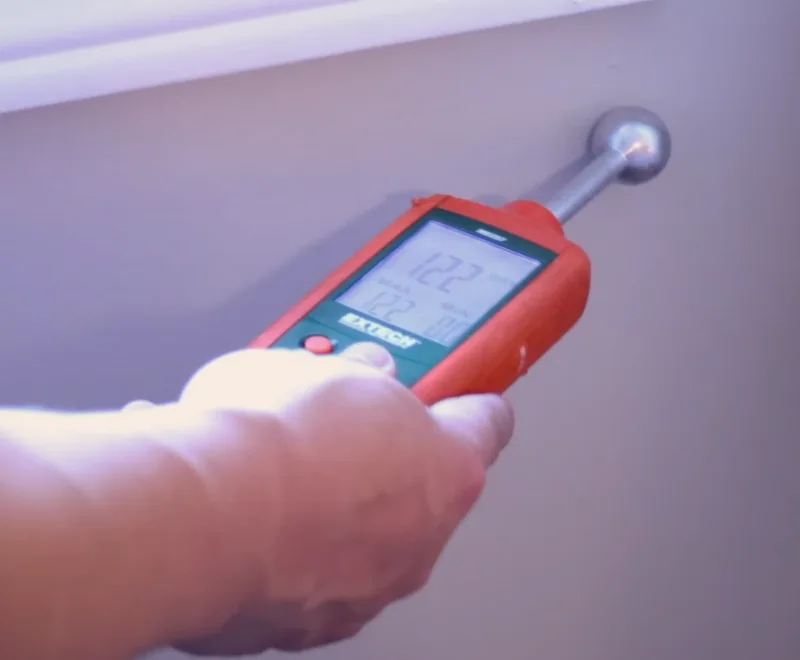
| Uses visual assessment, moisture meters, and thermal imaging | Uses air or surface sampling followed by lab analysis |
| Usually the right starting point | Only needed when there’s a specific question to answer |
| Can stand alone as a complete assessment | Only makes sense when interpreted alongside inspection context |
| Identifies moisture sources, water damage, and visible growth | Provides lab data about the air or surface sample collected |
| Doesn’t require a lab | Requires lab analysis when applicable |
| Recommended for leaks, odors, visible growth, and home purchases | Recommended for property transactions, post-remediation checks, or disputes needing documented evidence |
Why Santa Barbara Properties Can Have Moisture Concerns
Santa Barbara has a coastal Mediterranean climate. City planning documents describe warm, dry summers, cool winters and humid marine air that can bring fog and low clouds along the coast.
NOAA climate normally for the Santa Barbara station show that rainfall is concentrated heavily in the cooler part of the year, with an annual normal of about 19 inches for the 1991 to 2020 period.
That does not mean every Santa Barbara property has a mold problem. It does mean moisture deserves attention when there is water intrusion, condensation, poor ventilation or a history of leaks.
Coastal Conditions and Condensation
A property near the waterfront is not exposed to the same conditions as a home farther inland. The City identifies a coastal zone extending roughly half a mile inland from the ocean in much of Santa Barbara.
Marine air, cool surfaces and indoor humidity can contribute to condensation under the right conditions. The inspection should look at the actual property rather than assume that location alone means there is mold.
Rain, Roof Leaks and Water Intrusion
Santa Barbara receives most of its annual rainfall during the cooler months. After significant rain, areas around roofs, windows, exterior walls, drainage paths and previously repaired leaks may deserve attention when there are signs of water entry.
Why Santa Barbara Homeowners Trust Our Mold Testing Process
⭐Modern equipment
⭐IAQA certified mold inspector
⭐Clear communication
⭐Independent Testing
⭐Verify Remediation
⭐Laboratory Analysis
⭐Easy-to-Understand Reports
⭐Affordable mold inspection
⭐Testing for Any Property
⭐24/7 Emergency Mold Inspection
⭐Free Estimate & Consultation
Do I Need a Mold Inspection or Mold Testing?
What Does a Mold Inspection Include?
The exact scope depends on the property, but an inspection may include:
Certified Mold Inspector in Santa Barbara
A certification can show that an inspector has completed training through a professional organization, but certification is not the same thing as a California state mold inspection license.
California does not currently have a state licensing requirement specifically for mold assessors.
When choosing a certified mold inspector, ask what training they have, what their inspection includes, whether they perform remediation themselves, what testing methods they use, and what you will receive after the inspection.
Most importantly, ask whether they can explain what the inspection can and cannot determine.
Mold Inspection for Home Buyers in Santa Barbara
Buying a Santa Barbara property can involve older homes, remodeled properties, condominiums and multi unit buildings.
The City reports that about 75 percent of its housing stock was built before 1980.
That does not mean an older home has a mold problem. Age simply makes the property’s maintenance history more relevant.
If you are buying near State Street, the Mesa, Eastside, Westside, San Roque, Samarkand, Riviera, Downtown or West Beach, the inspection should focus on the actual building rather than rely on neighborhood assumptions.
Should I Get a Mold Inspection During Escrow?
If there are signs of moisture, past water damage, a musty odor, visible growth or concerns raised during the general home inspection, an independent mold inspection may help clarify the situation before closing.
A mold inspection is not a guarantee that every concealed condition will be found.
Mold Inspection for Homeowners
- You see unexplained growth
- A musty odor keeps returning
- Your property has had a leak
- A roof or plumbing problem caused water damage
- Staining keeps returning
- You suspect moisture behind a wall
- You are unsure whether testing is necessary
Mold Inspection for Landlords and Property Managers
Mold complaints in rental properties should be handled carefully and documented.
An inspection can help identify visible conditions, moisture sources and areas that may require further evaluation.
California’s Department of Public Health notes that mold and dampness can fall under California housing requirements when cited by a code enforcement authority.
Legal responsibilities can depend on the facts of the property and tenancy, so an inspection should not be presented as legal advice.
Residential and Commercial Mold Inspection
We can investigate mold and moisture concerns in:
- Single family homes
- Condominiums
- Townhomes
- Apartments
- Rental properties
- Offices
- Retail spaces
- Multi unit buildings
- Other occupied or commercial properties
The City of Santa Barbara maintains public information on residential development, permits and multi unit housing projects, reflecting the range of property types being built, remodeled and maintained in the area.
Our Mold Inspection Process in Santa Barbara
1. We Start With Your Concern
A recent leak, recurring staining, visible growth, a rental complaint or a home purchase can change what needs to be investigated.
2. We Review the Moisture History
Previous plumbing leaks, roof problems, flooding, repairs and recurring dampness can provide useful clues.
3. We Conduct a Visual Inspection
Accessible areas are examined for visible growth, staining, water damage, moisture related conditions and other signs that warrant closer inspection.
4. We Investigate Moisture
Moisture meters and thermal imaging may be useful where appropriate. These tools help investigate moisture conditions. Thermal imaging does not directly identify mold.
5. We Look at Areas of Concern
Bathrooms, kitchens, plumbing areas, attics, crawl spaces, HVAC areas and other accessible locations may be examined based on the property and reported concerns.
6. We Decide Whether Sampling Makes Sense
If testing can answer a useful question, sampling may be recommended. If it will not add meaningful information, it may not be necessary.
7. Laboratory Analysis When Appropriate
Samples are handled according to the testing method being used and sent for laboratory analysis when applicable.
8. We Document the Findings
Photos, observations, moisture information and laboratory results, when collected, should be tied back to the property and explained in plain language.
9. We Explain the Next Step
You should leave the inspection understanding what was found, what was not found, what remains uncertain and what action makes sense.
Schedule a Mold Inspection in Santa Barbara
Have a concern about mold or moisture?
Tell us what you are seeing, smelling or dealing with at the property. We can help determine whether a mold inspection, testing or further investigation makes sense.
Mold Inspection and Testing Questions Santa Barbara Property Owners Ask
We’re happy to help. If you can’t find the info you’re looking for, please don’t hesitate to reach out to us!
Call us (805) 765-0923