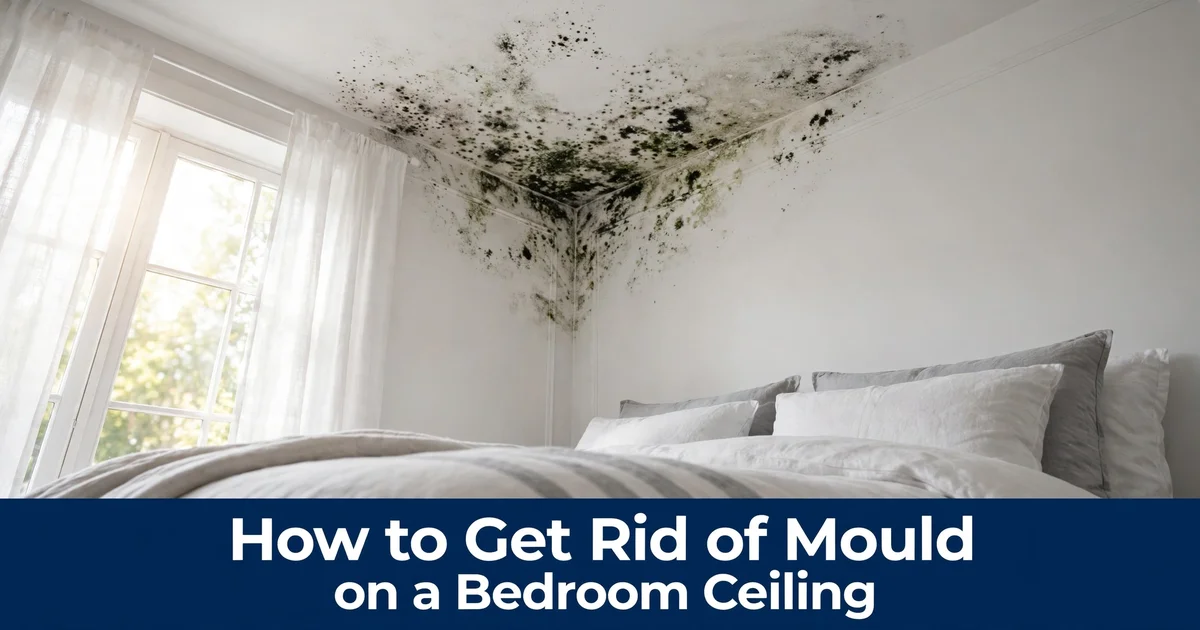
How to Get Rid of Mould on a Bedroom Ceiling
The short answer: find out why the ceiling is wet before you clean it. A small, dry patch from room moisture is a job you can do yourself; a patch with a brown ring, soft board or a damp smell is a water problem, and scrubbing first wastes your work. A bedroom ceiling is the one ceiling you breathe under all night, so it earns a diagnosis before it gets a scrubbing.
Quick facts
- Under about 10 square feet (1 square metre) is a do it yourself job. Bigger, get help.
- Mould can take hold on a damp surface in 24 to 48 hours.
- Keep bedroom air under 60 percent humidity; 30 to 50 percent is the healthy range.
- Never mix cleaners: bleach with vinegar or ammonia makes a toxic gas.
Is it condensation or a leak?
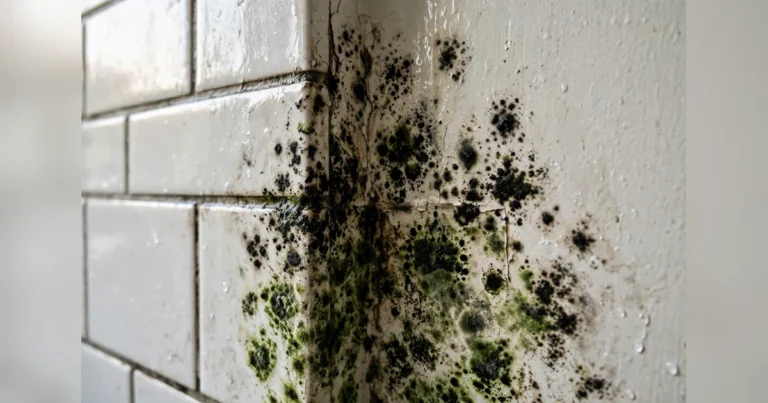
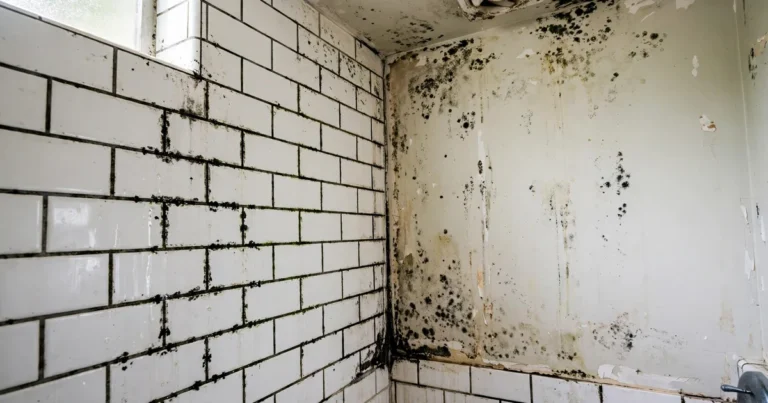
Look before you touch. The patch’s shape and feel tell you where the water came from. Mould in the corner by the outside wall is usually last night’s breath. Mould in the middle of the ceiling is usually water from above.
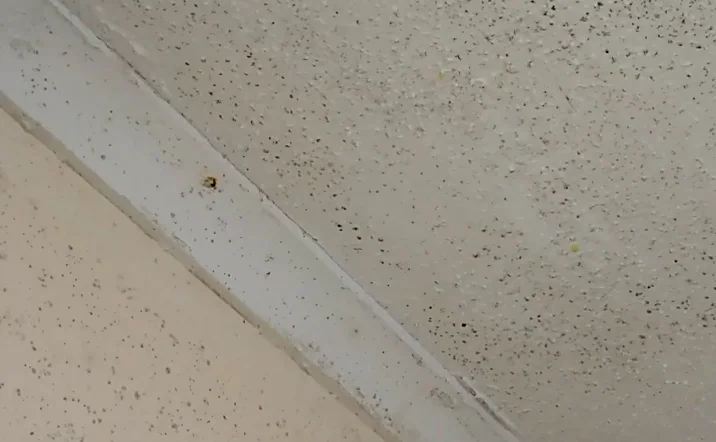
| What you see | What it means |
|---|---|
| Fine speckles spread wide, dry, ceiling firm | Condensation from room air |
| One patch, brown or yellow ring, paint bubbling, board soft | A leak from above |
| A brown stain, no growth at all | An old leak, now dry |
| A patch with straight edges | A gap in the insulation above |
If the patch has straight edges, do not look for a leak first. Look for the gap in the insulation above it. Most mould on ceiling patches in a bedroom are condensation, not a leak. Still unsure? A cheap moisture meter settles it in a minute: damp board, water from above; dry board, the room makes the water.
Is black mould on a bedroom ceiling dangerous?
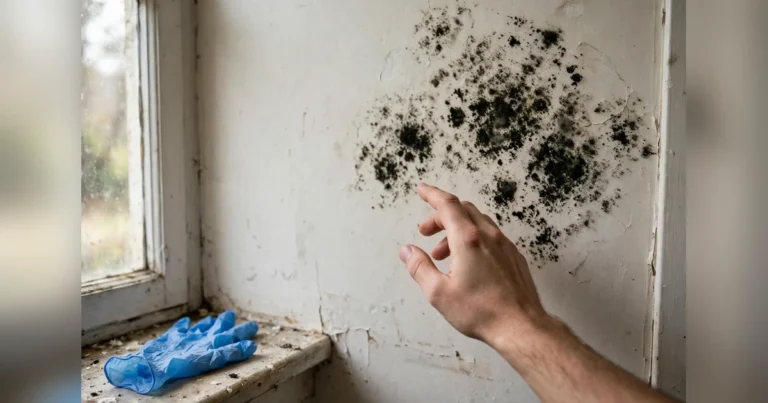
For most healthy people, a small patch brings a blocked or runny nose, sore eyes, itchy skin and sometimes a wheeze. That is not a reason to panic. It is a reason to fix it. The real risk sits with asthma, allergies, weak immune systems and lung disease: spores can trigger an asthma attack, and children and older adults face worse effects too.
Black mould is a colour, not a name. Many moulds look black, and the feared species, Stachybotrys, cannot be picked out by eye. Colour tells you about the moisture, not the species. What matters is patch size, and who sleeps under it.
What do you need before you start?
Cover the bed first, then protect yourself, then touch the ceiling.
- Plastic sheeting over the bed, pillows and carpet
- Sealed goggles, N95 or better mask, gloves
- A stable step ladder on a flat floor, never a chair
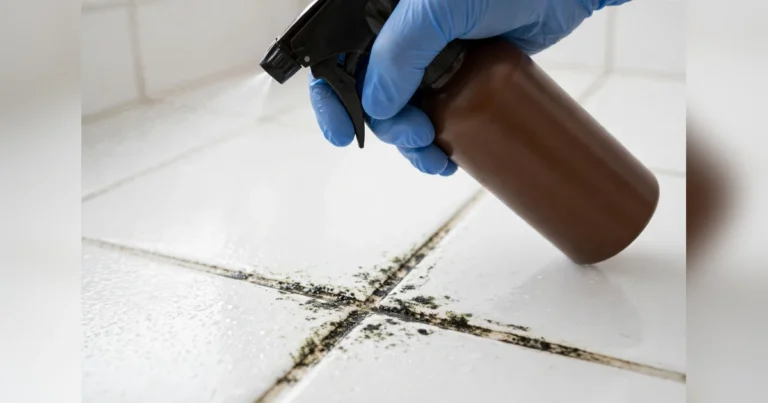
- Spray bottle of water, your cleaner, cloths, bucket
Never scrub a bedroom ceiling dry and then sleep under it that night. Everything you knock loose lands on the bed you are about to lie in. Open a window, shut the door, and keep children and pets out until dry. Bag the used cloths, take them out of the house, and wash the clothes you worked in.
How do you get rid of mould on a ceiling in a bedroom, step by step?
Scrub it off with detergent and water first: the method the US Environmental Protection Agency names for hard surfaces, and a painted ceiling is one.
- Sheet the bed and floor. Mask, goggles and gloves on.
- Mist the patch, so nothing dry is brushed into the air.
- Scrub with a cloth in warm water and mild detergent, clean edge first. The soap helps it cling.
- If growth survives, use the vinegar mix below for its full time: the waiting kills, not the rubbing.
- Wipe clean, folding the cloth to a fresh face.
- Dry it fully and fast: fan on the patch, or a dehumidifier running.
- Wash the bedding and anything soft under the work area.
Soft, porous material is the exception. Mould grows into the empty spaces in ceiling tiles and soft board, and the EPA warns it may have to be thrown away, because growth inside cannot be scrubbed out.
Which cleaner should you use on a ceiling?
Start with detergent, then vinegar. Bleach is for hard surfaces only.
| Cleaner | Mix | Leave it on | Best for |
|---|---|---|---|
| Detergent and water | Mild detergent in warm water | Scrub, wipe, dry | First pass, painted ceilings |
| White vinegar | 4 parts vinegar, 1 part water; undiluted if stubborn | 15 minutes to 1 hour | Most recommended here |
| Hydrogen peroxide, 3 percent | Straight from the bottle | 10 to 15 minutes | Small patches, bleach free |
| Borax | 1 cup in 4 litres of water, do not rinse | Scrub, leave the film | Slows regrowth; keep children and pets away until dry |
| Baking soda | 1 teaspoon in 2 cups of water | Spray, scrub, spray again | Light growth; weakest here |
| Diluted bleach | 250 ml in 4 litres of water | 10 to 20 minutes | Hard surfaces only |
| Fungicidal wash | As labelled; foam sits on ceilings | About 30 minutes | Returning growth; keep away from fish tanks and pets |
| Tea tree oil | 1 teaspoon in 1 cup of water | Leave on, do not rinse | Small patches; costly on big areas, can harm pets |
Bleach can make a ceiling look cured in ten minutes. On plasterboard it mostly lightens the surface while the water in the mix soaks toward the roots. Never mix bleach with vinegar or ammonia. Never mix vinegar with hydrogen peroxide: together they make peracetic acid, which burns skin and lungs.
Why is the stain still there after cleaning?
A shadow left behind after cleaning is usually a stain, not live mould. The stain is the mould’s shadow. Killing the growth is one job, covering the shadow is another, and swapping the order is why most ceilings get painted three times.

Clean first. Dry fully. Fix the moisture. Then stain blocking primer, and repaint with mould resistant paint if the room stays damp. Paint over live mould and the colony keeps eating the paper backing behind the coat and grows through it. Anti mould paint promises years of protection, but the promise covers the paint film, not the room. Wet air beats good paint every time.
Why does mould keep coming back on a bedroom ceiling?
Because the water is still there. Cleaning removes the growth. It does not remove the reason. Eight hours of breathing in a closed room is a moisture source nobody counts, and all of it rises to the coldest surface in the room. No cleaner can remove mould for good while that water stays. Mould does not die off in summer either. It dries, sleeps, and wakes when damp air returns.
A fan that runs is not a fan that works. Hold a tissue to it. If the tissue drops, the steam stays.
- At night: door slightly open or trickle vents cracked, and a low, steady heat so cold surfaces stay dry.
- In the morning: wipe window water off, wring the cloth into the sink (never onto a radiator), air the room, and leave the bed unmade an hour so bedding dries.
- Each week: dry laundry outside the bedroom, or in a closed, aired room. Bed and furniture a few centimetres off outside walls.
- Each season: check insulation above the bedroom, clear gutters, check the roof before the wet months.
When should you stop and call a professional?
Stop when the job stops being a cleaning job. When the same patch comes back in the same shape, the ceiling is not dirty. It is wet, and it is telling you where.
Get help, or an inspection first, when:
- The patch is bigger than about 10 square feet, or about 1 square metre
- The board is damp, soft or sagging, or ringed by a brown stain
- A musty smell with no visible source: growth is hiding in the ceiling space
- An old textured or popcorn finish from before the mid 1980s can contain asbestos. Do not scrape it
- Your heating or air system may be carrying mould. Do not run it until checked
- Anyone with asthma or a weak immune system should not be the one scrubbing overhead
If growth is inside the plasterboard, the bad section is cut out about 30 cm past the visible edge, the space above checked, and the ceiling rebuilt.
Published guide prices, in US dollars: a small do it yourself clean, $30 to $75; an independent inspection, $300 to $600; a minor professional clean up, $500 to $1,500; a major job inside the ceiling space, $1,500 to $5,000 or more. These are guide prices, not quotes.
Do you rent? What must your landlord do about mould?
Report it in writing before you clean it. If you rent, your landlord’s duty starts with your report, so a dated photo of the ceiling and one email in writing are worth more than any spray in the cupboard. Official UK guidance tells landlords to record it before removal, fix the cause, and re-check the room about six weeks after repair.
In Scotland, Awaab’s Law has covered private landlords since 6 October 2026: investigation within 10 working days, a written summary within 3, repairs started within 5. In England the same duties cover social housing, and a consultation on extending them to private rentals opened on 8 October 2026 and runs to 18 December 2026. The paper trail is the tool: photo, email, dates.
Questions people ask about mould on a bedroom ceiling
Can I just paint over mould on a ceiling?
No. It peels, and the growth feeds behind the new coat and comes through it. Clean, dry, fix the moisture, then prime and paint.
Should a baby sleep in a room with mould on the ceiling?
Move the child to another room until the patch is cleaned and the ceiling is dry. Children face worse effects from damp and mould, and nobody should sleep in the room on the night it is scrubbed. Healthy adults can sleep in the room for a night or two. Asthma or a weak immune system means sleeping elsewhere until it is fixed.
Most small, dry patches are a Saturday job. Nobody needs to sell you fear about them. Read the pattern first, clean second, keep the room dry third. If the pattern points to water above the board, get eyes on it before you scrub. Looking first is cheaper than painting three times.