17 Signs of Mold Illness
The proven signs of mold illness sit in your breathing, your eyes, and your skin. The CDC lists a stuffy nose, a sore throat, coughing or wheezing, burning eyes, and a skin rash. It cannot tell you that mold made you sick. A doctor judges your body. An inspector judges your house.
Quick facts
- The effects of mold are not the same for every person. One person sneezes all day while the next room feels nothing.
- People with asthma or a mold allergy face the strongest reactions.
- No test can prove that mold made you sick. A doctor can test you for a mold allergy.
- California studied mold exposure limits and never set one.
- The CDC does not recommend mold testing to judge health risk. Fix the water and remove the mold.
What are the signs of mold illness?
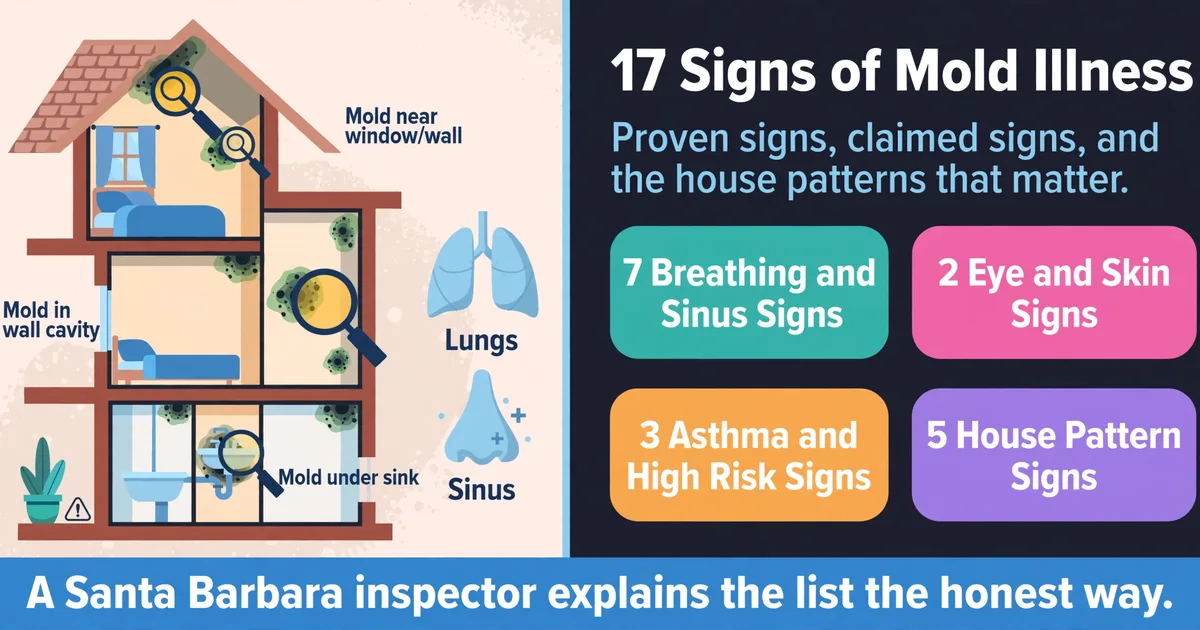
The 17 signs below are the ones health agencies stand behind, plus the patterns that point at your house.
Most lists of signs of mold in the body mix proven signs with guesses. The proven side effects of mold are mostly allergy and breathing signs, so this list runs in four parts: breathing, eyes and skin, high risk signs, and house patterns.
| Sign | Evidence |
|---|---|
| Stuffy or runny nose | Proven (CDC, EPA) |
| Sneezing fits indoors | Proven (EPA, Mayo Clinic) |
| Sinus pressure that keeps coming back | Proven as sinus trouble (CDC) |
| A cough that will not clear | Proven (CDC) |
| A sore or scratchy throat | Proven (CDC) |
| Wheezing | Proven (CDC) |
| Chest tightness or shortness of breath | Proven (Mayo Clinic) |
| Itchy, red, or watery eyes | Proven (CDC, EPA) |
| Skin rash, hives, or eczema flare | Proven (CDC, EPA) |
| Asthma getting harder to control | Proven (CDC) |
| Fever with cough and breathlessness | Proven pattern. See a doctor. |
| Chest infections that keep coming back | Proven risk. See a doctor. |
| Better away from home, worse back home | Pattern clue that doctors use |
| Worse in one room than the rest | Pattern clue that inspectors use |
| The same pattern in more than one person | Pattern clue, not proof |
| Flares in damp spells or after a leak | Pattern clue, not proof |
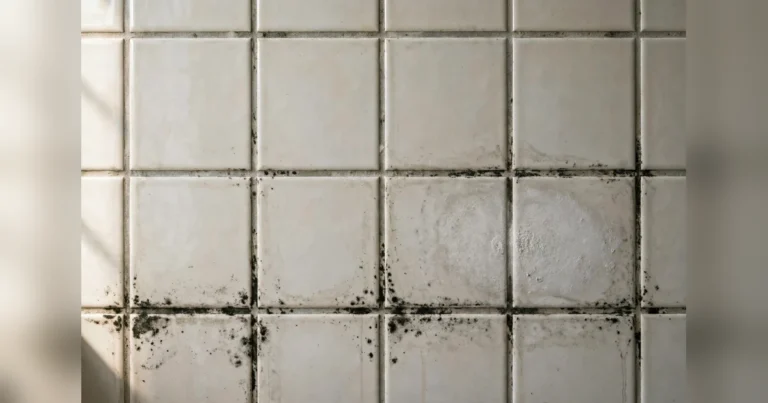
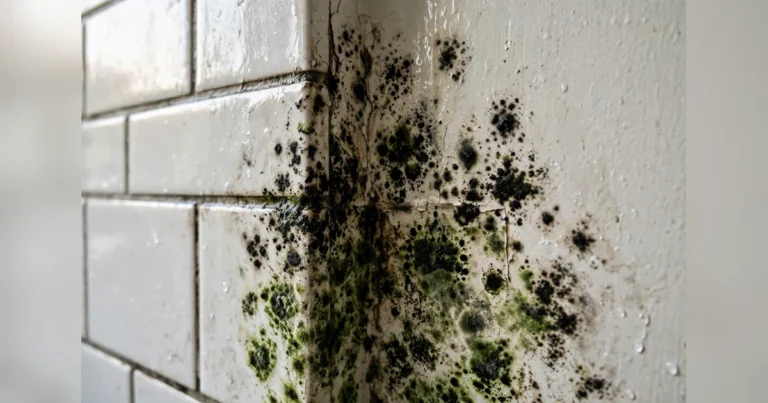
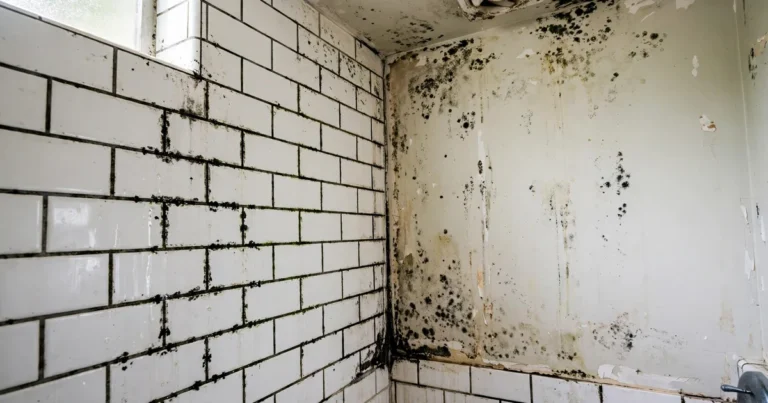
| Musty smell or visible moisture | House sign (CDPH) |
What are the signs in your breathing?
Seven of the 17 signs sit in your nose, your throat, and your lungs, and these carry the firmest proof.
Mold spreads by tiny seeds called spores. They float in the air and ride into your nose and lungs with every breath.
1. Stuffy or runny nose that will not quit
A cold ends in a week or so. A nose blocked for weeks at home is one of the first signs the CDC names.
2. Sneezing fits that start indoors
Sneezing fits that start at the front door and stop outside point at the house air. The EPA names sneezing as a classic allergy answer to mold.
3. Sinus pressure that keeps coming back
Your sinuses are hollow spaces in your cheeks and forehead, and when they swell your face feels pressure. Many people search for headache from mold. Harvard doctors tie the headache to the sinus pressure. A headache alone does not prove mold.
4. A cough that will not clear
A cough that follows you from room to room is worth more than a cough that follows you everywhere. If it lets up at work and comes back at the front door, look at the house as well as your chest.
5. A sore or scratchy throat
The CDC lists a sore throat among the common signs. A raw throat at home that fades at the office fits the picture, since spores in damp air rub a sensitive throat raw.
6. Wheezing
Wheezing is a whistling sound when you breathe out. It means the airways have gone tight. The CDC ties wheeze to mold, with or without asthma.
7. Chest tightness or shortness of breath
Mayo Clinic lists both among the asthma signs mold can stir up. Hard breathing means the doctor comes first. Every time.
What are the signs in your eyes and skin?
Two signs show on the surface: one in your eyes, one on your skin.
8. Itchy, red, or watery eyes
Eyes react fast because spores land right on them. The CDC and the EPA both list red or itchy eyes. Eyes that flare in one room and calm outdoors are a clue.
9. Skin rash, hives, or eczema that flares at home
Skin that touches mold can break out in a rash in sensitive people. Harvard Health names eczema and hives as skin answers to mold. A rash that flares in a damp room fits the pattern.
What are the asthma and high risk signs?
Three signs carry more weight than the rest, and two of them mean see a doctor first.
People with asthma, a mold allergy, or chronic lung disease face the most risk, and people with a weak immune system top the list. Real mold infection symptoms are not like allergy signs. The infection grows in the lungs and belongs in a hospital.
In 2026 the CDC reported about 450 proven cases of invasive mold disease in Atlanta area hospitals from 2020 to 2024. About one in three died in the hospital, almost all with weak immune systems. A second CDC report that October counted a rare mold that can infect the brain: 49 cases in 17 years at one lab, California among the states with the most. Rare, and a hospital story.
10. Asthma that is getting harder to control
The Institute of Medicine found firm proof that mold in damp buildings makes asthma worse. More attacks and worse nights are the shape. If your asthma plan stops working at home, tell your doctor and look at the house.
11. Fever with cough and breathlessness
This pattern can match a lung illness called hypersensitivity pneumonitis. In plain words, the lungs react hard to mold breathed in again and again after heavy exposure. Fever plus hard breathing is a doctor visit that day.
12. Chest infections that keep coming back
Chest infections that keep returning need a doctor fast if you are on chemotherapy, on drugs that lower your immune system, or have had a transplant. The CDC says such people can get infections in their lungs from mold.
What are the signs the problem is in the house?
Five of the 17 signs are not in your body at all. They are patterns, and patterns are what an inspector can check.
A symptom says you feel bad. A pattern tells you where to look, and these are the signs a residential mold inspection is built to test.
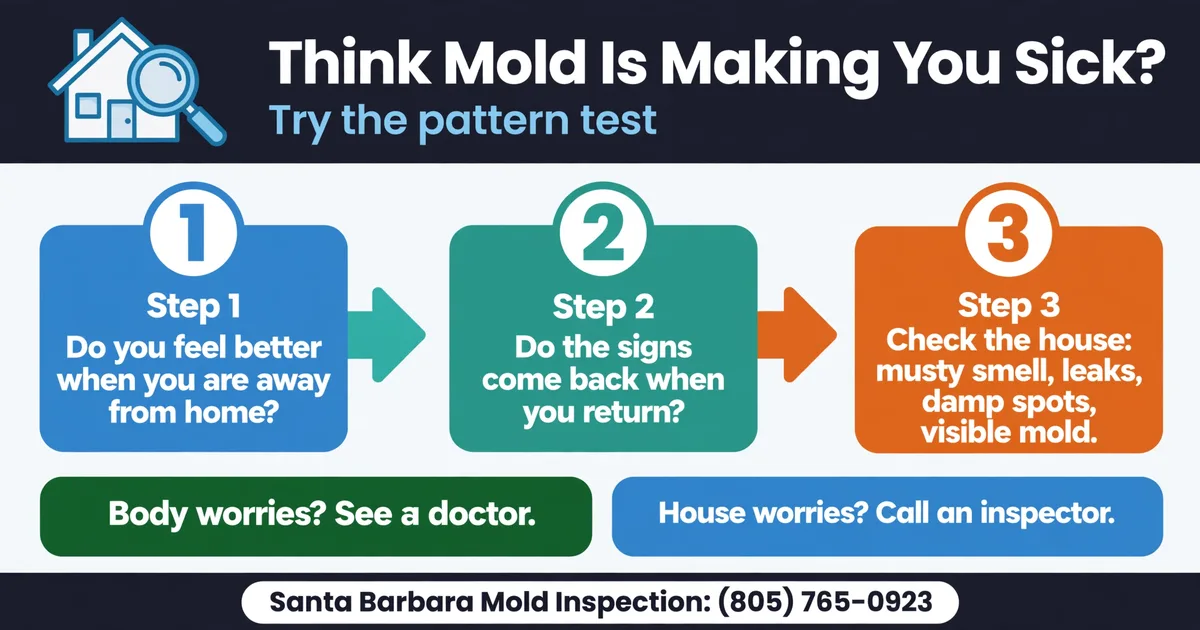
13. You feel better away from home and worse when you return
Feeling better on vacation is a clue, not a verdict. Write down where you were and how you felt. That notebook helps your doctor, and it helps me decide where to look and where to sample. If the pattern is strong, mold testing shows what is in the air where you feel worst.
14. Symptoms are worse in one room
Mold grows where water goes, so one wet room can carry the load for the whole house. A room under a roof leak or beside a damp attic is a fair start, and an attic mold inspection checks that space.
15. The same pattern in more than one person
If the whole family has the same cold that never ends, and the dog is coughing too, stop buying tissues and start looking for the leak. One sick person can be bad luck. The same cold in three people under one roof is a building question.
16. Symptoms flare in damp spells or after a leak
Signs that flare in a damp week and fade in a dry week point at moisture. Here the damp spell may be fog, not rain.
17. A musty smell or visible moisture with symptoms
Your nose is a decent early warning system. A musty smell in one room and a clear head in the rest of the house is a pattern an inspector can work with. The California Department of Public Health treats dampness and mold odor as the unhealthy condition itself. The fix starts with the water.
When should you see a doctor, and when should you call an inspector?
Bodies go to doctors, and houses go to inspectors.
Nobody in this trade can look at your symptoms and name the mold. A doctor reads your body. An inspector reads your house. If you are struggling to breathe, see the doctor first.
See a doctor first if:
- Breathing is hard, or asthma medicine is not working.
- There is fever with cough and breathlessness.
- A weak immune system or chronic lung disease, with signs getting worse.
- A child has a new wheeze or a cough that keeps growing.
- Signs are strong, frightening, or do not ease up away from the house.
There is no blood or urine test that proves mold made you sick. A doctor can test for a mold allergy and rule out other causes. The Mayo Clinic rule is plain: signs that persist mean see a health professional.
Call an inspector if:
- You can see mold or smell it and want the size and the water source written down.
- Your signs track the house and you want it checked as the cause.
- You rent and need a written report for your landlord.
- You are buying, selling, or renting out and need the facts on paper.
- Cleanup is done and you want an independent check.
An inspector will not tell you whether mold is making you sick. One who offers to is selling something. Our FAQ page answers the question “Can an inspector tell me whether mold is making me sick?” in full.
What about brain fog, fatigue, and the other signs all over the internet?
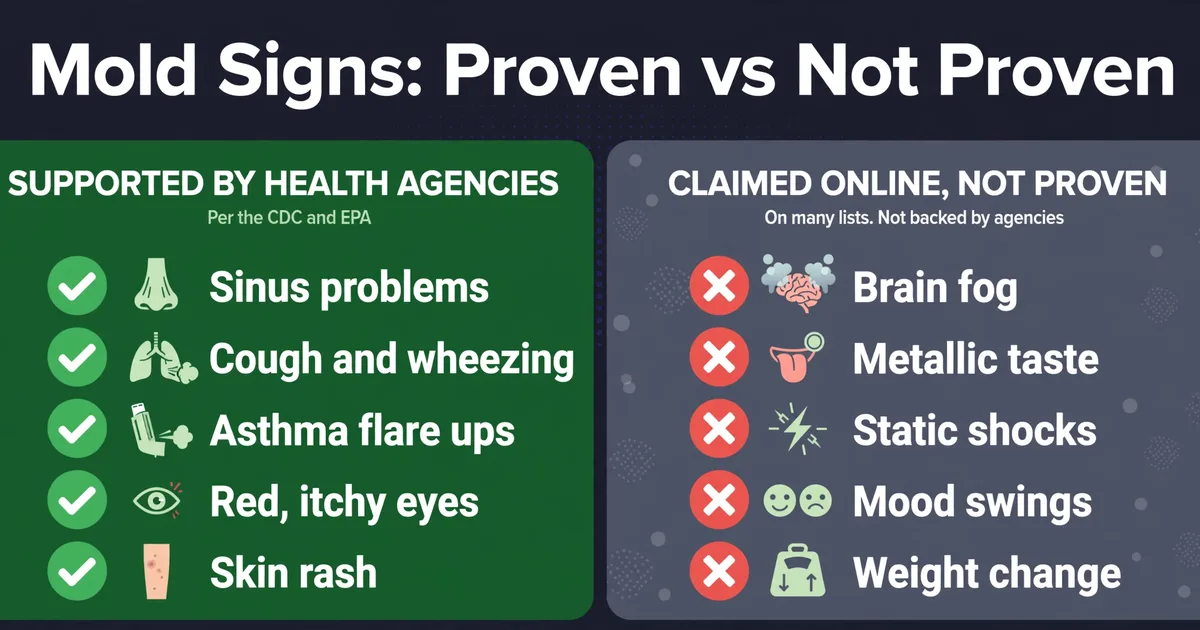
The long lists online add many signs that medicine has not proven, and the honest answer is that the proof is not there.
People type two questions: what is mold sickness, and which mold poisoning symptoms should they fear? Those are search words, not chart words. Doctors talk about mold allergy, asthma, and infection. The EPA draws the line in one sentence: “Symptoms other than the allergic and irritant types are not commonly reported as a result of inhaling mold.”
The most copied list online holds 23 items, not 17. It comes from one practitioner, copied site to site for years. Brain fog, memory trouble, joint and muscle pain, numbness and tingling, dizziness, metallic taste, static shocks, weight change, constant thirst, night sweats, stomach trouble, and mood changes all sit on that list. These feelings can be real, but real feelings still need a proven cause, and for mold breathed in at home the proof is not there. Fatigue gets one fair note: Harvard lists more of it with mold allergy, so tiredness can ride along with the allergy signs, but it cannot prove mold alone. We checked the CDC and EPA pages again in October 2026. No agency has added these signs to the proven list.
The CDC says the toxic mold label is not accurate, and no mold is proven worse than another by its name. A black color tells you nothing about danger. A lab can name the species. Your symptoms cannot, and neither can a photo on your phone. The toxic mold inspection page sets out how the word toxic should be read, and the black mold inspection page shows how dark growth gets checked.
California studied mold exposure limits and never set one, so no honest inspector will hand you a safe spore number. What we can hand you is where the water is getting in and what is growing because of it.
Internet lists of mold signs run long because fear runs long. The honest list is shorter: breathing, eyes, skin, and asthma. Anything past that belongs in a doctor’s office, not a search engine.
Why do these signs show up so often in Santa Barbara homes?
Santa Barbara gives mold two gifts: damp coastal air and old houses.
In Santa Barbara the marine layer does the watering for free. May Gray and June Gloom keep walls damp for weeks at a time, and mold only needs the damp. It does not need your permission.
Most homes here were standing before 1980, with plaster walls and crawlspaces that stay cool and damp. Old houses do not make people sick by themselves, but old plumbing can leak quietly for years.
The median home here was built in 1966, and winter rain does the rest. Water slips under tired tile roofs and sits in crawlspaces that never fully dry. Two EPA rules fit this coast: dry wet materials within 24 to 48 hours, and keep humidity below 60 percent.
What should a Santa Barbara tenant do with this list?
If you rent, your first tool is notice in writing.
California law treats visible mold that endangers health as a substandard condition under Health and Safety Code Section 17920.3. Damp rooms sit in the same law. Your landlord’s duty to repair starts when you give notice, under Civil Code Section 1941.7. A written inspection report is the clearest notice there is. Before you sign, your landlord must hand you the state booklet on dampness and mold for renters (Health and Safety Code Section 26148). Keep copies of everything you send.
Frequently asked questions
How do I know if mold is making me sick?
You cannot know from signs alone. No list of mold sickness symptoms can prove it. See a doctor for your body, and get the house checked if the pattern points home.
Why is one person in my house sick and everyone else fine?
Bodies differ. The CDC says some people are sensitive to mold and some are not, so one person can react while the rest of the house feels nothing. That proves nothing either way.
Is there a test that proves mold made me sick?
No. Ohio State doctors say no test shows that mold exposure made you sick. A doctor can test for a mold allergy. Urine mold tests sold online are not proven, so do not pay for one.
I can smell mold but I cannot see it. What now?
Smell is a real clue. Mold often grows where eyes cannot go: behind walls, under floors, and inside the HVAC system that heats, cools, and moves the home’s air. Start with the water.
How long does it take to get sick from mold exposure?
There is no fixed timeline. Allergy type signs can start fast, sometimes the same day. Other signs build slowly over weeks or months of living with the mold. It depends on the person, the amount of mold, and how long the exposure lasts.
Talk to a local inspector
We do inspections only in Santa Barbara homes, so our report has nothing to sell you. If your signs track your house, call (805) 765-0923 or send us a message, read more on the Blog, or start with the mold testing page.
Please note: This article is general information. It is not medical advice and does not diagnose any illness. If you have health worries, talk to a doctor. If someone is struggling to breathe, call 911.