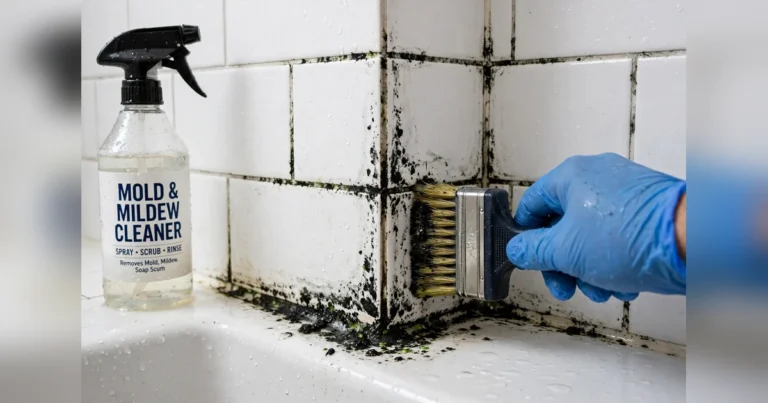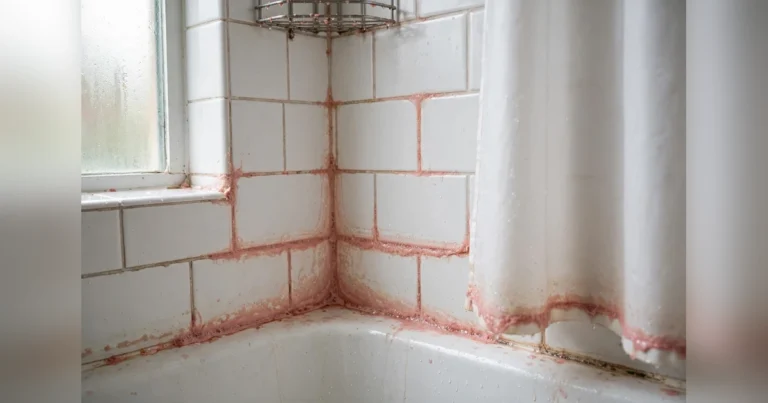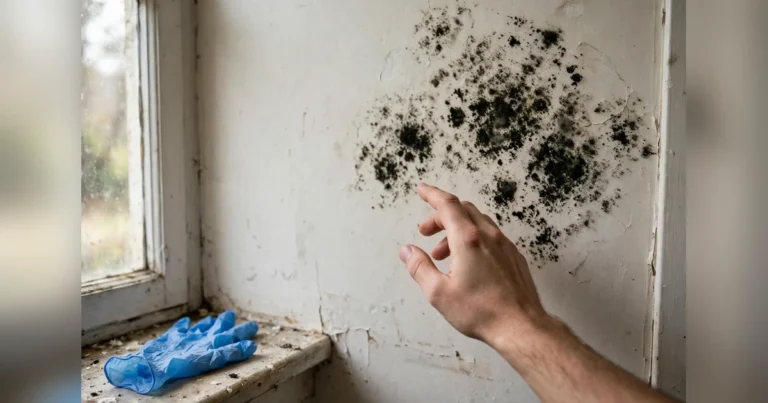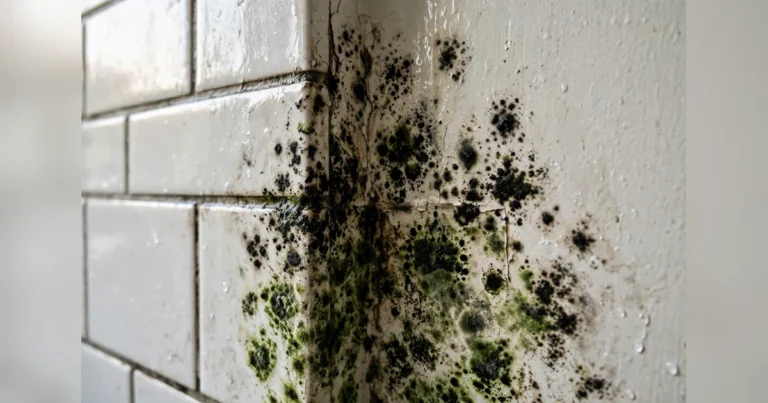
How to Get a Free Mold Inspection
Short answer: Yes, you can get a mold inspection for free, but free covers the visit, not the lab work. Remediation companies, video call services, your landlord, code enforcement, your insurance claim, disaster programs and free lab kits are all real routes, and each one has a catch. This guide puts every route in one place, with what is included, what is left out, and when free is not enough.
Quick facts
- A free inspection is a visit. Air and surface samples cost money to analyze in a lab, so free visits almost never include them.
- Most free inspections come from remediation companies. The visit is free because the company hopes to sell you the cleanup.
- Renters in California can get an inspection without paying, first from the landlord, then from city or county code enforcement.
- Insurance does not pay for a stand-alone inspection. It can pay for testing when a sudden covered water event, like a burst pipe, makes testing part of a claim.
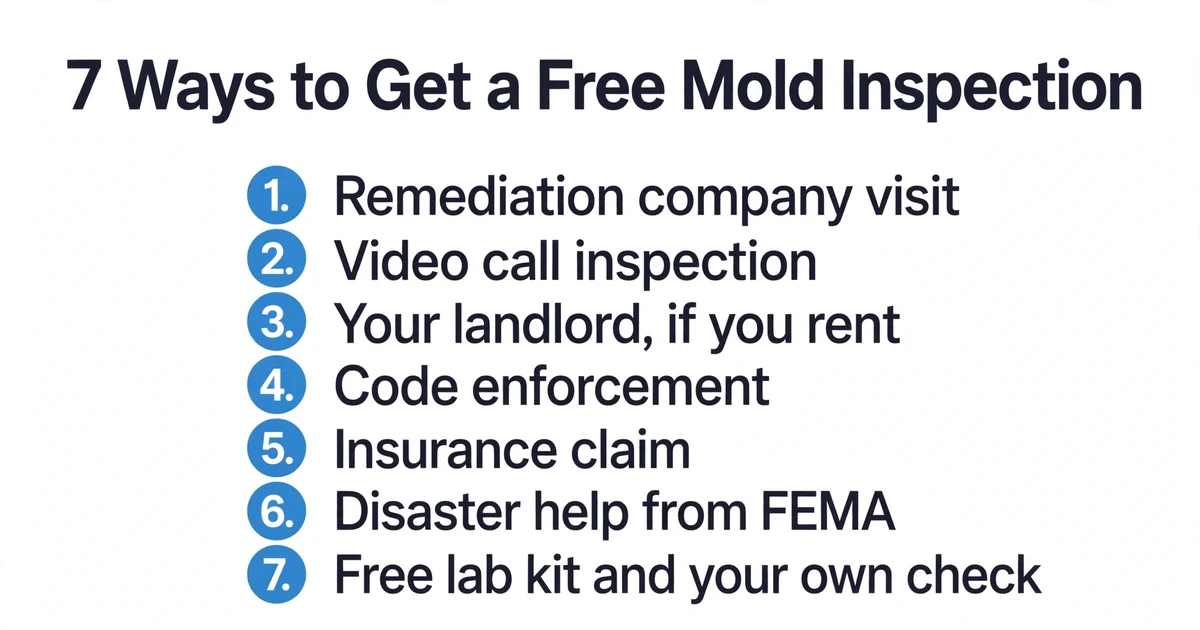
- After a declared disaster, FEMA and charity programs can help for free, but they pay to clean and make the home safe. They rarely pay for lab tests.
- A paid independent inspection is the right tool when a home sale, an insurance claim, a health problem or a dispute depends on the answer.
Is a free mold inspection really free?
Yes, the visit itself can be truly free, with no bill and no obligation to buy anything. What free does not mean is a full professional assessment with lab results and a written report.
Two different things share the same name, and this is where most people get confused. The first is a free estimate visit. A company comes out, looks at the problem, and gives you a price for the cleanup. The visit costs nothing because it is how the company wins work. The second is a professional mold assessment. An inspector finds the moisture source, measures how far the problem goes, takes samples with an outdoor sample for comparison, and gives you a written report. That work takes time and lab money, so it is not given away.
Free tells you whether someone wants the job. It does not tell you how far the mold has spread. A free visit is a good first step. Just know which of the two things you are actually getting before the person walks in.
What does a free mold inspection include, and what does it leave out?
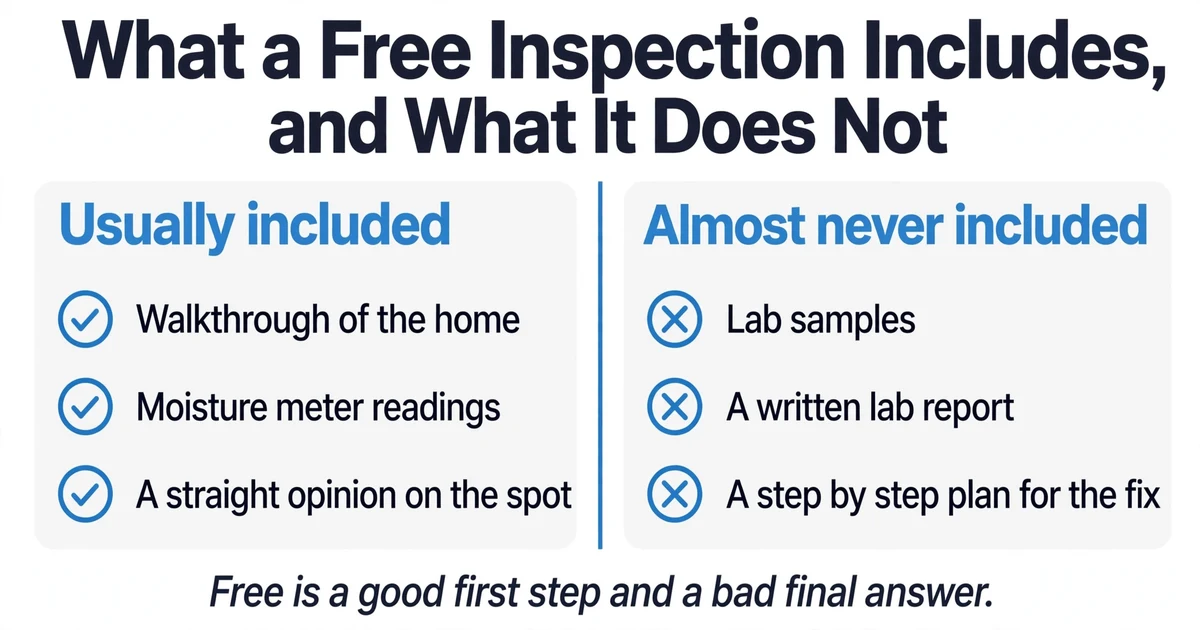
A good free visit includes a walkthrough of the home, a look at the usual hiding places, moisture meter readings, and a straight opinion on the spot. It almost never includes lab samples, a written lab report, or a step by step plan for the fix.
Here is how the free routes compare, side by side:
| Route | Visit cost | Moisture readings | Lab samples | Written findings | Sells cleanup too |
|---|---|---|---|---|---|
| Remediation company free visit | Free | Usually yes | No, lab fee is extra | Sometimes | Yes |
| Free virtual (video call) inspection | Free | No | No | Sometimes | Depends on the provider |
| Landlord-arranged visit (renters) | Free to the tenant | The landlord’s contractor decides | Rarely | The landlord keeps it | Often yes |
| Code enforcement inspection | Free, it is a public service | Officer’s documented check | No | Yes, an official notice | No |
| Insurance adjuster visit | Free with a claim | The adjuster scopes the damage | Only to scope covered damage | The claim file | No |
| FEMA disaster inspection | Free after a disaster declaration | Damage check | No | FEMA’s decision letter | No |
| Free lab sample kit | Kit free, analysis paid per sample | No | Yes, paid analysis | A lab report | No |
| Your own walkthrough | Free | Only if you own a meter | No | Your own notes and photos | No |
| Paid independent inspection | Paid, see prices below | Yes | Yes, with an outdoor control sample | Yes, a full report | No |
The pattern is simple. Free covers the visit and the opinion. The moment a sample has to travel to a lab, somebody pays the lab, and that somebody is almost always you.
How do you get a free inspection from a remediation company, and what is the catch?
Call two or three local remediation or restoration companies, ask if the inspection is free, and ask exactly what the visit includes before you book. Then treat the visit as a quote, not as a diagnosis.
A free inspection from a company that also sells the cleanup is a quote with a flashlight, not a diagnosis. The inspector may be skilled and the moisture readings may be real. The conflict is built into the business model. The same company decides whether mold is a problem, how big the problem is, and what the fix will cost. If the person checking your home profits from finding mold, ask who profits if he finds none.
There is fine print worth asking about. Some companies state on their own sites that free inspections are only for people who live in the home they own, and that rentals are charged. Some fit free visits into short windows between paying jobs. None of this makes the visit useless. It makes it a first step.
Use this route when you can already see mold and you want prices for the cleanup. Get two or three free visits, compare the scopes and the prices, and do not sign on the first visit.
Can you get a free mold inspection over a video call?
Yes. Some services now offer a free virtual inspection, where an inspector guides you through your own home on a video call and tells you where to look and what to photograph.
You walk with your phone. The inspector asks you to open the cabinet under the sink, point the camera at the ceiling stain, check behind the washing machine, and describe any musty smell. At the end you get a straight answer on whether a full visit is needed.
A video call inspection costs nothing, and it can rule out the small problems before they become wall problems. Its limits are real too. There is no moisture meter in the wall, no samples, and the inspector only sees what your camera shows. It is a first look, not a final answer, and for many homes a first look is all they need.
How do renters get a free mold inspection in California?
Renters do not have to pay for an inspection. In California, the landlord has the legal duty to fix mold that comes from a building problem, and if the landlord ignores you, city or county code enforcement can inspect the home and order the repair.
For a renter, the landlord’s duty starts with your written notice, not with your phone call. So the first step is paper, not payment:
- Tell your landlord in writing. Describe where the mold or the leak is, when you first saw it, and keep a copy with the date. Take dated photos.
- Give the landlord a reasonable time to act. California law (Civil Code sections 1941 and 1941.1) requires landlords to keep a rental fit to live in, including proper waterproofing and working plumbing.
- If nothing happens, ask for a code enforcement inspection. Health and Safety Code section 17920.3 lists dampness in living areas and visible mold growth as substandard housing conditions when a health officer or code enforcement officer confirms them. Minor mold on surfaces that normally stay damp, like a shower corner, does not count.
- Keep every document. The officer’s written correction notice is the paper with legal weight.
Two more protections matter. Under Civil Code section 1942.4, a landlord cannot demand or collect rent when cited substandard conditions stay unrepaired for 35 days after the official written notice, without a good reason. Under Civil Code section 1942.5, a landlord cannot punish you for complaining: no retaliation, like an eviction move or a rent increase, for 180 days after a habitability complaint.
Know what this route does and does not do. The landlord chooses the contractor who visits. Code enforcement does not run lab tests on your home. Their job is the moisture source and the condition of the home, and their written notice is what makes the landlord move. In the city of Santa Barbara, complaints go to city code enforcement. In Goleta and unincorporated areas, they go to Santa Barbara County Environmental Health Services.
Will insurance pay for a mold inspection?
Not as a stand-alone check-up. Insurance can pay when mold follows a sudden covered water event, and the testing is part of scoping that claim.
Insurance does not pay to look for mold. It pays when a covered water event made the looking necessary. A burst pipe, a ruptured water heater or a burst washing machine hose is a sudden event, and most policies treat the damage that follows, including mold, under the claim. A slow leak under a sink that drips for six months is maintenance, and it is excluded. The species of mold does not decide the claim. The cause of the water decides it.
When you open a claim, the insurer sends an adjuster to see the damage, and that visit costs you nothing beyond the claim itself. If testing is needed to show how far the covered damage goes, it may be included under the policy’s mold limit. Many policies cap mold at about $1,000 to $10,000 total for testing, removal and repair combined, so the cap matters more than any single test.
One caution before you file. Water and mold claims stay on your record for years and can raise your premium. If the damage is close to your deductible, paying out of pocket can be the cheaper move in the long run.
How do you get free mold help after a storm or flood?
After a Presidentially declared disaster, apply to FEMA. FEMA can pay for mold cleanup when disaster mold makes a home unlivable, and FEMA sends its own inspector to check the damage.
After a disaster, the free help is real, but it cleans and clears. It rarely tests. Here is what exists:
- FEMA Individuals and Households Program. It can cover mold cleanup and remediation after a declared disaster. The maximum housing assistance is $43,600 per disaster. A smaller Clean and Sanitize Assistance payment helps with less severe damage and is open to renters as well as owners. Apply at DisasterAssistance.gov or call 1-800-621-3362. Take photos of the damage and keep receipts for anything you clean yourself.
- Crisis Cleanup, 844-965-1386. This hotline connects survivors with charity and faith based volunteer groups that help with cleanup, mucking out and basic house checks for free. Help is not guaranteed, and it is cleanup help, not lab testing.
- Free test kits for disaster families. Through a program linked with the American Red Cross, disaster-affected families can call 844-930-6653 to see if they qualify for a free mold test kit or a free online health screen. It is a qualification based program, not an open offer.
And one warning that saves people real money: flood insurance through the National Flood Insurance Program does not cover mold damage. Do not wait for a flood policy to pay for mold. It will not.
Is a free mold test kit actually free?
The kit can be free. The lab work is not. You collect the samples yourself, and the lab charges per sample to analyze them.
Some accredited labs will send you a sample collection kit at no charge. Store bought home test kits usually cost a little money up front, and many add lab fees on top. Either way, the analysis is the product, and the analysis is what you pay for.
There is a deeper problem with cheap kit results. A lab number without an outdoor sample beside it is a number without a meaning. Mold spores are in all outdoor air, so a lab count from inside your home only says something when it is compared with the air outside your home on the same day. Kits that skip the outdoor control sample give you a number you cannot judge. The US Environmental Protection Agency makes the same point from the other side: if you can see mold growing, you already know you have mold, and sampling is not needed to prove it.
How do you inspect your own home for free?
Walk your home slowly with a flashlight and your nose. Look for growth, stains and water damage, and smell for a musty, earthy odor in every room and corner.
This costs nothing and it is not a weak substitute. Health agencies say the same thing: mold is found by looking and smelling, and visible growth means you have mold whether a test is run or not. Check these places, in this order:
- Under every sink, and behind the washing machine, the dishwasher and the fridge water line
- Around tubs, showers and toilets, and on bathroom ceilings
- Window frames where condensation collects
- The attic, around roof stains and vents
- The crawl space or basement, after rain if you can
- Around the air conditioning unit and its coils and drain line
- Any wall that has ever had a leak, even an old one
Take dated photos of anything you find, and fix the water first. Mold follows moisture, so keep indoor humidity below 60 percent, and ideally between 30 and 50 percent. For a small visible patch on a hard surface, the EPA says a homeowner can usually clean an area of less than about 10 square feet on their own. Bigger areas, mold inside walls, or mold that keeps coming back after cleaning are signs to bring in a professional.
When is a free inspection not enough?
Free is not enough when the answer has to stand up for money, health or a legal record: buying or selling a home, an insurance claim, ongoing symptoms, a renter dispute, or mold you can smell but cannot see.
In those cases you need an independent inspection from a company that does not sell cleanup. A paid independent inspection adds what free visits leave out: moisture mapping of the walls, thermal imaging, air and surface samples with an outdoor control sample, a written report you can hand to a buyer, an insurer or a lawyer, and a clear plan for the fix. The most honest free inspection is the one where the inspector can say you do not need us, and lose nothing by saying it. An inspection-only company can say that every day, because it has no cleanup contract to win.
What does that cost? Prices are published by the companies themselves, and they are the only honest way to show the range. One Texas assessment company publishes a flat $550 for a home up to 2,500 square feet, including up to 2 lab samples with an outdoor control and a report in 1 business day, with extra samples at $85 and a remediation protocol from $750. One Cincinnati company states that most of its mold tests in 2026 cost $300 to $400. Published guides put full professional inspections broadly between about $200 and $1,000 depending on the size of the home and the number of samples. Those are other companies’ published figures, not a quote for your home.
California note: this state does not license mold inspectors, so there is no state license to ask for. Ask instead for private certification and training, such as ACAC or IICRC credentials, and for a sample report before you book.
What questions should you ask before you book a free inspection?
Ask these eight questions on the phone, before anyone enters your home. A straight company answers all of them without hesitation.
- Is the visit really free, with no charge and no obligation?
- Do you also sell mold cleanup, or do you only inspect?
- Will you take moisture readings, or only look?
- Will I get the findings in writing?
- Are lab samples included? If not, what do they cost, and which lab analyzes them?
- What would a sample tell us that the visit cannot?
- How fast will I get the results or the report?
- Are there conditions, like free visits only for people who live in a home they own?
The answers sort the honest offers from the sales calls in about two minutes.
What are the red flags of a free mold inspection scam?
Walk away if the inspector scares you, rushes you, or will not put anything in writing.
Watch for these:
- Pressure to sign a cleanup contract today, before you can think or compare
- A promise to remove all mold forever. No one can promise that. Mold spores are in all air, indoors and out
- Scare words with no evidence, like calling every dark patch toxic before any check is done
- Findings given only in words, with no photos, no readings and no written scope for the price
- A very large quote with no breakdown of the work
- The same company that did the cleanup offering to do the final clearance check on its own work for free. The clearance check should be done by someone independent, because no company fails its own job
A careful inspector slows the conversation down, shows you the moisture source, and explains what would happen if you did nothing. A sales visit speeds the conversation up.
Frequently asked questions
Can you get mold tested for free?
Almost never, if tested means samples analyzed by a lab. Lab analysis costs real money per sample, so a free kit still leads to a paid analysis. The exceptions are narrow: qualification based disaster programs, like the free test kit offered to disaster-affected families through the Red Cross linked program (call 844-930-6653 to check if you qualify).
Does the health department inspect homes for mold for free?
A health department or code enforcement office can inspect a rental and order the landlord to fix the moisture source and the condition, and that public inspection does not cost the tenant. What they do not do is run lab tests on the mold in your home. Their job is enforcement, not testing.
How long does a free mold inspection take?
A free consultation visit commonly runs about 1 to 2 hours for a typical home. A full paid assessment with samples takes longer, and lab results usually take days, not hours.
How much does a professional mold inspection cost?
Published prices vary by company and by how many samples are taken. The labelled examples in this guide: $300 to $400 for most tests at one Cincinnati company in 2026, and a $550 flat published price at one Texas assessment company including 2 lab samples and a written report. Published guides put full inspections broadly between about $200 and $1,000.
Is a free mold inspection worth it?
Yes, as a first step. A free visit can confirm visible mold, find the moisture source and give you cleanup prices to compare. It is not the final word when a home sale, an insurance claim, a health concern or a dispute depends on the result. That is when an independent inspection with samples and a written report earns its cost.
The bottom line
Free mold inspections are real, and now you know where every one of them lives: the remediation company’s visit, the video call, your landlord, code enforcement, your insurance claim, disaster programs, a free lab kit, and your own two eyes. Each one is free for a reason, and each one stops at a different line. Free is a good first step and a bad final answer.
If you are in the Santa Barbara area and you want an inspection from a company that only inspects, call us at (805) 765-0923 for a free estimate. We do not sell cleanup, so our findings are not a sales pitch. We find the mold, we find the moisture source, and we tell you plainly what needs to happen next.