How to Clean Shower Mold and Keep It From Coming Back
Is it mold, or something else?
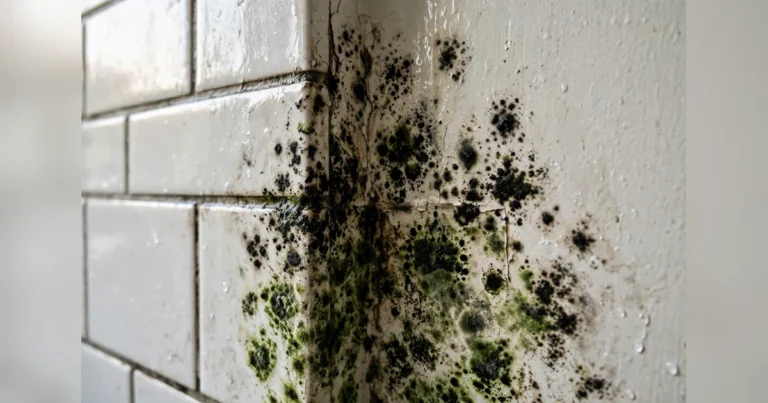
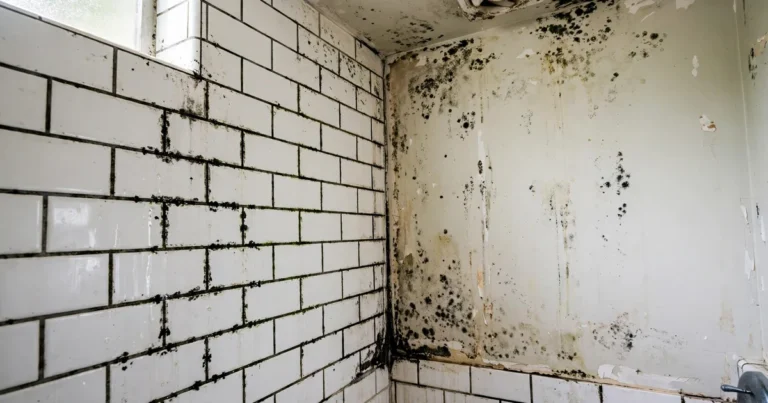
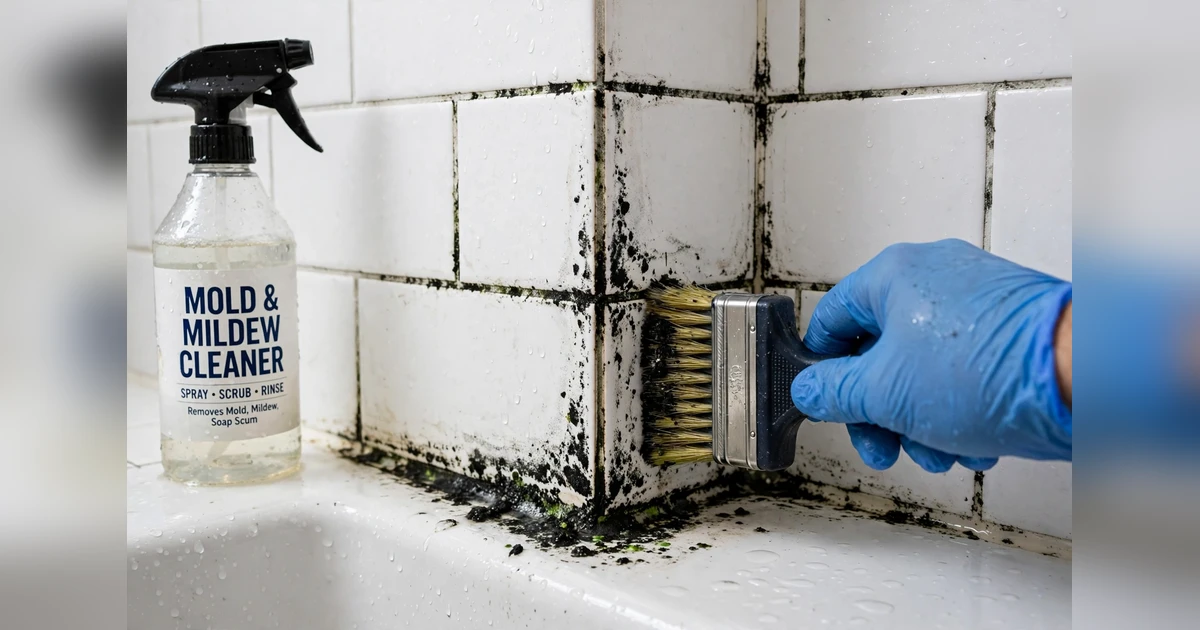
What you see tells you what to use. Black or grey dots on grout are most often mold. Dark color alone does not mean black mold. A slimy pink, orange, or red film is a germ called Serratia marcescens, not mold. Pink slime is not mold, and treating it like mold is why it keeps coming back.
A clean-looking shower can still be a dirty grout line. Grout is full of tiny holes. It holds soap, oil, and dead skin. Mold eats that food.
| What you see | What it is | What to do |
|---|---|---|
| Black or grey dots | Mold | Vinegar, peroxide, scrub |
| Pink or red slime | Germ, not mold | Cleaner, dry well |
| Spot stuck on caulk | Mold inside caulk | Replace caulk |
| Orange or brown crust | Hard water | Vinegar, soap |
| Dark mark after cleaning | Dead stain | Leave it |
| Past shower, soft wall | Behind wall | Fix leak |
What do I need before I start?
Gloves, goggles, a mask, air, and one cleaner. Wear gloves to mid-forearm, goggles with no holes, and a mask that fits well, an N-95. The EPA guide lists this kit. You also need a stiff brush, a soft pad, a spray bottle, and a squeegee. Asthma, bad mold allergy, lung disease, or weak immunity? Do not do this job. Ask a doctor.
Which cleaner should I use?
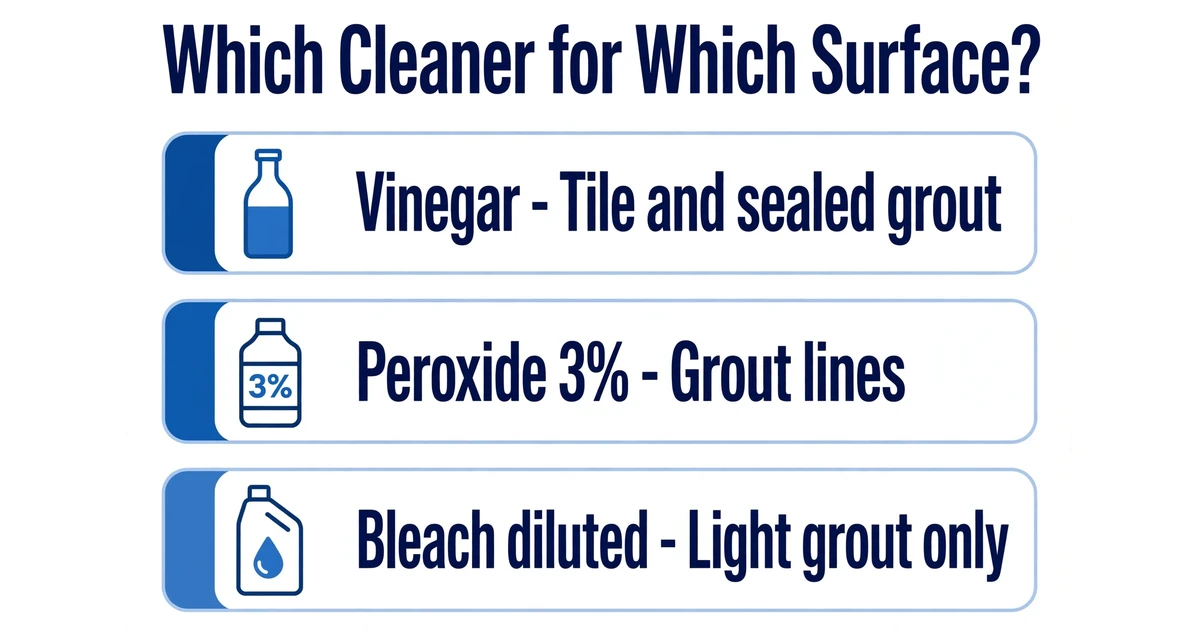
Pick the cleaner that fits the surface.
| Cleaner | Wait time | Best for | Watch out |
|---|---|---|---|
| Vinegar | 10-30 min | Hard tile, sealed grout | Hurts unsealed grout |
| Peroxide 3% | 10-15 min | Grout lines, colored grout | Can fade cloth |
| Bleach, mixed | 5-15 min | Light grout, tile stains | Strong smell, fades color |
| Baking soda | 10-40 min | Stains, soap film | Weak on deep mold |
| Steam | Slow passes | Grout holes | Hot steam burns |
Oxygen bleach and mold sprays also work.
Bleach wins the photo. Peroxide wins the grout. Bleach makes white fast, but it does not go deep into grout, so mold comes back in the same line. Peroxide goes deeper and is kinder to colored grout. Acid hurts unsealed grout and stone.
Bleach strength is not the same in each guide. One big company says 1 cup of bleach in 1 gallon of water. Other guides say 1 part bleach to 10 parts water. Some forum posts use 1 part bleach to 1 part water. More bleach means more fumes in a small room. Use the mix on your product label.
How do I clean shower grout?
Spray, wait, scrub, rinse, dry. In that order. Wipe loose dirt off, then spray vinegar on sealed grout, or 3% hydrogen peroxide on grout of any color. Wet the lines well and wait as long as the table says. Scrub with a stiff brush or an old toothbrush, rinse with clean water, and dry the lines. If black marks stay, do the peroxide step one more time. For old stains, spread a paste of baking soda, peroxide, and dish soap on lines. Wait 10 minutes. Scrub and rinse. Steam is the other deep choice for tiny holes.
How do I clean shower caulk, and when do I replace it?
Be soft with caulk. It tears with ease. Caulk is the soft line that seals the edge. Spray it, wait, and scrub with ease with a soft brush. For a hard line, press cleaner-wet cotton on the line for a few hours, then rinse and dry. No razors or wire brushes. A cut lets water behind the tile.
If the stain survives the scrub, the problem may be under the caulk, not on it. Change the caulk when mold is inside it: it will not wipe off, has black threads, is loose, or stays dark after two cleans. Cut the old line out, clean the joint, and let it dry a full 24 hours. A wet joint grows mold under new caulk fast. Put in new 100% silicone or mold-proof caulk. Let it cure 24 hours. Do not shower till then.
What about the drain, curtain, showerhead, and other spots?
The spots people skip are the drain, the curtain, and the showerhead. Clean tile and glass with the same cleaner, on a soft pad. Scrub the drain cover and rim, then flush with hot water and vinegar. Wash the curtain liner in hot water if the label allows, with vinegar in the last rinse. If not, soak it in vinegar and rinse it. Take the showerhead off and soak it in vinegar, or bag it in vinegar for one hour, then run the shower.
Do not skip these spots: caddy, faucet underside. Squeeze bath toys dry, spray and rinse them, and keep them in a draining box. If your tub has jets, spray and run them to rinse. Wash towels each 3 to 5 uses. Wash soft rugs as often as towels, or swap for hard mats. Mildew-proof liners last longer.
Why did bleach fail for me?
Bleach fails for three reasons. Grout has tiny holes, so bleach stays shallow. Mold inside caulk is out of reach. Water behind the wall feeds mold from inside. The place of the mold is the tale, not the bleach.
What should I never mix?
Never mix bleach with ammonia, vinegar, or any other cleaner. The CDC warns that bleach mixed with ammonia or other cleaners can make poison gas. Ammonia hides in some glass cleaners. Read labels. Never use vinegar and bleach one after the other. Rinse well and wait till the surface is fully dry. Never mix cleaners to make them stronger. Stronger is how a small bathroom becomes dangerous. Do not test bleach mixed with baking soda. The safe rule is plain: bleach goes with water only.
Is cleaner safe when shampoo touches it later?
Yes, if you rinsed and dried well. One forum user asked this. Their shower is used each day with soap, shampoo, and conditioner. They feared the cleaner could turn bad with those products. It does not. The risk is mixing cleaners, not soap. Clean with one product, rinse with clean water, dry it, and let the shower air out. If you spray bleach, wear a mask and goggles.
The stain stayed. Is the mold dead?
A stain is not proof of live mold. Bleach and peroxide kill mold but can leave a dark shade. Watch time: same for weeks is old harm, dark again in days is live mold with water behind it.
Why does it keep coming back?
How fast it comes back tells you why.
| How fast | What it most often means | What to do |
|---|---|---|
| In days, same spot | Leak, or mold inside caulk | Check signs; change caulk; fix leak |
| In weeks, same spot | Weak fan, wet shower, unsealed grout | Fan more, squeegee daily, seal grout |
| In weeks, new spots | Soap scum left behind | Rinse after showers, scrub weekly |
| After months, slow | No routine | Start the routine below |
Mold that returns in days is a leak report, not a cleaning failure. Do not blame your scrubbing. Water still reaches that spot unseen. The fix is a repair, not a cleaner.
How do I know it is behind the tile?
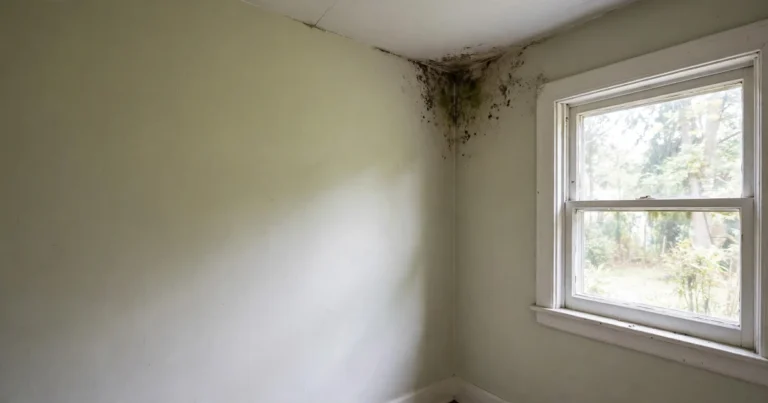
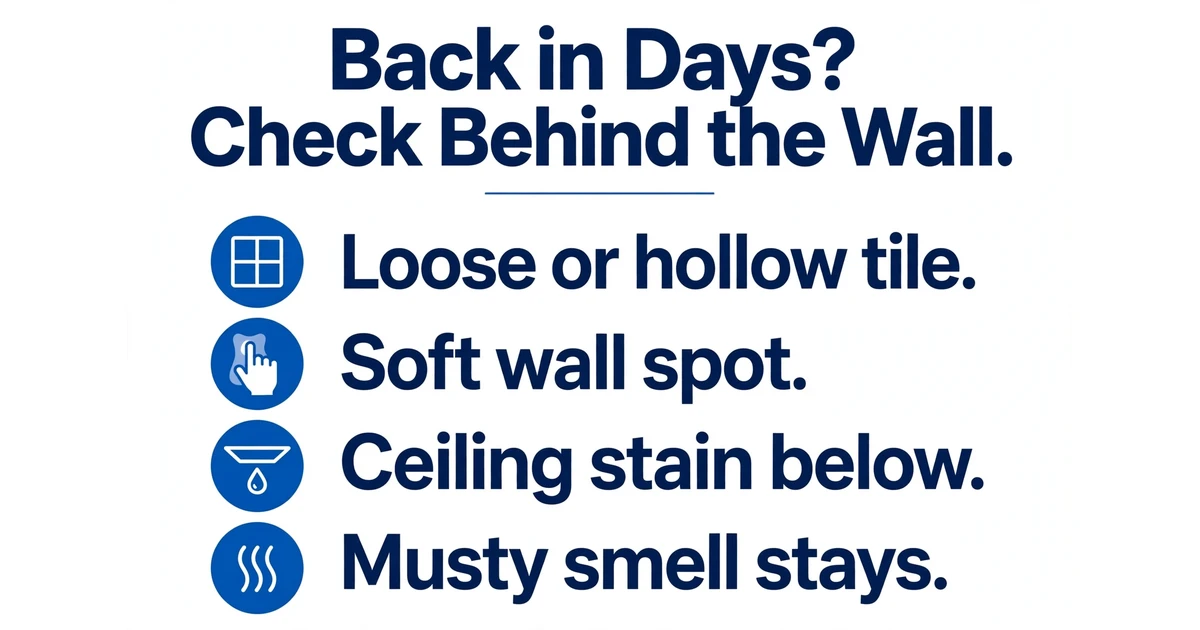
Look for signs that cleaning cannot explain. Cracks again after you fix it. Tile that sounds hollow, or feels loose. A soft spot in the wall by the shower. Paint that peels, or boards that swell. A stain below that turns dark after showers. A musty smell that stays after all is clean. A shower base that feels soft. One sign needs a close look. Two or more mean mold is fed from inside the wall.
How do I keep it away?
Dry the shower each day. Clean it before spots show. Each day: run the fan while you shower and after. Your shower dries from the top down, so squeegee the same way. Spread the curtain wide open and crack the glass door. Hang towels wide open and lift the mat off the floor. Rinse the shower fast after use. Leave the bathroom door open when you are done. Soap scum is mold’s dinner. Rinse it away before it sits down. Each week: spray grout and caulk with a mold cleaner, scrub, rinse, and dry. Move bottles off ledges. Wash mats and liners as their labels say. A daily shower spray helps too. Each month: hold tissue by the fan. If it does not pull it in, clean or fix the fan. Look for caulk that peels or is dark under. That caulk needs to go. Look under the sink and above the shower for drips. Seal grout once or twice a year. Sealed grout is a raincoat. Unsealed grout is a sponge.
Run the fan more than most people do. Guides say 15 to 30 minutes after each shower, some up to one hour without a window. The test is plain: the room must feel dry before the next shower. The fan that stops when you leave is the fan that never finished the job. Health experts say keep indoor air below 50% wetness. News from October 2026 says 30 minutes of fan time after a shower. A March 2026 report says a window clears wet air faster than a fan alone, so use both.
I rent. Whose job is this?
Surface mold is most often your job. Mold from a leak or a dead fan is your landlord’s job. Report it in writing with photos and the date. Do not paint over mold. The California Department of Public Health‘s position helps renters. Seen mold that harms health counts as bad housing, and the owner must fix it. That rule is from January 2016. If your landlord will not act, go to local code enforcement.
When do I call a professional?
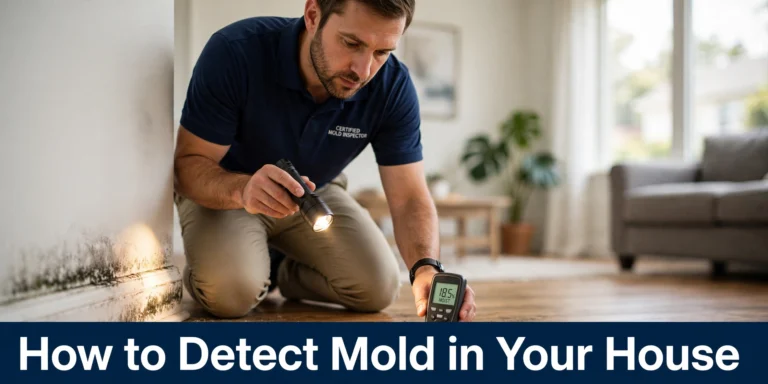
Stop when size, speed, or people say stop. The EPA line is 10 square feet, near the size of a small rug. Past that, call a pro. Call sooner for return in days, spread past the shower, soft walls, or loose tile. Call sooner too for a musty smell with no mold in sight, or weak immunity at home. News from 2026 gives one more reason. CDC teams found near 450 cases of deep mold disease in four Atlanta hospitals from 2020 to 2024. Near one in three died in care, but most were already very sick. These numbers are about very sick people, not about a grout line for a fit person. Costs from trade sources, not quotes: do-it-yourself goods near $50 to $150, pro help near $500 to $3,000.
What about showers in Santa Barbara?
Santa Barbara showers dry slow, so drying matters more here. Sea mist hangs over the coast most mornings; Goleta is more foggy. A room wet till noon gives mold a long wet time. Old coastal rentals have small fans or no window. Winter is worse. A September 2026 NOAA note put the chance of a very strong El Nino in fall and winter 2026-27 above 90%. That is the time for more fan, daily squeegee, and monthly caulk checks. Stucco and tile hide water well.
Get your bathroom checked
If mold keeps coming back, or you see a behind-wall sign, find the water. Mold Testing maps the wetness and tells you if you have a cleaning job or a leak. If you are in Santa Barbara, call Mold Inspection Santa Barbara at (805) 765-0923 for a free estimate. We inspect only.