Mold Identification Photos: 22 Types by Look, 14 Lookalikes, and What a Photo Cannot Tell You
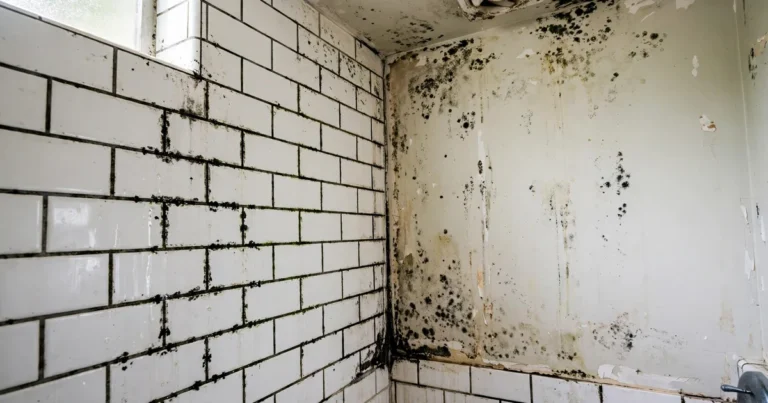
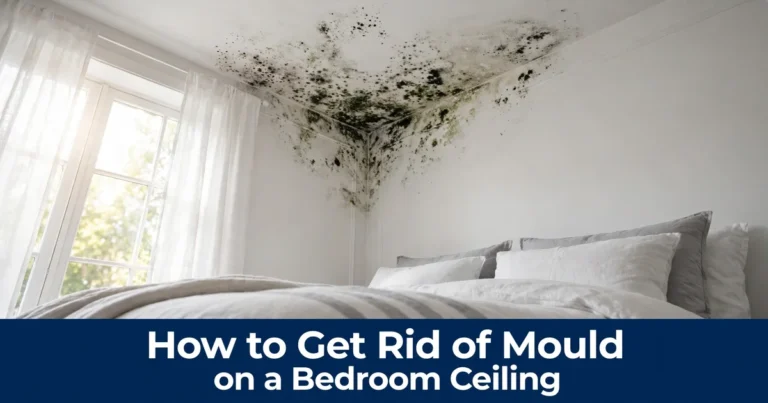
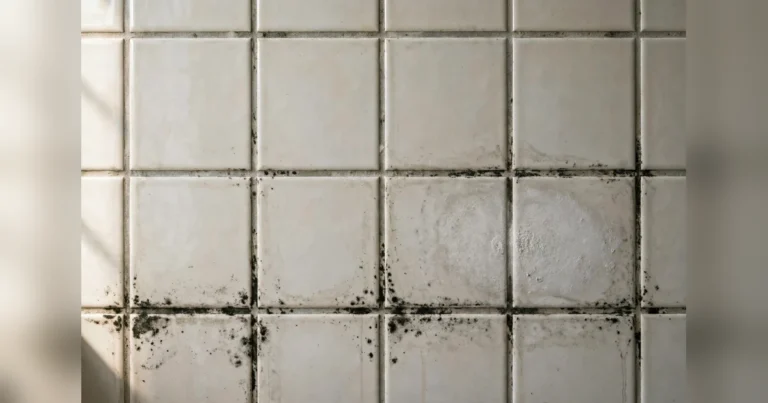
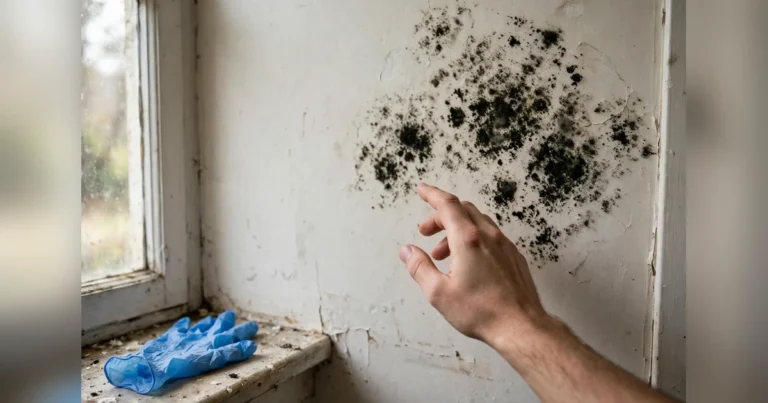
Use photos to find the spot, not to name the species.
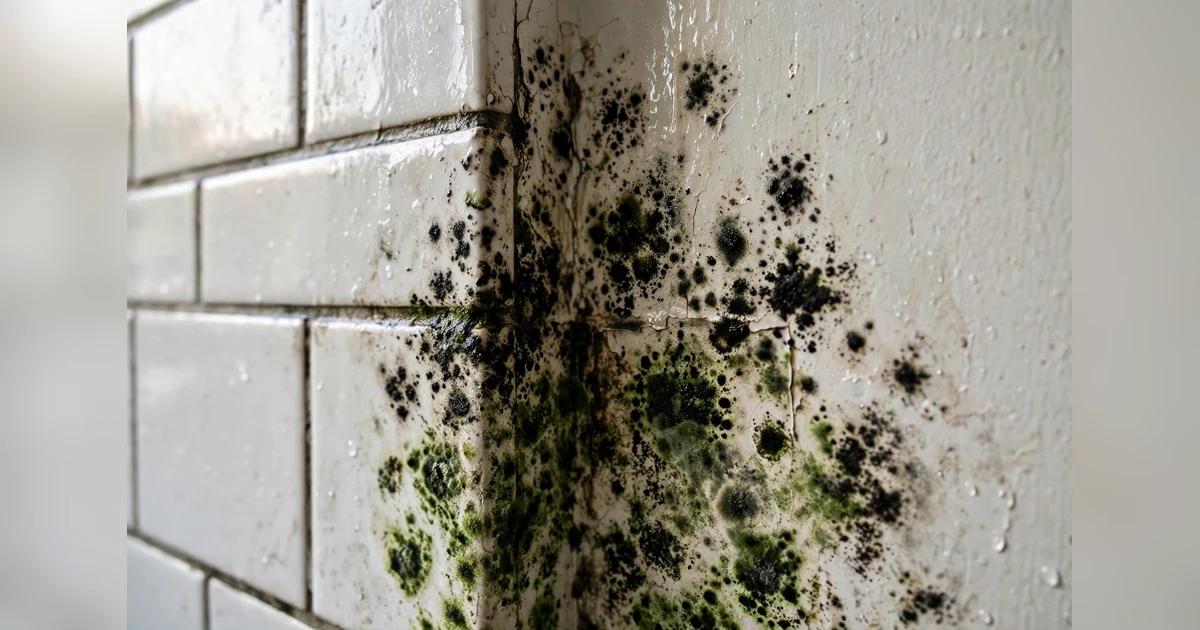
A photo can show you the spot. It cannot tell you the species.
Every card shows a typical look, not a confirmed specimen. One species can look different wet, dry, young, and old.
California’s health department says any mold you see or smell should be fixed. Mildew is certain kinds of mold, usually flat.
Quick facts:
- A photo never proves a species.
- Take one close up and one wide shot.
How to use these photos
Match the look, then check the moisture. Mold does not pose for the camera. It hides where the photo cannot reach.
Two photos beat one photo: one close, one wide, and the truth sits between them.
22 types by look
Color is the first thing you see and the last thing you should trust.
1. Stachybotrys
Dark greenish black, slimy when wet, powdery when dry.
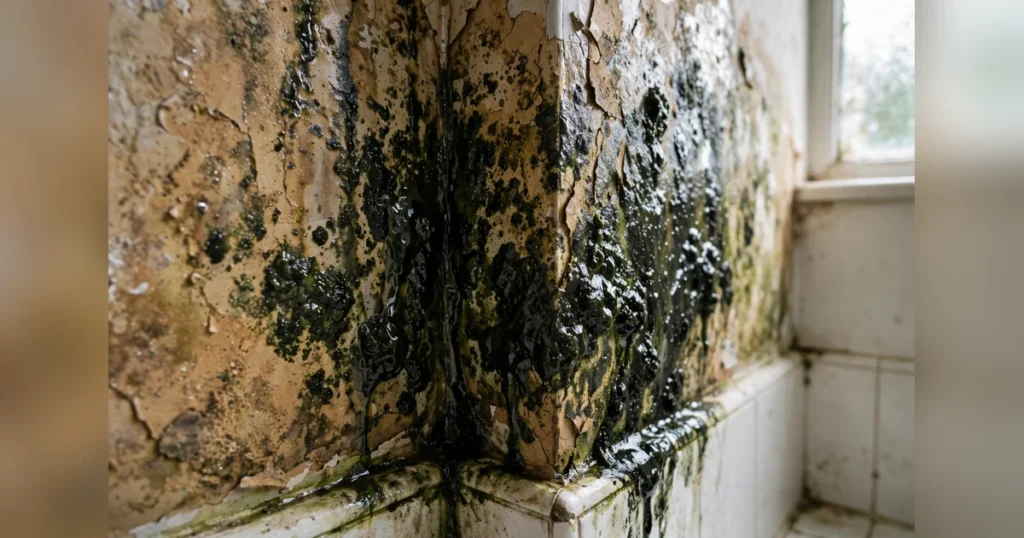
Long wet drywall and wallpaper. See our black mold page.
2. Aspergillus
Green, brown, black, yellow, or white. Woolly or powdery.
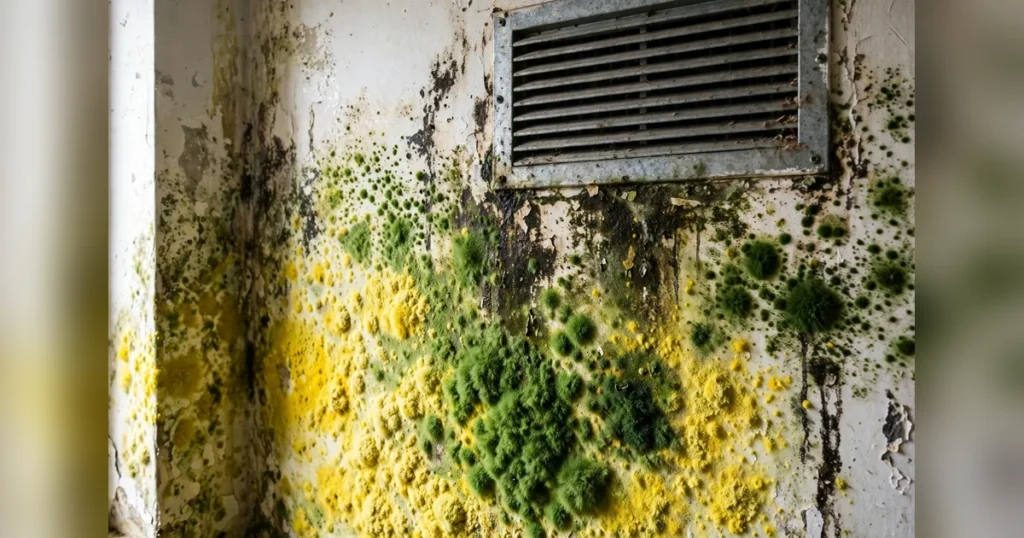
Wood, paper, dust, vents. Never name it from color.
3. Penicillium
White first, then blue green or pinkish. Velvety or powdery.
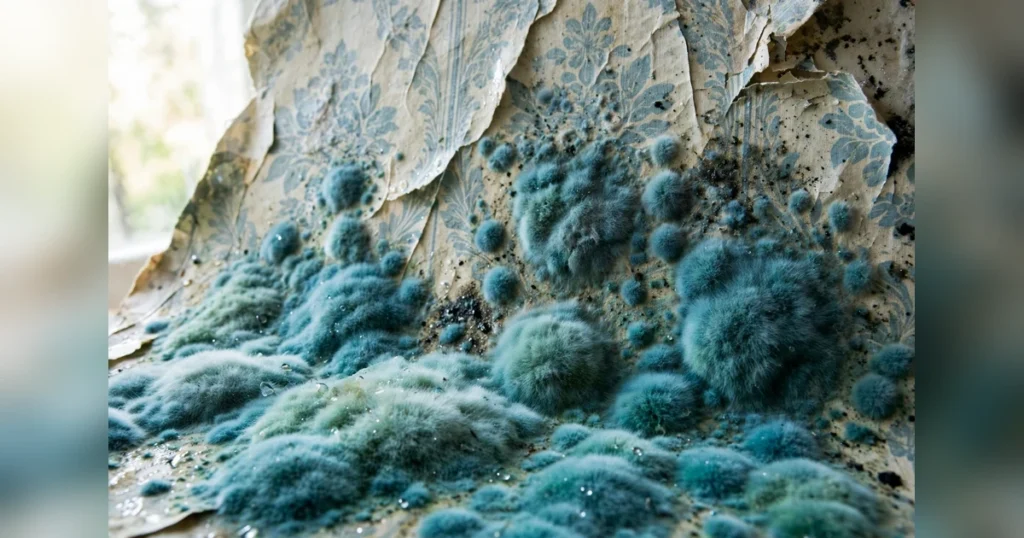
Food, walls, carpet, drywall. Dry it fully.
4. Cladosporium
Olive green to brown or black. Powdery or velvety.

Sweating windows and fabrics. Fix the humidity.
5. Alternaria
Grayish white first, then dark green brown. Woolly.
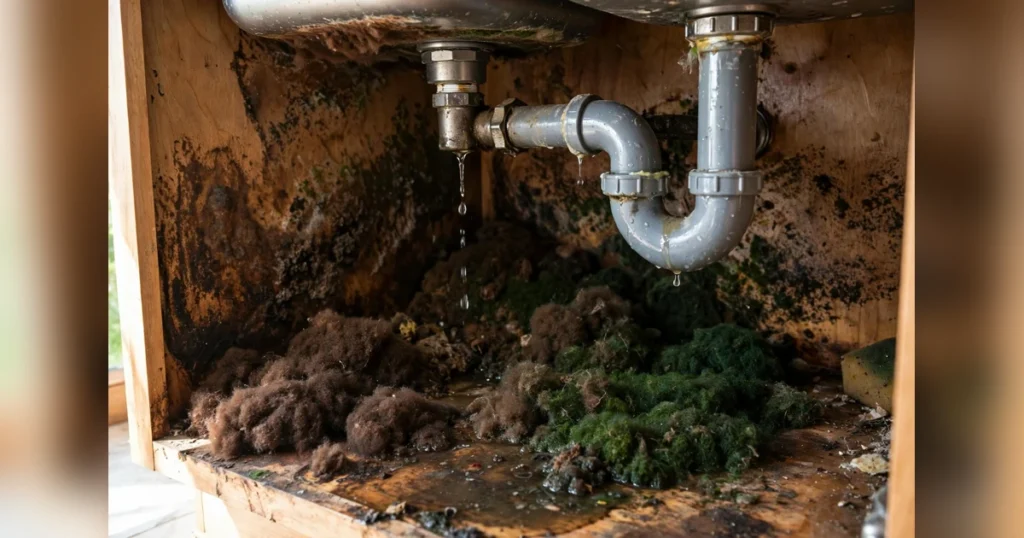
Windows, showers, sinks, AC. Check for leaks.
6. Chaetomium
White and cottony, then gray to black.
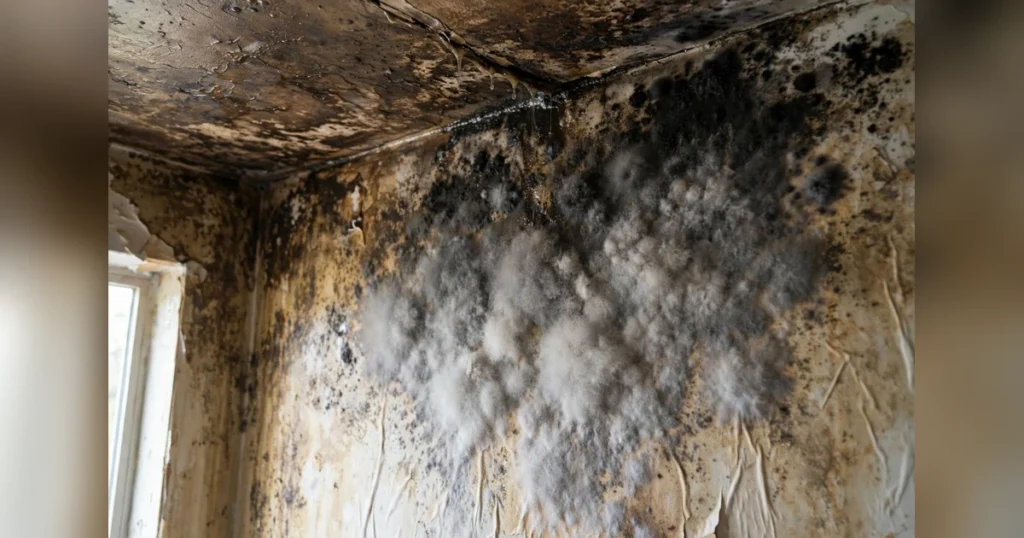
Wet drywall and wall cavities. Check inside.
7. Fusarium
White, pink, red, or tan. Fluffy or woolly.

Very wet carpets and humidifiers. Dry it fully.
8. Trichoderma
White with green patches. Woolly, then compact.
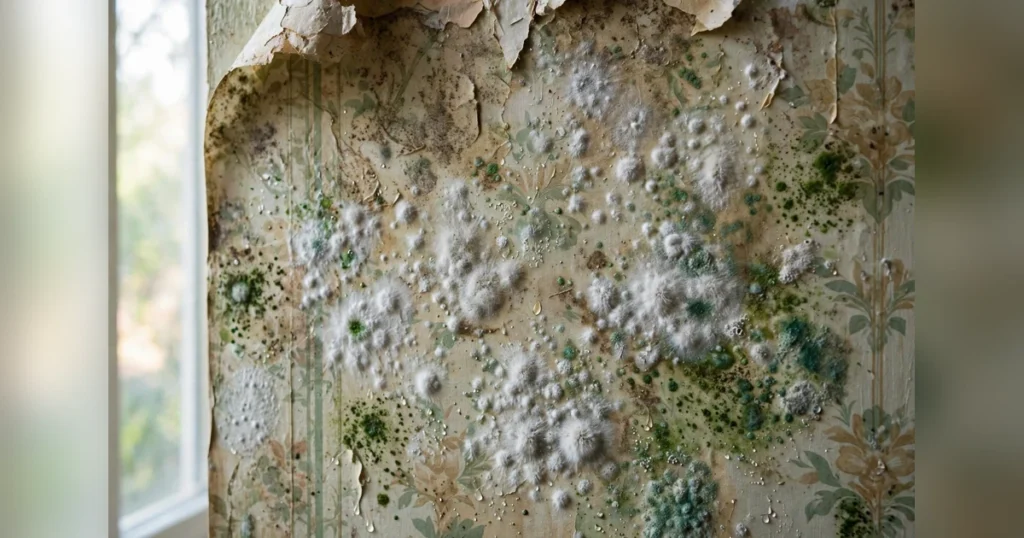
Damp carpet and AC filters. Dry it fast.
9. Ulocladium
Olive brown to black or gray. Velvety.
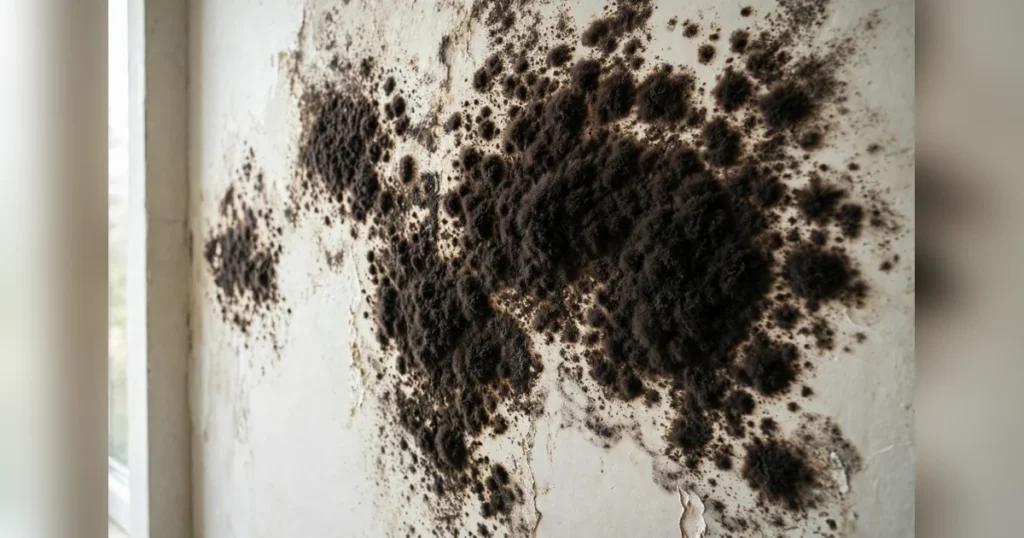
Chronically wet drywall. A moisture case.
10. Aureobasidium
Cream to pink, then brown and black. Velvety or slimy.
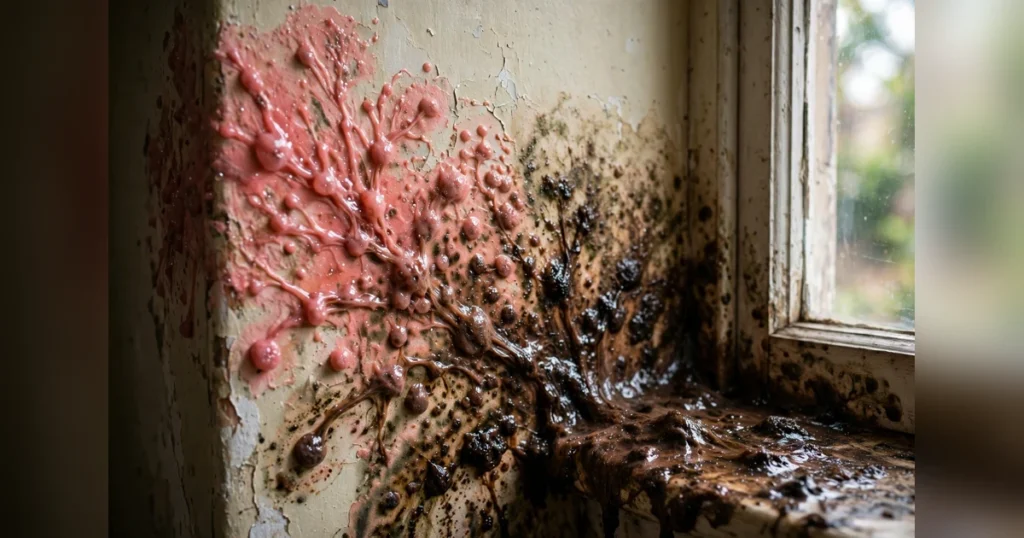
Caulk, grout, window sills. Replace grown caulk.
11. Mucor
White to gray, thick and fluffy.
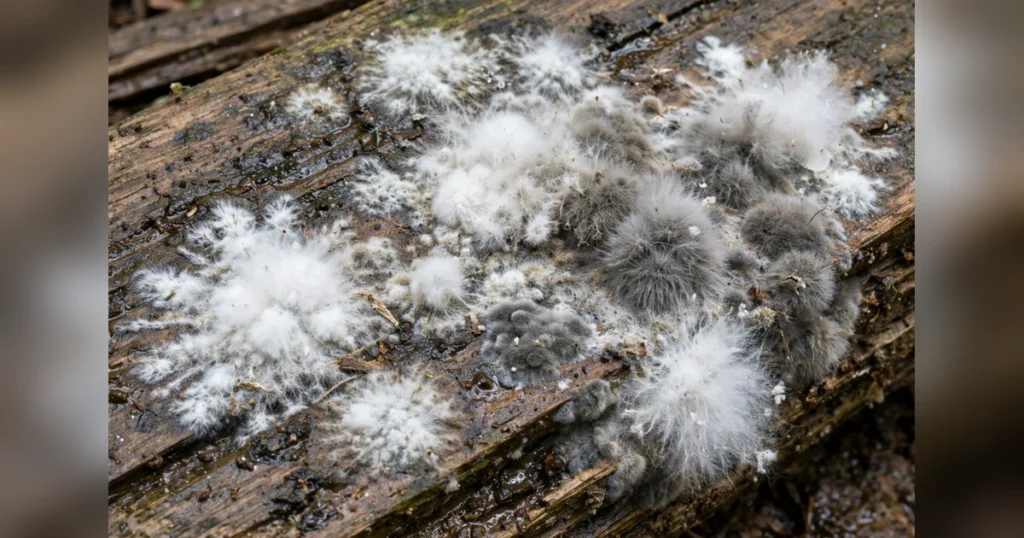
HVAC vents, damp wood. Do not name it from a photo.
12. Rhizopus
Cottony white, then black on top.
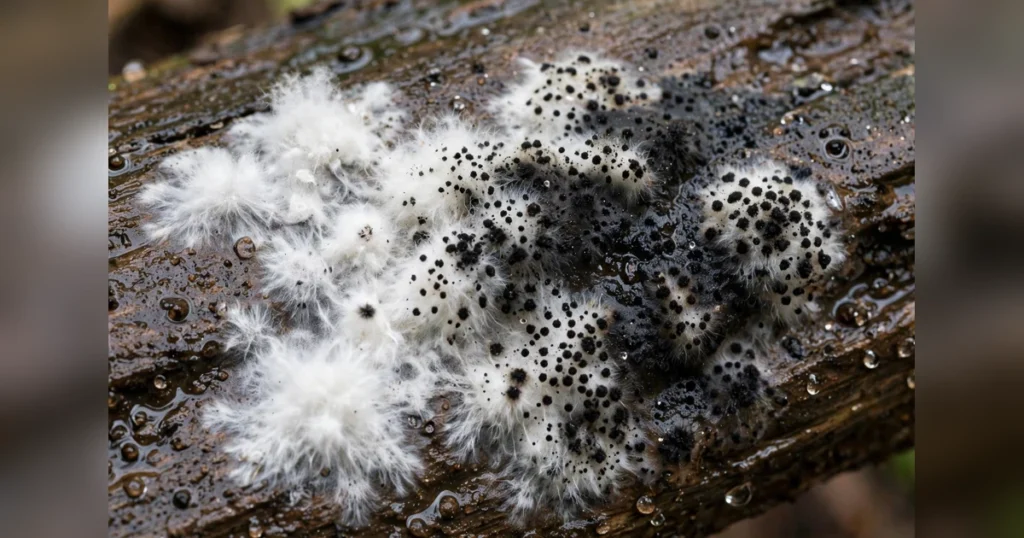
Food mold, not wall mold. Throw it away.
13. Acremonium
White, gray, pink, or orange. Moist, then powdery.
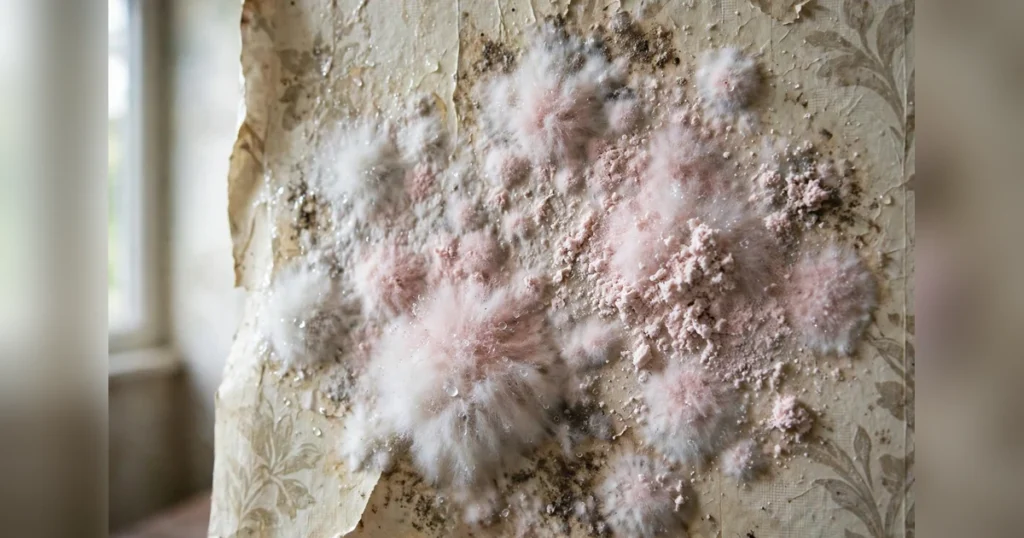
Humidifiers and drain pans. Standing water.
14. Curvularia
White to pinkish gray, then dark. Woolly.
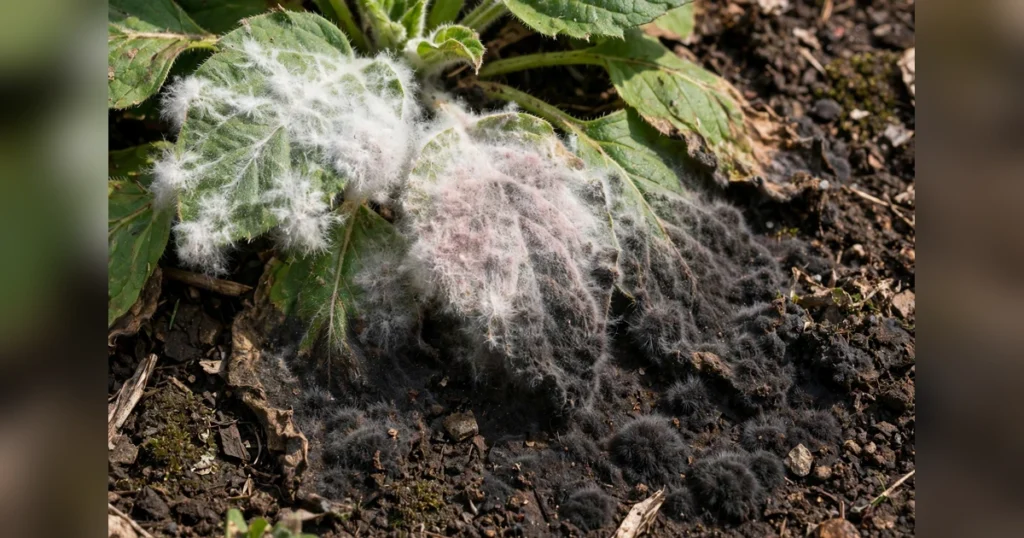
Plants and soil, not a wall type.
15. Epicoccum
Yellow to pink, then dark with black dots.
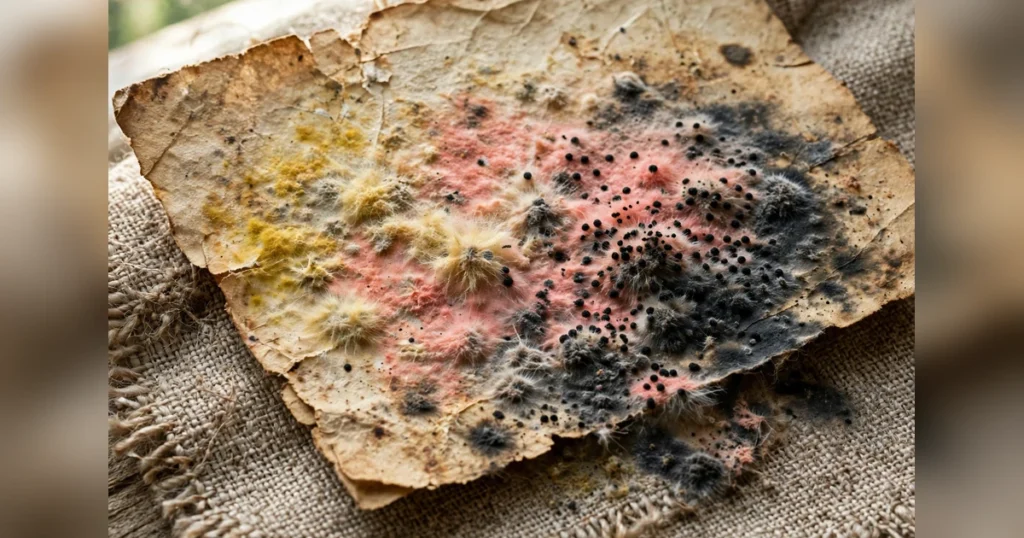
Paper and textiles. Clean and dry them.
16. Wallemia
Sources disagree: brown powdery, or gray green.
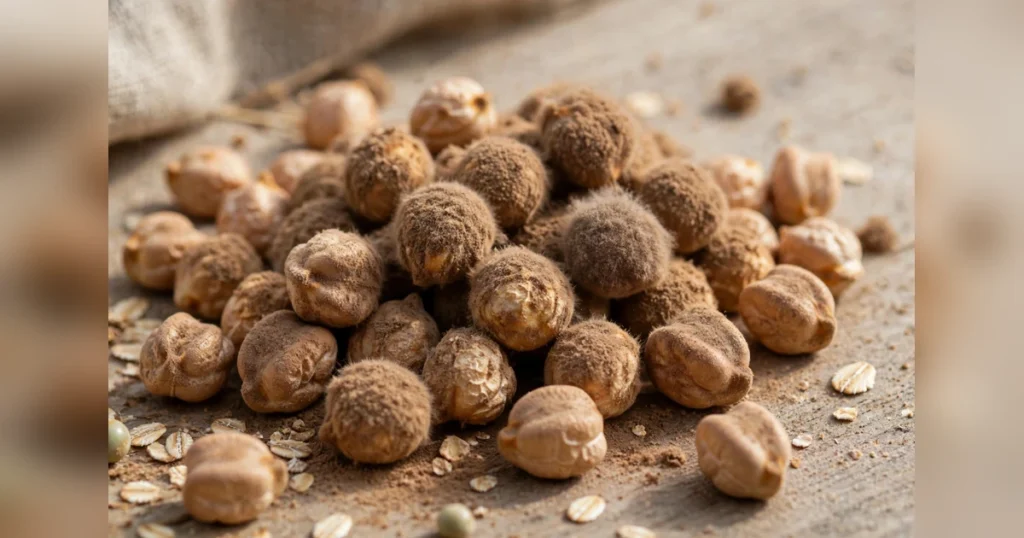
Dry foods and dust. No single color is definitive.
17. Memnoniella
Dark green to black. Texture wording disagrees.

Drywall and wall cavities. An inspection case.
18. Eurotium
Whitish to bright yellow round fruiting bodies.
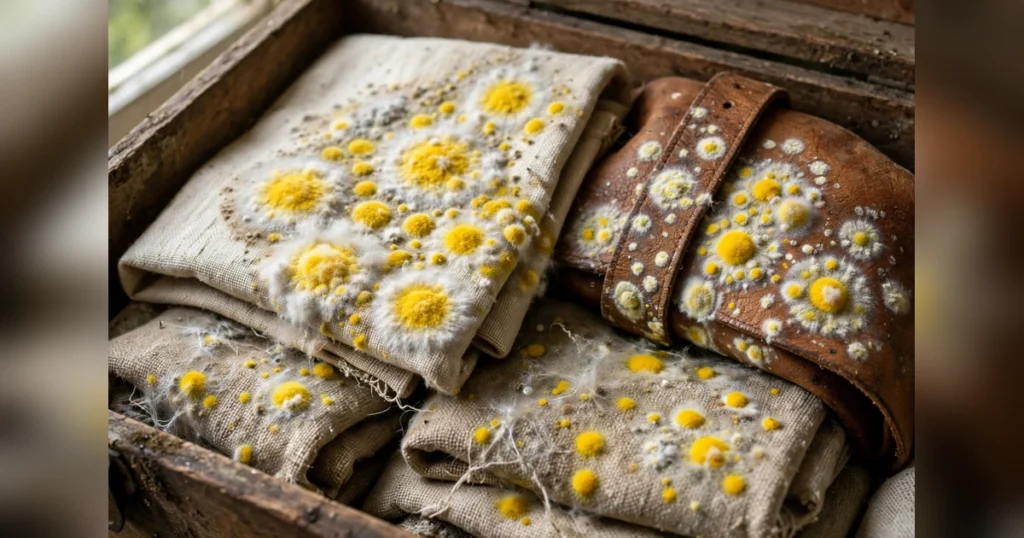
Stored textiles and leather. Dry storage.
19. Scopulariopsis
White, then light brown or tan. Velvety.
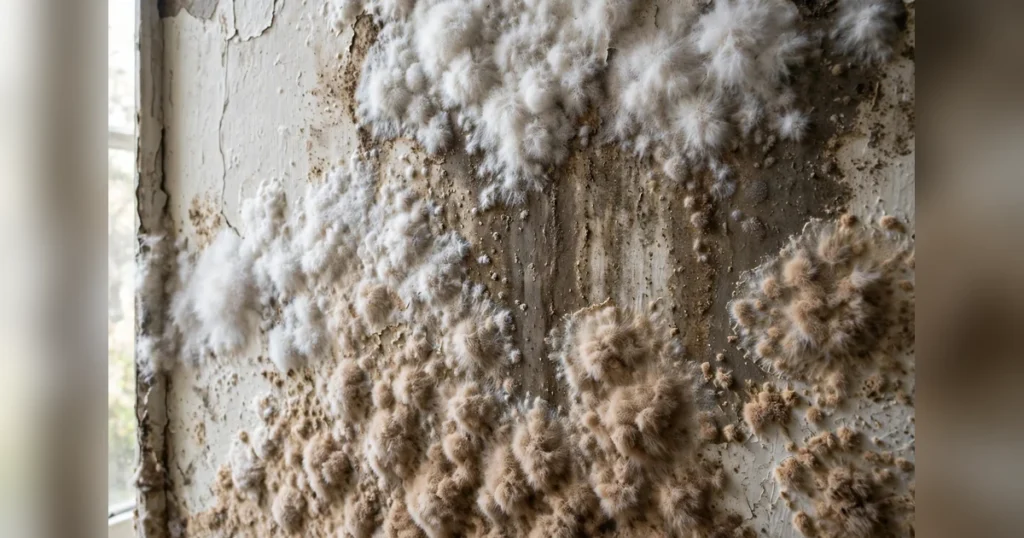
Walls, mattresses, shoes. Dry and clean them.
20. Stemphylium
Gray to brownish black. Velvety or cottony.
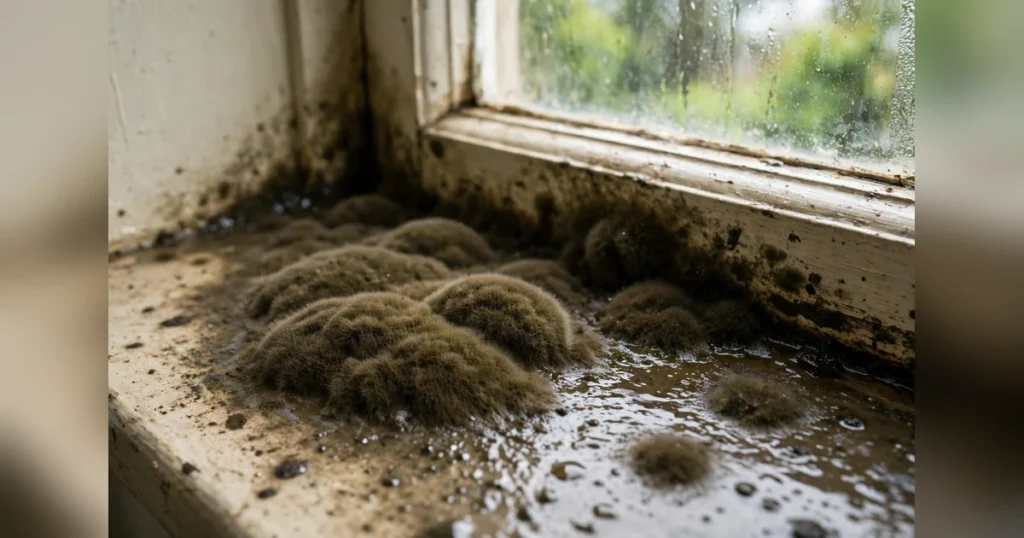
Rare indoors, mostly outside dust. Check filters.
21. Torula
Light grayish brown. Powdery.
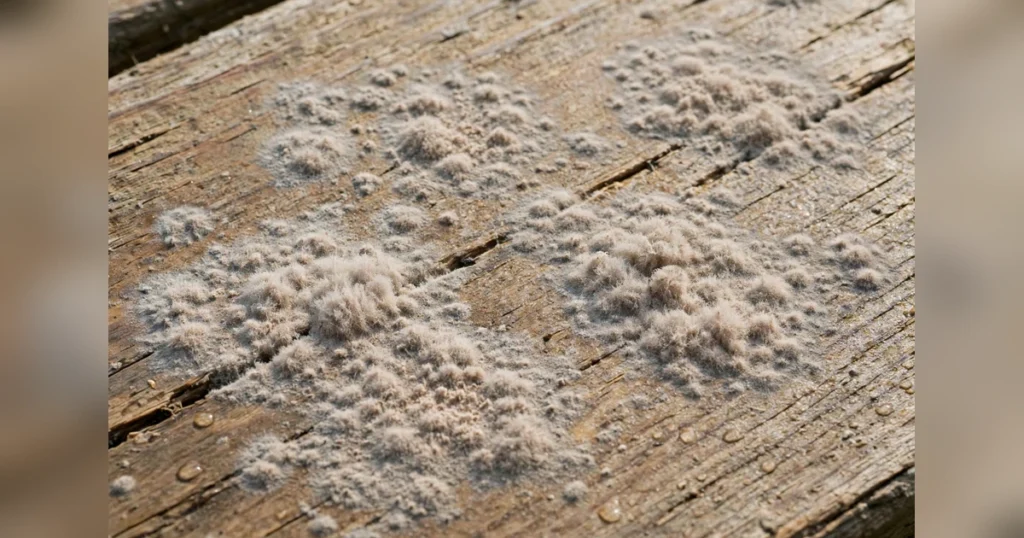
Cellulose material. Dry damp wood.
22. Serpula
Yellow orange to red brown wavy sheets.
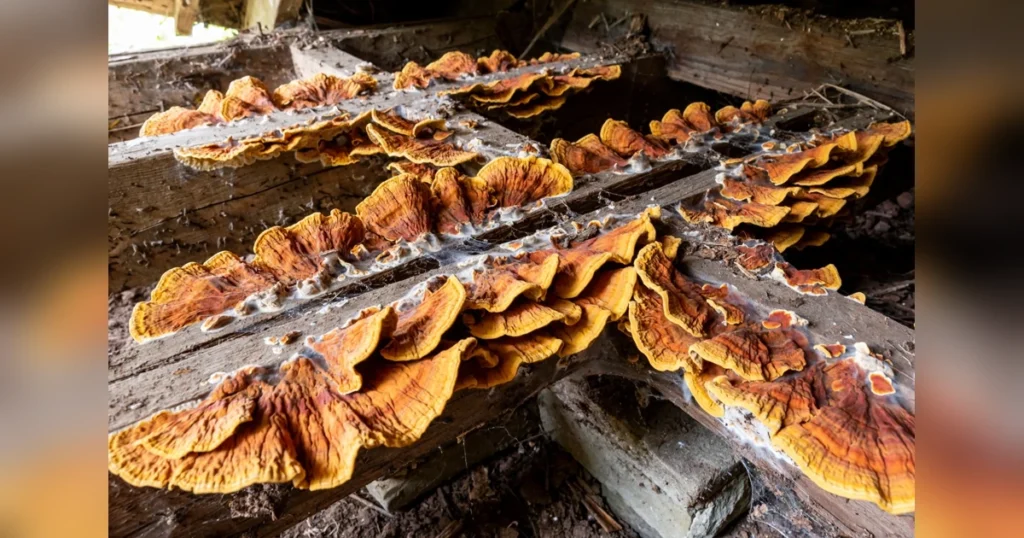
Dry rot on timber. Get structural advice.
White mold is a description, not a species
White growth cannot be named from a photo.
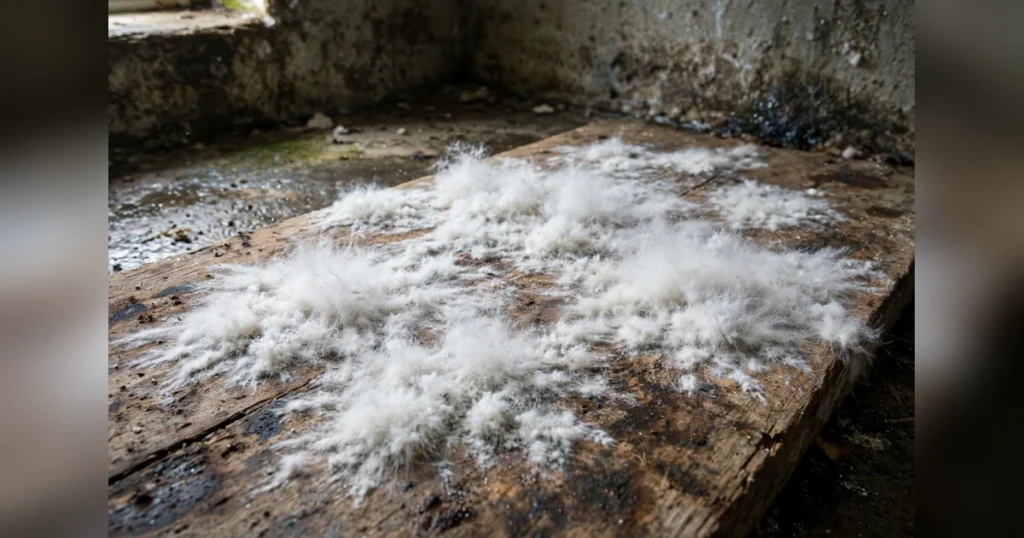
Mucor, Rhizopus, early Penicillium, early Aspergillus, and Trichoderma can all look white.
14 lookalikes that are not mold
Mold usually sits raised off the surface. Dirt, soot, stains, and salt usually lie flat.
No household color change test can confirm what a deposit is.
Mildew. Flat film, still mold.
Efflorescence. Salt, powder when pinched. Salt on a basement wall can look like growth in a photo, and only a touch test and a moisture check separate them.
Pink slime. Slimy film, usually bacteria. Pink slime in the shower is usually bacteria, not mold, and the photo cannot settle it either.
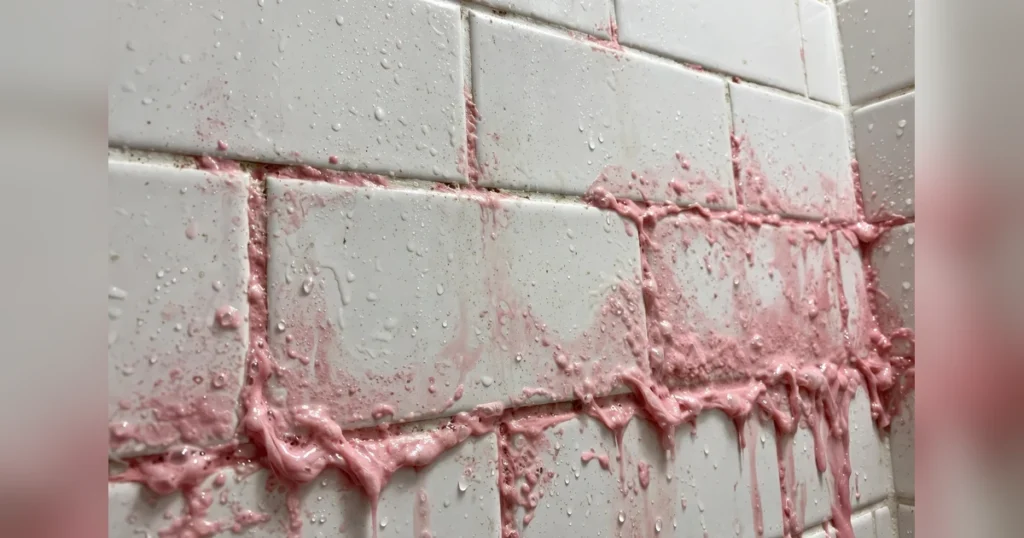
Dirt. Smooth, wipes clean.
Soot. Dry, powdery, smoky smell.
Ghosting. Stud lines, dry soot.
Rust. Straight streaks, flaky.
Wood stain. Deep in wood.
Mineral deposits. Crusty ring, not fuzzy.
Soap scum. Wipes off, feeds pink film.
Water stains. Flat, hard edge.
Iron bacteria. Orange pink rings at fixtures.
Paint defects. Blisters are vapor, not colonies.
Pollen. Wipes away and stays gone.
Stages: early, mature, wet, dry
The same mold looks different wet, dry, young, and old, so one picture is never the whole story.
Hidden growth: the photos you cannot take from the room
If the photo looks clean but the room smells musty, check behind the wall before you relax.
The most important photo is the one you did not take: the wall cavity, the attic, the space under the sink.
Wall cavity, drywall back, behind tile, carpet pad, HVAC.
What a photo cannot tell you
A photo cannot name the species, prove a health risk, or replace an inspection.
If you see or smell mold, find the moisture and fix the source. Our detect guide and mold testing page explain next steps.
2026: photo apps
Apps can screen a photo. They cannot confirm a species, and their own limits say so.
Mold Scanner launched September 16, 2026, with a 65 to 70 percent camera limit. Screening only.
How to photograph a spot
Send two photos, not one, and send them unfiltered.
Santa Barbara homes
Coastal damp, older homes, and weak fans are the local pattern. No local color or texture claim is made for any type.
Marine layer mornings, pre-1966 homes, weak fans. Check the fan vents outside.
When to get an inspection
Large, hidden, or recurring growth needs a scope.
Send the photo first, but let the inspection answer what the photo cannot.
Call (805) 765-0923 or visit our contact page for a free estimate.