Pink Mold in Shower: What It Is, How to Clean It, and Why It Keeps Coming Back
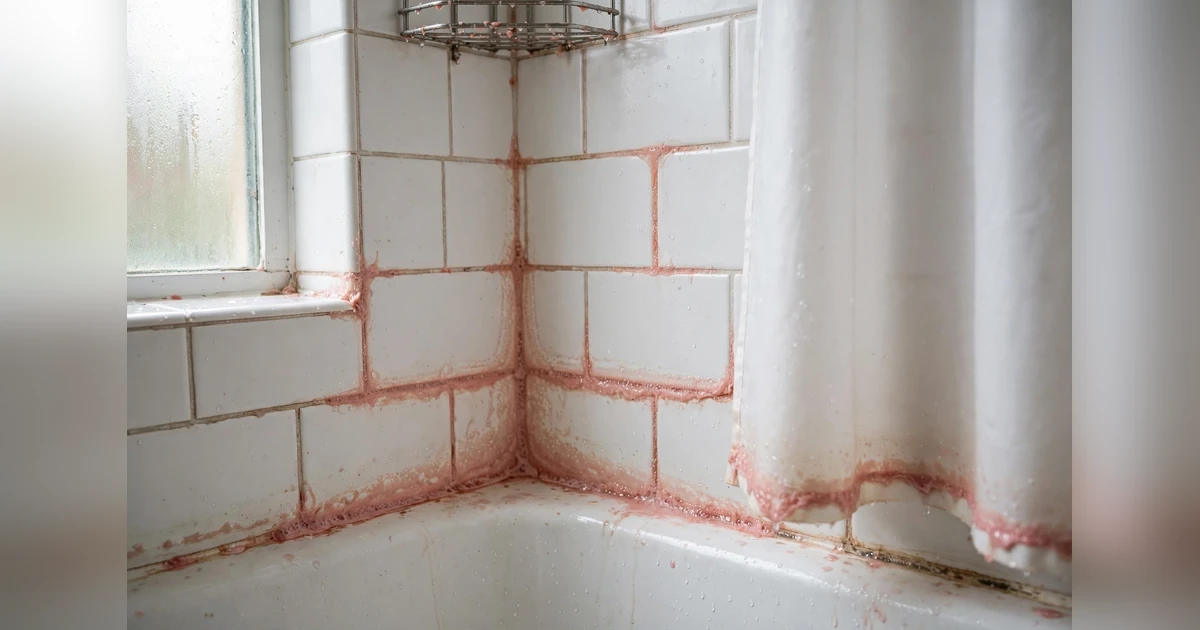
That pink film in your shower is usually not mold. It is usually a bacteria called Serratia marcescens. It makes a pink, slimy film on wet shower surfaces. It feeds on soap scum. You can clean it simply, and slow its return by drying the shower. Risk is low for healthy adults, higher for weak immune systems, open wounds, or serious illness. This guide covers only the shower: what it is, where to look, cleaning, never do list, returns, and when to get help.
What is the pink stuff in my shower?
The pink stuff is usually bacteria, not mold.
Its name is Serratia marcescens. It lives in wet places. Its pink color comes from a pigment called prodigiosin. It forms a slimy layer called a biofilm on shower surfaces. Pink in the shower is usually bacteria wearing mold’s color. People call it pink mold for its color, but color alone does not name it. The film grows where water and soap sit. It likes warm, wet air and poor airflow. Soap scum alone feeds it well.
Is it mold or bacteria?
Most pink shower film is bacteria, and true mold looks and acts different.
| Feature | Pink shower film | True mold |
|---|---|---|
| What it is | Bacteria | Fungus |
| Look | Pink, orange, or red slimy film | Black, green, or fuzzy patches |
| Feel | Slimy and flat | Fuzzy or raised |
| Place | Wet shower surfaces with soap | Damp walls and materials |
| Removal | Clean and disinfect | May need deeper moisture work |
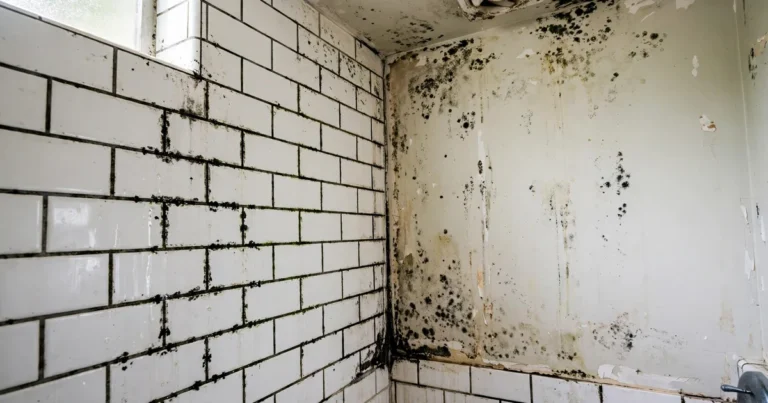
A small number of true molds can also look pink in a shower, such as Aureobasidium and Fusarium. Color alone cannot tell Serratia apart from these molds. No home test can settle it either. No bleach dab, color chart, or phone photo can name it. Lab testing can, but it is rarely needed for shower film. A pink slimy film on a wet shower surface is a cleaning and drying job first. Call it pink mold if you like. The shower does not care about the name, only the water.
Why does it grow in my shower?
It grows because your shower gives it food, water, and warmth all at once.
Soap scum is the food. The shower is the plate. Every shower leaves soap, shampoo, and body oils behind. The bacteria eats fatty substances in these residues. Warmth helps it grow. One 2026 guide lists growth between 77 and 95 degrees Fahrenheit, which is normal shower warmth. Poor airflow keeps surfaces wet longer, and wet surfaces let the film grow again fast. Standing water is worst: water sitting in grout, folds, or around the drain gives film time to build. Hard water minerals add grip, and iron can feed bacteria too. Sellers of shower filters claim filters help by cutting chlorine byproducts, minerals, and iron. One shower user online reported a whole home water softener cleared the pink film in their home. Both claims are single source claims, not settled fixes. Neither is proven as a cure. Drying and cleaning matter more.
Where exactly should I look in the shower?
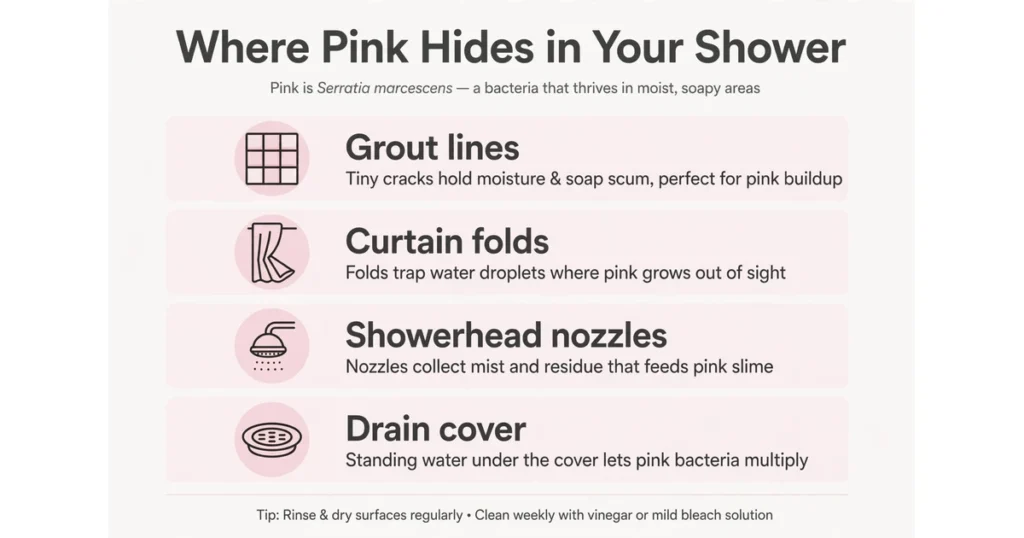
Look in five spots: grout, curtain, showerhead, drain, and the ceiling above the shower.
The drain, the folds, and the grout are pink’s three favorite addresses.
| Spot | What pink looks like there | First move |
|---|---|---|
| Grout lines | Pink lines between tiles | Scrub with a brush after removing scum |
| Curtain bottom and folds | Pink hem, slimy folds | Wash or replace the liner, hang it open |
| Showerhead nozzles | Pink tint, weak spray | Soak in vinegar, scrub nozzles |
| Drain cover | Pink ring | Lift the cover, clean it, rinse well |
| Ceiling above shower | Pink dots near steam | Clean gently, then fix steam and airflow |
Corners stay wet longest, so check them first. A curtain that stays bunched stays wet, and wet is where pink starts. A showerhead that sprays unevenly may be telling you where pink lives. Pink inside the nozzles can block water and make the spray weak or uneven.
How do I clean it from tile and grout?
Clean in this order: remove scum first, then disinfect, then rinse, then dry.
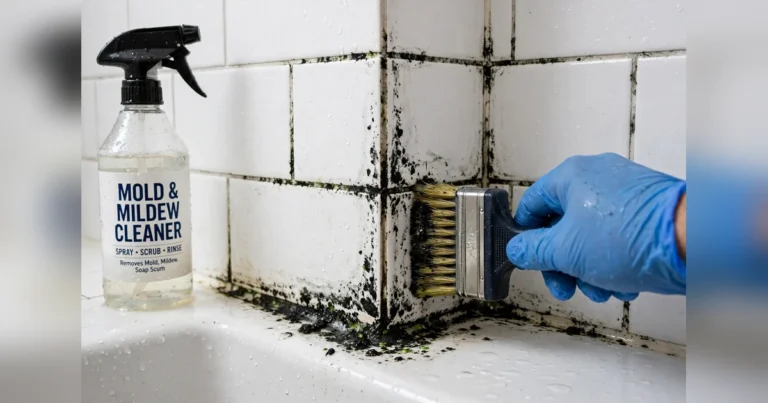
If you skip the scum step, disinfectant sits on top of food and works less well. Bleach on top of scum cleans the color and leaves the dinner. Start with warm water and dish soap, scrub grout, corners, and caulk bases with a stiff brush, then rinse. Then disinfect. Wear gloves and air the room. Pick one disinfectant. Bleach solution, hydrogen peroxide at 3 percent, or a store antibacterial bathroom cleaner all appear in guides. Sources disagree on strength and time, so the table shows the disagreement honestly.
| Cleaner | Strength in sources | Time in sources |
|---|---|---|
| Bleach solution | 1 cup per gallon, up to 1 to 1 | 5 to 15 minutes |
| Hydrogen peroxide | 3 percent | 10 minutes |
| White vinegar | Half vinegar and half water | 10 to 15 minutes, 1 hour soak for showerhead |
Then scrub lightly, rinse, and dry every surface. If it wipes off pink and slimy, you cleaned the film, not the cause. The cause is the wet, soapy surface, so drying is part of cleaning, not an extra step.
How do I clean the curtain, showerhead, and drain?
Each spot needs its own method, and the curtain needs air more than chemicals.
Wash a fabric curtain in hot water with vinegar, or follow its label. Wipe a plastic liner with bathroom cleaner and rinse. Hang the curtain open after every shower. Replace a liner that stays pink or torn. For a showerhead, use the vinegar soak. Mix half white vinegar and half water. If the head comes off, soak it for one hour. If it stays fixed, fill a strong plastic bag with the mix, tie it over the head so nozzles sit in the liquid, and soak for one hour. Then scrub nozzles, rinse one minute, refit, and flush with hot water. For the drain, lift the cover, scrub the cover and the rim, rinse well, and dry. No source settles whether a pink drain reseeds the shower or only shows the same film. Clean it as part of the shower.
What should I never do to pink shower slime?
Never mix cleaners, never use ozone, and never judge by color alone.
Never mix white vinegar and hydrogen peroxide. Mixed together they make peracetic acid, which irritates skin, eyes, and lungs. One shower user online reported using the mix with no scrubbing, then warned about the irritant risk themselves. Never run an ozone generator in a home you live in. One user reported it kills everything but said no one can be near it. Never paint over pink film. Paint hides the film and traps wetness behind it. Never guess the organism from color. Pink does not prove bacteria, and dark does not prove a dangerous mold. Never skip drying. If you use bleach, keep the room aired.
Why does it come back so fast?
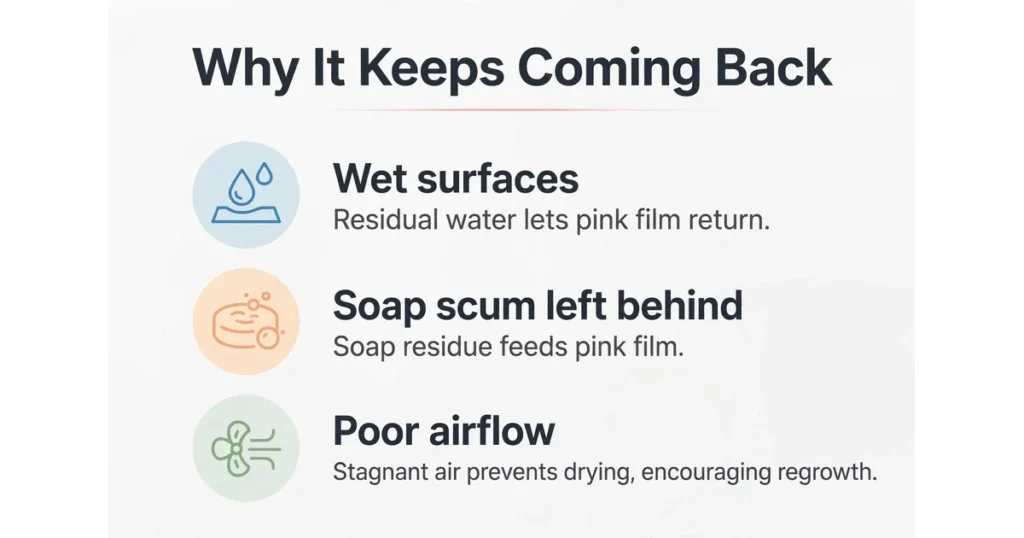
It comes back because water, food, and warmth return every day.
Pink that returns in a day was never gone. It was only wiped thin. A thin wipe leaves film in grout pores, curtain folds, and nozzle holes. The next shower feeds it again. Pink that returns in weeks is a different story. That means cleaning works but the routine or the airflow needs fixing. Shower users online report the same split. Some scrub weekly and still see pink return. One user blamed water standing as it drains. One user reported no permanent fix at all, saying water plus time equals growth. No source proves a permanent one time cure. The rule is simple: return in a day means never dried or never fully cleaned; return in weeks means the drying routine is missing.
How do I stop it coming back?
Dry the shower after every use, and clean it every week.
Dry the shower and pink has to start over from nothing. Squeegee walls and doors after each shower. Hang the curtain open. Wipe the showerhead and fixtures dry. Fix drips fast. Rinse soap off walls after bathing. Liquid soap leaves less residue than bar soap. Wash curtain liners monthly. Clean and disinfect shower surfaces weekly. Seal grout lines and replace cracked caulk when pink keeps returning in the same lines. Sealed grout gives film less grip. Fan time is disputed too, so pick a routine you can keep daily.
| Fan advice in sources | Time |
|---|---|
| One shower user | 15 minutes after showering |
| One water guide | 20 minutes after showering |
| One 2026 shower guide | 20 plus minutes after showering |
| One brand guide | Fan or window for a few hours |
A fan that runs every day beats a perfect fan time you never use. With no fan, open a window or door after showering. If steam stays on the mirror long after showering, airflow is too weak.
Is it dangerous to shower with it?
For healthy adults, risk is low, but take it seriously in vulnerable homes.
Serratia marcescens can cause infections in people with weak immune systems, chronic illness, open wounds, or tubes such as catheters. Guides list urinary, respiratory, wound, and eye infections for these groups. Those lists come from medical sources about the bacteria in general, not from proven shower cases. No source in this guide proves a shower film caused a specific infection. Do not let a guide scare you with a list. The safe rule: clean it promptly, keep it off open wounds, and keep vulnerable people away from heavy film. In such homes, clean and dry the shower before they use it. Fast spreading film or film with wall dampness is no longer a simple cleaning job.
What is new in 2026?
Two 2026 guides exist, but no 2026 government update covers pink shower slime itself.
A 2026 shower guide updated in April 2026 added the water quality angle: chlorine, hard water, and iron as film helpers. A May 2026 brand guide gave a short product method, 5 minute dwell. The United States Environmental Protection Agency updated a general mold page on September 8, 2026, but that update is general mold guidance, not pink shower guidance. No major outlet 2026 news story on pink shower slime was found. No new household guidance from the government on this exact topic was found. Judge a 2026 page by its method and honesty, not its date.
When should I get an inspection instead of just cleaning?
Get an inspection when cleaning stops working or dampness goes beyond surface film.
Book a check if pink returns within days despite full cleaning and drying, if grout stays dark or soft, if the wall feels damp, if paint peels near the shower, or if a musty smell stays with no visible patch. Surface film is a cleaning job. A damp wall or failed seal is a moisture job. California law does not name pink slime or Serratia, so a small pink film on working shower tile or grout cannot be called a legal violation on that text alone. Keep film and dampness as two separate questions. If you are unsure which one you have, a mold testing visit can check moisture and air quality in the home. For black growth concerns, see black mold inspection. For help, contact us or call (805) 765-0923 for a free estimate. Coastal showers stay damp longer, but no Santa Barbara figure for pink shower slime exists, and this guide invents none.