What Happens If You Touch Mold? What to Do Right Now, and When to Worry
Short answer
For most healthy adults, touching mold once is not an emergency. Wash your hands with soap and water, change clothes that touched it, and watch your skin for 1 to 3 days. Touching mold is usually a washing problem, not an emergency. The risk grows when the person is sensitive to mold, when the skin is cut or cracked, when the patch is large, or when touching it sends a cloud of spores into the air that you then breathe in. If a rash spreads, blisters, comes with fever, or comes with trouble breathing, that is a doctor visit, not a home remedy.
Quick facts
- The main risk from touch is allergy and irritation, not infection. The EPA says inhaling or touching mold or mold spores may cause allergic reactions in sensitive people, including skin rash.
- Healthy intact skin is a strong barrier. Mold does not usually grow on it. Broken skin and weak immunity change the story.
- Wash with soap and water. Sanitizer alone is not enough to remove spores.
- Do not touch your face before washing. Hands carry spores to eyes, nose, and mouth.
- Watch for 1 to 3 days. Delayed contact dermatitis can show up days after the touch.
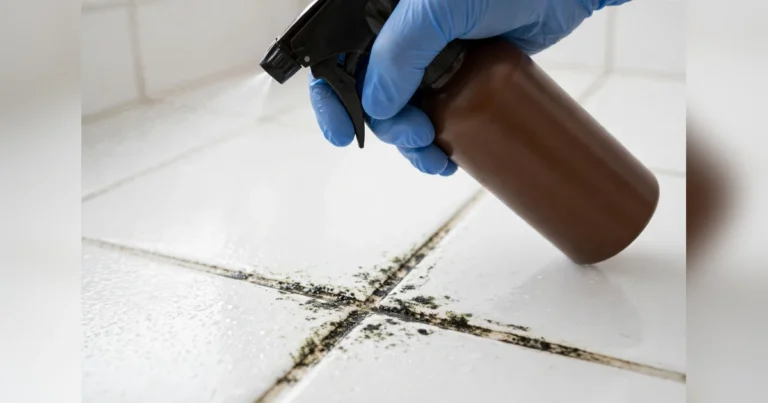
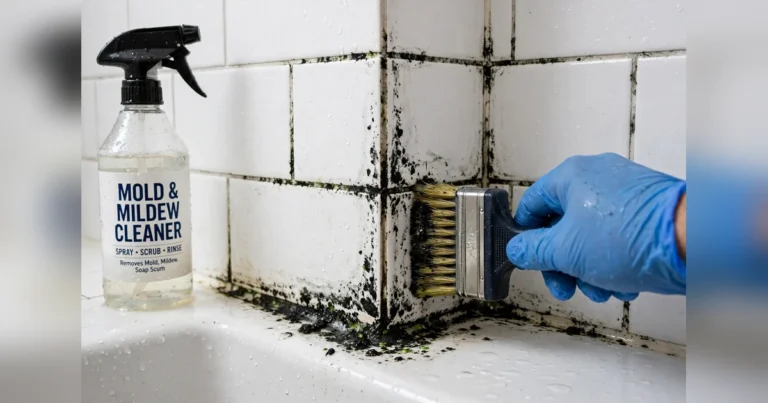
- Gear rule: long gloves, goggles with no vent holes, and an N-95 mask that fits. A dust mask does not protect you.
- DIY limit: under 10 square feet, on a hard surface, with no high-risk person in the home. Bigger than that, or inside a wall, or in the HVAC system, means a professional.
What happens the moment you touch mold?
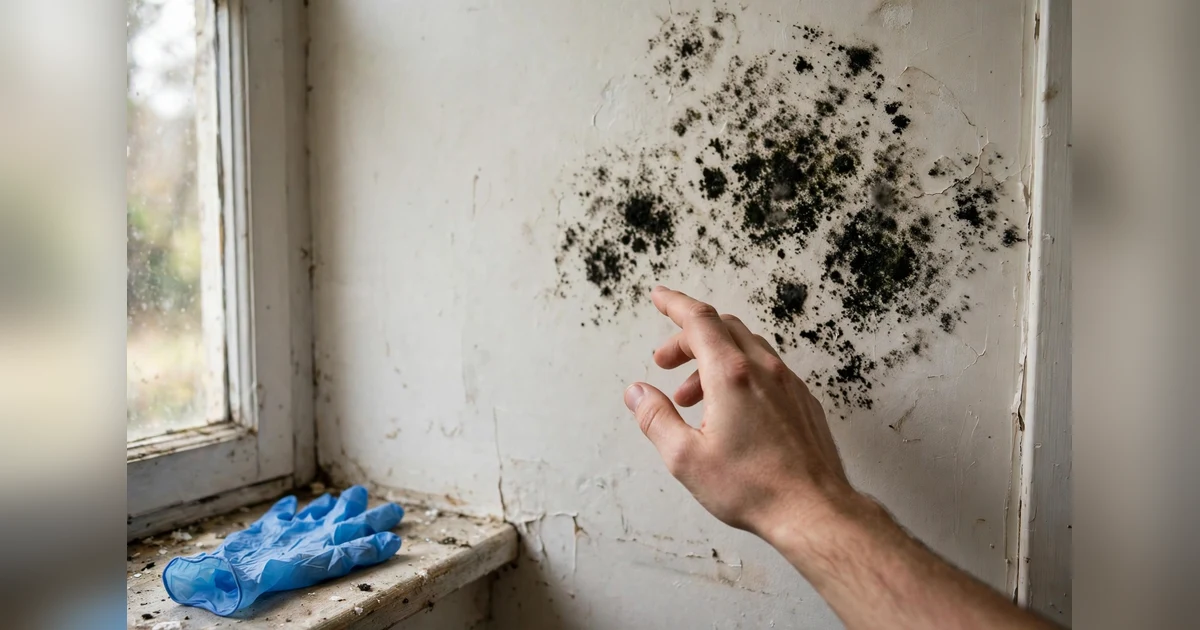
In the first moment, usually nothing you can feel. Mold spores are tiny and invisible. When your bare hand presses a patch, spores and small fragments stick to your skin. For most people with healthy skin, nothing happens at all in that moment. The skin sheds dead cells all day, and landed spores get shed with them.
For a sensitive person, the first signs can start within minutes: itching where the skin touched the mold, redness, or a prickly feeling. Eyes can water if spores reach them. If you disturb a dry patch, spores also lift into the air at once, and you may start sneezing or coughing while your hand is still on the wall. The most dangerous part of touching mold is often what you breathe when you disturb it. That is why the skin question and the breathing question always travel together.
Your hands are the delivery system, not just the victim. Spores on your fingers move to your phone, your door handles, your face, your clothes, and the next room you walk into. That spread is the second thing that happens in the first moment, and it is the part people forget.
What happens in the hours and days after?
The story unfolds on a timeline, and the timing tells you what kind of reaction it is. Most reactions follow one of three paths.
Within hours, an allergic reaction can show up: red bumps, raised welts, hives, or itchy patches where the skin touched the mold, plus hay fever symptoms such as sneezing, a runny nose, and red eyes. Mold allergy rashes tend to appear within hours of exposure and look like itchy red welts, raised and patchy, on the torso, arms, neck, or face.
In 1 to 3 days, delayed contact dermatitis can appear: red, sharp-edged patches only where the skin touched the trigger, sometimes with small blisters or weeping. This delay is why people get confused. The rash that shows up tomorrow was decided by the touch you forgot today. If you do not connect the rash to the touch, you keep touching the same patch and the rash keeps coming back.
Over days to weeks, existing eczema can flare up. Mold is a documented trigger for flare-ups in people who already have eczema. The skin gets drier, itchier, and more inflamed, and scratching makes it worse. A rash that improves when you are away from home and worsens when you return is a strong clue. If the rash gets better away from home and worse back home, the house is telling you something.
For most healthy people with a small touch and a good wash, none of this happens. The skin stays calm, and the story ends at the sink.
I already touched it. What do I do right now?
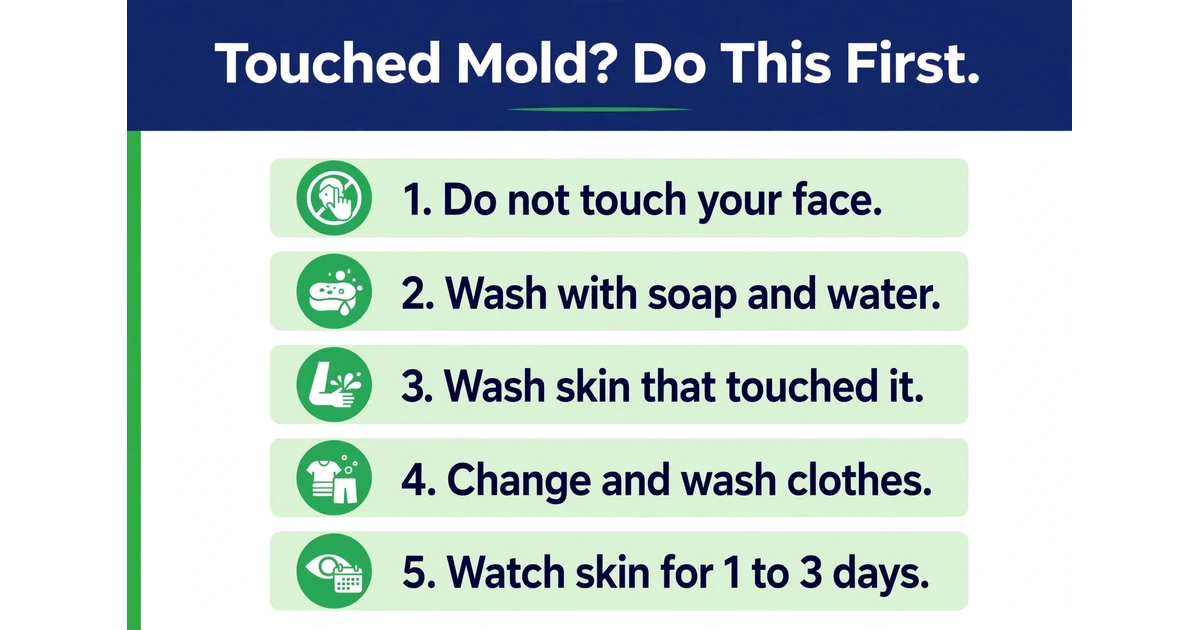
Do these five steps in order, and do them now, not later.
- Do not touch your face, eyes, nose, or mouth. Keep your hands away from your face until they are washed.
- Wash your hands thoroughly with soap and water. Use a normal 20 second hand wash, warm or cold water, and scrub between fingers and under nails. There is no special mold hand wash. Soap and water is the whole method.
- Wash any other skin that touched the mold, and rinse your eyes with clean water if spores got in them.
- Change clothes that touched the mold and wash them promptly. Mold can collect on clothes and be released later, so do not let contaminated clothes sit in the laundry basket.
- If the exposure was large, for example yard work, flood debris, or cleaning a patch, take a shower and change fully.
Then watch. Look at the skin that touched the mold once a day for 1 to 3 days. Take a photo of any rash in natural light, so a doctor can see how it started if you need one later. Note the time of the touch and whether the rash gets better when you leave the house. That note is worth more than any photo of the mold itself.
Is hand sanitizer enough after touching mold?
No. Sanitizer does not wash spores off. Soap and water does. Hand sanitizer is made to kill germs on the skin. Mold spores are not killed that way, and they are not rinsed away by a gel. They stay on the skin until soap and running water carry them off.
This matters because the real pattern is so common: someone touches a moldy wall or a moldy box without thinking, feels uneasy, reaches for the sanitizer bottle, and then touches their face feeling safe. They are not safe yet. The spores are still there. The rule is simple. Sanitizer is for germs. Soap and water is for spores. If you only have sanitizer, use it, but wash with soap and water as soon as you can, and do not touch your face until you do.
What does a mold rash look like?
A mold rash is usually itchy, red, and raised, and it shows up where the skin met the mold or where airborne spores landed. The most common patterns are small red bumps or welts that itch intensely, raised inflamed patches that feel warm to the touch, sudden hives, and dry scaly areas that crack or peel.
It helps to compare three rashes people confuse with each other.
| Feature | Mold allergy rash | Eczema | Contact dermatitis |
|---|---|---|---|
| Look | Itchy red welts, raised, patchy | Dry, cracked, scaly | Red, sharp-edged |
| Where | Anywhere airborne spores reach, often torso, arms, neck, face | Hands, elbows, knees | Only where skin touched the trigger |
| Timing | Within hours of exposure | Chronic, ongoing | 1 to 3 days after contact |
| Pattern | Better when away from home | Lifelong, flares and settles | Clears when the trigger is removed |
| First step | Allergy workup plus a mold check of the home | Dermatologist | Find and remove the trigger |
Do not try to diagnose yourself from a photo online. Photos are a starting point, not a diagnosis. What matters is the pattern: where it is, when it started, whether it itches, and whether it improves away from home. A rash that comes back every time you are home, even after creams, points to the home, not the cream.
While a rash itches, protect it from yourself. Keep the skin clean with cool water, let it air dry, and do not rub it with towels. Cut your fingernails short and wear light cotton gloves at night so you do not scratch in your sleep. Scratching is how a simple rash turns into a second problem: bacteria that normally live on skin can get into scratched skin and cause an infection that needs antibiotics. Ice can help with itch and swelling, and a bland moisturizer protects the skin barrier. For a basic itchy rash, an over-the-counter antihistamine and a small amount of hydrocortisone cream for a short time are what clinicians usually suggest, but ask a clinician before using steroid cream on a spreading, blistering, or undiagnosed rash.
Is it irritation, allergy, or infection?
These are three different things, and mixing them up is the biggest mistake in this topic. Use this table to tell them apart.
| Type | What it feels like | What to do |
|---|---|---|
| Irritation | Redness and itching that fades after washing, in anyone | Wash with soap and water, avoid further contact, watch for 1 to 3 days |
| Allergy | Hives, itchy welts, sneezing, runny nose, red eyes, asthma symptoms, in sensitive people | Wash, antihistamine for itching, see a clinician if it spreads or breathing is affected |
| Infection | Spreading pain, blistering, swelling, warmth, pus, or fever, almost only with broken skin or weak immunity | See a doctor promptly, do not wait it out at home |
Irritation is the most common and the least serious. The EPA states that mold exposure can irritate the eyes, skin, nose, throat, and lungs of both mold-allergic and non-allergic people. Allergy needs a sensitive immune system and can be immediate or delayed. Infection needs an opening and a weak defense, which is the next section.
One honest limit from the EPA belongs here: symptoms other than the allergic and irritant types are not commonly reported from mold exposure, and research on mold and health effects is ongoing. That is why articles that promise a long list of exotic symptoms from one touch should not be trusted.

Can mold grow on your skin?
No, not on healthy intact skin. This is the question almost everyone asks, and the answer is reassuring. Healthy skin is slightly acidic, which holds back many fungi. Skin constantly sheds dead cells, and landed spores get shed with them. The immune system also defends actively against fungi.
Mold needs a broken defense to settle on living skin. That means cuts, burns, cracked eczema skin, or skin that stays damp in folds, or an immune system that cannot fight back. In those cases, molds such as Aspergillus, Fusarium, and Rhizopus can rarely cause skin infections, but even then it is uncommon.
So the rule is plain. Healthy skin sheds mold. Broken skin invites it in. If your skin is intact and you washed well, you do not need to worry about mold growing on you. If your skin is broken, the next section applies to you.
I have a cut and I touched mold. Is that different?
Yes, and this is the one case where a touch deserves more respect. A cut, a burn, a cracked eczema patch, or a fresh surgical wound gives spores a way past the skin barrier. For a healthy person, even then, infection is still uncommon, and the right move is simple: wash the wound with soap and clean water right away, cover it with a clean dressing, and watch it for spreading redness, warmth, swelling, pain, or pus.
For a person with a weak immune system, the same touch carries real risk. The CDC describes mucormycosis, a serious but rare fungal infection caused by molds called mucormycetes, which mainly affects people with weakened immune systems. It most commonly affects the sinuses or the lungs, but it can also occur on the skin after a cut, burn, or other skin injury, with blisters and burns as skin symptoms. It does not spread from person to person. Risk conditions include cancer, organ or stem cell transplant, wounds or burns, long-term corticosteroid use, and uncontrolled diabetes.
A second group, Fusarium, follows the same pattern. In a review in Clinical Microbiology and Infection, tissue breakdown from trauma, severe burns, or a foreign body was the risk factor in people with healthy immune systems, while in people with blood cancers Fusarium was the second most common pathogenic mold. Host immune status was the single most important factor in the outcome.
The plain version: a cut plus a healthy immune system means wash, cover, and watch. A cut plus a weak immune system means wash, cover, and call a clinician the same day. A wound that blisters, turns black, spreads fast, or comes with fever means urgent care, not waiting.
What if my child touches mold?
A child who touches mold needs washing, not panic. Children touch walls, toys, and moldy boxes without thinking, and parents find out after the fact. Do the same five steps as for an adult: keep hands away from the face, wash hands and face with soap and water, change clothes that touched the mold, and watch the skin for 1 to 3 days.
Then add the child rules. Move the child away from the moldy area and do not let the child keep playing there. Do not disturb a moldy area while a baby remains in the room. Move the baby and essential items away before any cleaning, opening of materials, sanding, painting, or repair work, and never dry-brush, sand, or scrape moldy material near a child.
Watch breathing as well as skin. Children are the group the newest research worries about most. A study from the University of Bristol, published in February 2026 in Environmental Research: Health, followed nearly 14,000 children from birth to about age 24 and found that serious indoor mold exposure at age 5 was tied to nearly 6% lower lung function by age 15 and 1.85 times the odds of an asthma diagnosis by age 8. That study measured home exposure, not one touch, and the article must be honest about that. But it explains why a child who keeps touching a moldy wall deserves a fixed wall, not just washed hands.
Call the pediatrician if the child develops a spreading rash, blistering, wheezing, trouble breathing, or a rash with fever, or if the child has asthma or allergy and the symptoms do not settle. Keep the house humidity below 50%, clean visible mold with soap and water, and on high mold-count days, have children bathe or shower and change clothes after playing outdoors, as KidsHealth advises parents.
What about pets that touch mold?
Pets get the same wash, and the same keep-away rule. Dogs roll in moldy garden areas and walk through flood debris. Cats rub against moldy walls and boxes. Wash paws with soap and water after a pet has been in floodwater or a contaminated debris area, and keep pets away from visibly moldy areas, damaged drywall, insulation, crawl spaces, and flooded rooms.
Watch for licking, chewing at paws, or skin irritation after exposure. Pets groom themselves, so spores on paws end up in mouths. If a pet keeps licking one spot, or the skin looks red and irritated after a moldy-area visit, call the veterinarian. And do not let a pet sleep on bedding that sat in a moldy or flooded area. Wash it hot or throw it out.
Is touching black mold worse than other mold?
No. Black mold is not a special touch poison. The rule is the same for every mold you can see. This is the point where the internet does the most damage, because some pages call black mold “particularly dangerous to touch” while the health authorities say the opposite.
California Department of Public Health answers the question directly: no, you do not need to know if the mold in your building is toxic mold or black mold. Any type of mold that you see or smell in your building is a risk to your health and should be fixed, and there is currently no evidence that the particular kind of mold in your building matters.
The EPA says the same thing in plainer terms: molds produce allergens, irritants, and in some cases potentially toxic substances, and inhaling or touching mold or mold spores may cause allergic reactions in sensitive people. The species name does not change what you do with your hands. Wash them. Do not touch it bare-handed again. Fix the water that grew it.
What does change the risk is not the species but the size, the place, and the person. A large patch, a patch inside a wall or an HVAC system, and a person with asthma, allergy, or weak immunity all raise the stakes, whatever color the mold is.
When should I see a doctor?
Most touches need no doctor at all. A few need one fast. Use these thresholds and do not guess.
Home care is enough when the rash is small, itchy, and local, it improves after washing, and it fades within a few days. An over-the-counter antihistamine, a cool compress, and a bland moisturizer are the usual home steps.
See a doctor when the rash spreads, flares even with an antihistamine, turns into persistent hives, disrupts sleep with itching, blisters, produces pus, or comes back every time you are home. See a doctor also when the person is an infant, has a weak immune system, or has a cut or wound that touched mold and shows spreading redness or warmth.
Get urgent care right away for swelling of the lips, tongue, or throat, trouble breathing, rapidly spreading hives, faintness, a rash with high fever, widespread blistering or peeling skin, or a purple bruise-like rash that does not fade when pressed. These are emergency signs, not wait-and-see signs.
A useful test for the doctor visit: does the skin improve when you are away from home and worsen when you return? A board-certified dermatologist, Dr. Paul Kuzel, made exactly this point in September 2026, explaining that mold sensitivity can cause eczema-like eruptions, contact dermatitis, and hives, with higher risk for people with barrier problems or atopic dermatitis, and that improvement away from home is the key clue. Tell the doctor about the touch, the timing, and the away-from-home pattern. It narrows the search faster than any photo.
What should I wear so I never touch mold bare-handed again?
Gloves cost less than the doctor visit that follows bare hands. Keep this kit where your cleaning supplies live, so the next damp patch is never a bare-hand decision.
| Item | What to pick |
|---|---|
| Gloves | Long gloves that reach the middle of the forearm; nitrile, vinyl, or rubber for water and mild detergent; natural rubber, neoprene, nitrile, polyurethane, or PVC for disinfectants or bleach |
| Goggles | Goggles with no ventilation holes, so spores cannot reach your eyes from the sides or top |
| Respirator | N-95 respirator that fits your face properly; a dust mask does not protect you |
| Clothing | Long sleeves, long pants, and removable protective clothing or disposable coveralls for larger jobs |
| Boots | Waterproof boots for flood work and wet areas |
| After-work wash | Soap and clean water on hands and exposed skin the moment you stop, and work clothes washed at once |
The CDC‘s 8 tips for mold cleanup say the same thing in one line: put on personal protective equipment (gloves, mask, goggles) to protect your eyes, nose, mouth, and skin. The California health department adds that a dust mask will not protect you from mold, and that mold can collect on clothes and be released later, so removable clothing matters.
Skipping the kit has three costs, and none of them is the price of gloves. Health risks rise within minutes, with throat irritation, coughing, and watery eyes, and asthma-like attacks or rashes in sensitive people. Spores cling to hair, clothing, and shoes and seed clean areas. And rushed, unprotected work leaves hidden mold behind, so the colony rebounds within weeks and the job has to be done twice.
How do I stop spreading spores through the house?
Think of the touch as the start of a chain, and break every link. Hands carry spores to faces, eyes, mouths, phones, and door handles. Clothes carry them to clean rooms, cars, and laundry baskets. Shoes carry them across floors. A disturbed patch sends spores into the air, where the HVAC system can carry them further.
Break the chain in order. Wash hands before touching anything else. Change and wash clothes that touched the mold. Wipe down phones and door handles you touched with unwashed hands. Keep the room ventilated to the outdoors while you work, and do not run the HVAC system if you know or suspect it is contaminated, because it can spread mold through the building. Seal moldy material in disposable bags or wrap it in plastic before carrying it through the house, and dispose of it as normal trash.
Then fix the reason the mold is there. The EPA rule is the whole game: clean up the mold and fix the water problem. If you clean the mold but do not fix the water, the mold will most likely come back. Dry water-damaged areas within 24 to 48 hours, keep indoor humidity below 50%, and throw out porous material such as carpet, drywall, ceiling tile, fabric, foam, cardboard, and paper that stayed wet or grew visible mold, as California’s flood guidance advises. A clean wall on a wet wall is a temporary wall.
Why do Santa Barbara homes make this a winter question?
Santa Barbara grows wall mold for a local reason that has little to do with rain, and the first touch often happens on a foggy morning, not after a storm. The California Current runs cold along this coast, and damp air gets trapped under a warmer layer and pushed ashore, where it sits for days. Locals call it May Gray and June Gloom, and in a bad year it hangs around through Fogust. Windows stay open because the weather feels pleasant, no air conditioner runs to pull moisture out, and the damp air moves through the house for weeks.
That is when hands meet mold. A homeowner wipes a damp wall, moves furniture off a cold exterior wall, or cleans a foggy window frame, and the patch they find has been growing quietly for weeks. Goleta, where our service address sits, is foggier than Santa Barbara itself, and June indoor humidity readings in the high sixties are common in houses with no air conditioning running.
This winter deserves an early check. NOAA’s Climate Prediction Center said in September 2026 that there is a greater than 90% chance of a very strong El Nino during fall and winter 2026-27. A wetter winter means more flood cleanup, and flood cleanup is where bare-handed contact happens most. California’s Office of Emergency Services advises wearing gloves, boots, and goggles to dispose of moldy belongings after a flood, and assuming mold if the home was not dried within 24 to 48 hours.
For renters, the touch question has a legal edge in California. Visible mold that is a danger to health makes a dwelling substandard under the State Housing Law, and the owner must remediate. Photograph the patch with dates, notify the landlord in writing, and do not let anyone paint over it or open the wall yourself. The photo you take before you touch anything protects you more than the scrub you do after.
Get your home checked
If the patch is bigger than 10 square feet, if it came back after cleaning, if you smell mold but cannot see it, if a rash keeps coming back every time you are home, or if anyone in the home has asthma, allergy, or a weak immune system, get Mold Testing before you spend money on cleaning. An inspection finds the water source, maps the moisture, and tells you whether the growth is on the wall or inside it, so the fix you pay for is the fix that lasts.
Call us for a free estimate at (805) 765-0923. We are an inspection-only service in Santa Barbara, open 24 hours, and we will tell you honestly whether you need us or whether a small patch is something you can handle yourself with gloves, goggles, and a mask.